
Spring Fishing in Iceland – The Season Begins Soon
After nearly six months of winter, we’ll soon finally be pulling on our waders again and making those first casts of the season. For many anglers, that first day back on the water is something special, the rivers opening after winter always carry a unique kind of anticipation.
This winter has been relatively mild, which is good news for the upcoming spring fishing. At the moment, we expect all our rivers to be easily accessible and fully fishable on opening day. Of course, this is Iceland, and the weather here always has the final say. Even though the forecasts currently show no major cold spells or heavy snow before the season starts, anyone who has spent time here knows that conditions can change quickly.
Still, the outlook for the start of the season looks promising.
Our fishing season starts in
Day(s)
:
Hour(s)
:
Minute(s)
:
Second(s)
Fishing in Iceland in April and Early May
Fishing during April and early May is often one of the most rewarding times of the year in Iceland.
The biggest advantage of spring fishing is that it is typically the best time of the year in terms of both numbers and size of fish. After the long winter, food has been limited and fish are hungry. When spring arrives and insect life begins to increase again, trout and char are very willing to feed.
Another key factor is fish behavior. During spring, fish tend to hold in deeper pockets and slower water, conserving energy in the cold temperatures rather than spreading out across shallow flats like they often do in summer. This means that once you locate them, fishing can be extremely productive.
Spring is also a slightly more affordable time to visit Iceland, both in terms of travel and accommodation, making it an excellent opportunity for anglers looking to experience our fisheries before the busy summer months begin.
Of course, spring fishing in Iceland also comes with one small challenge — the weather.
In early April, temperatures can range anywhere from -5°C to +15°C, (32°F – 59°F) but as you get closer to may the temperatures stable with the avarage being around 7°C
You might wake up to bright sunshine pouring through the window, only to find snow falling later that afternoon. But for many anglers, that unpredictability is part of the charm.
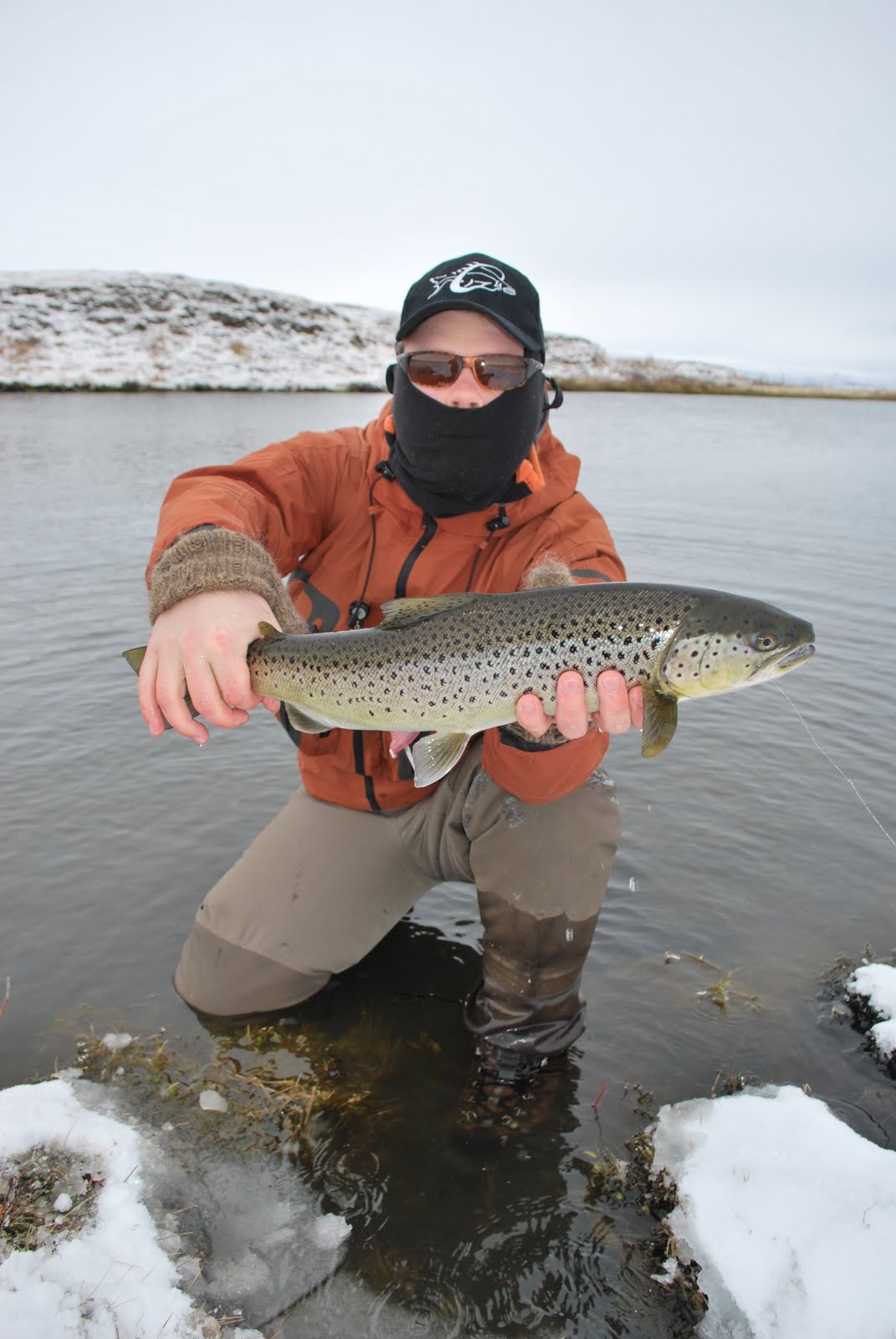
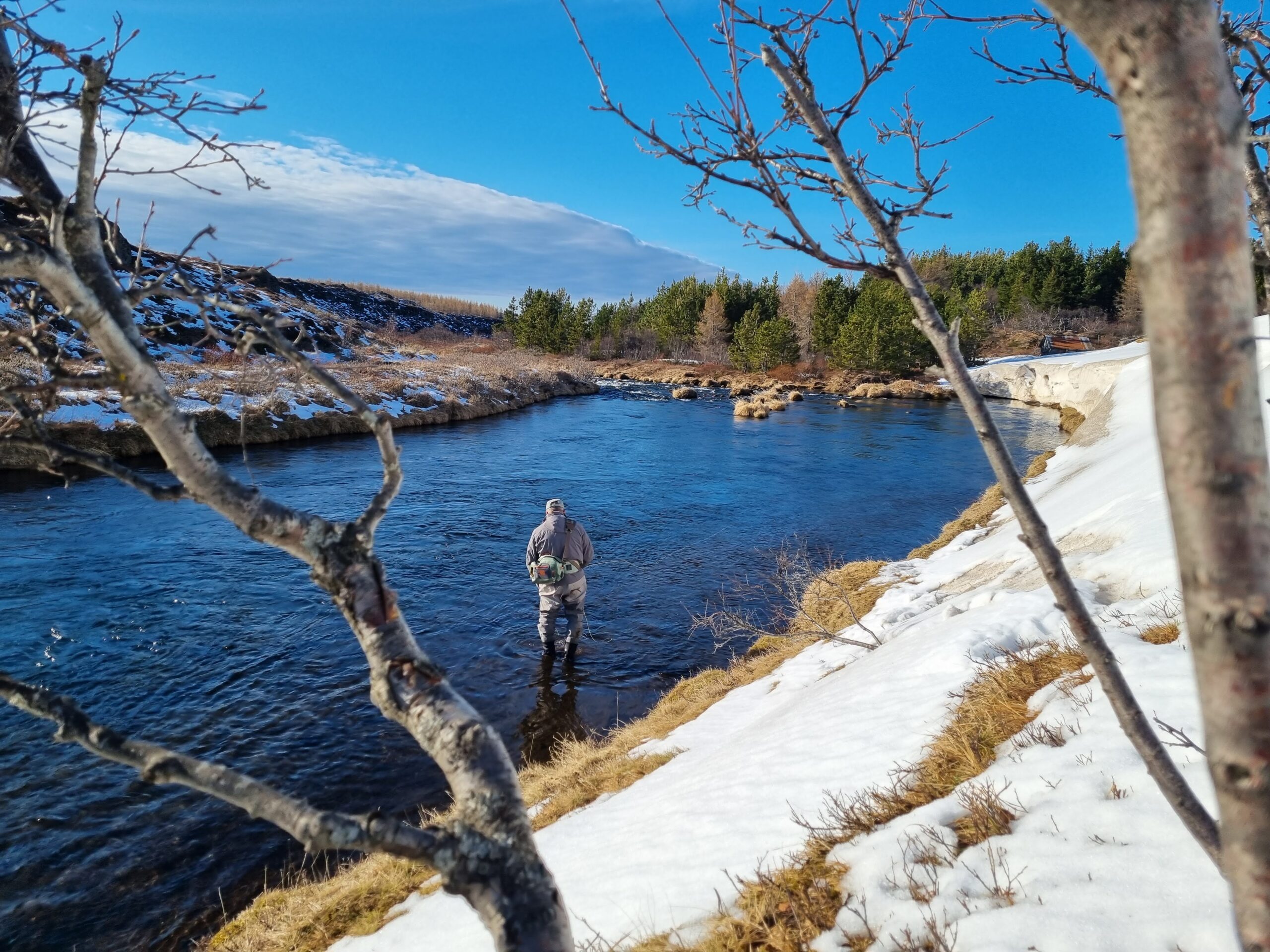
When I was a kid, I loved all those pictures of large fish being caught with a snowy backgroun, but i never managed to convivne anyone to go take me fishing in those conditions.
Eventually, when I got my driver’s license at 17 years old, I could finally go out myself and get that photo I had always wanted and experiance being the first one to cast in to many of the pools i fished.
How We Fish in Spring
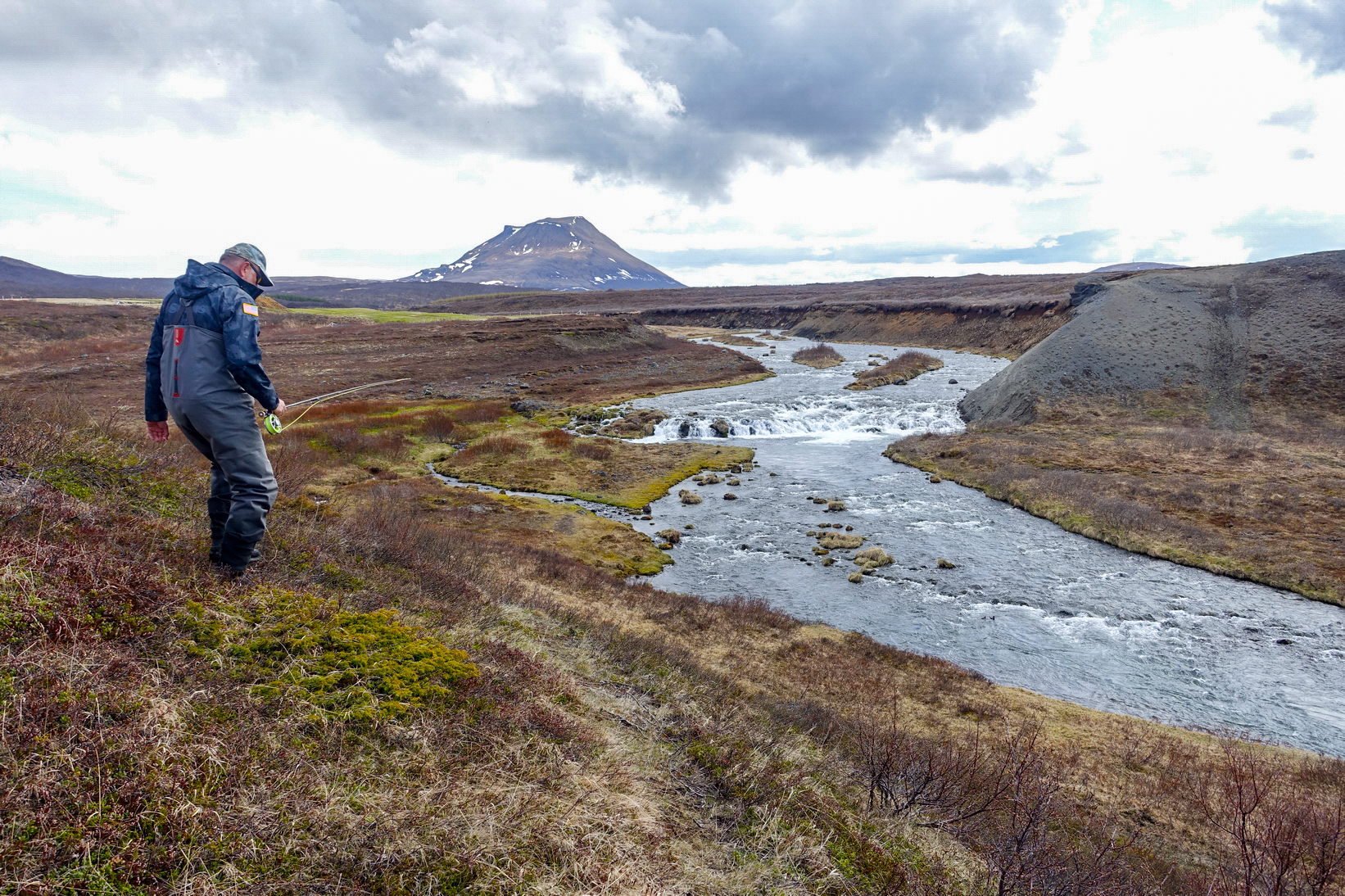
During spring, while nymphing is by far the most effective method, we do also fish streamers, especially for the large sea run browns, in the right conditions, they’ll even come up for a skated fly.
Because the water temperatures are still relatively low, fish usually won’t move far to chase food. The key is to present the fly directly in their feeding zone, giving them an easy meal. If your fly drifts naturally at the right depth, the odds of a take are extremely good.
Our typical trout and char setup includes:
- 6wt 9 foot single handed rod
- Floating line
-
2x or 3X tippet
-
A medium Oros indicator
-
Two nymphs
When we fish for the sea run browns on Brunná and Litlaá with streamers, we tend to use a 9ft single handed #7 or #8 wt rods with minimum 15 pound tippet. Smaller trout spey rods can come in handy o nsome of the pools. We typically fish the streamers with a floating line and a heavy fly but carrying a short fast sink tip can come in handy, especially in high or colourd water conditions.
Most productive nymph sizes tend to be #12 or #14, and sometimes even #10.
This might seem large considering that most Icelandic aquatic insects fall somewhere in the #16–#26 range, but in spring, fish are often happy to take something that resembles a large, energy-rich meal.
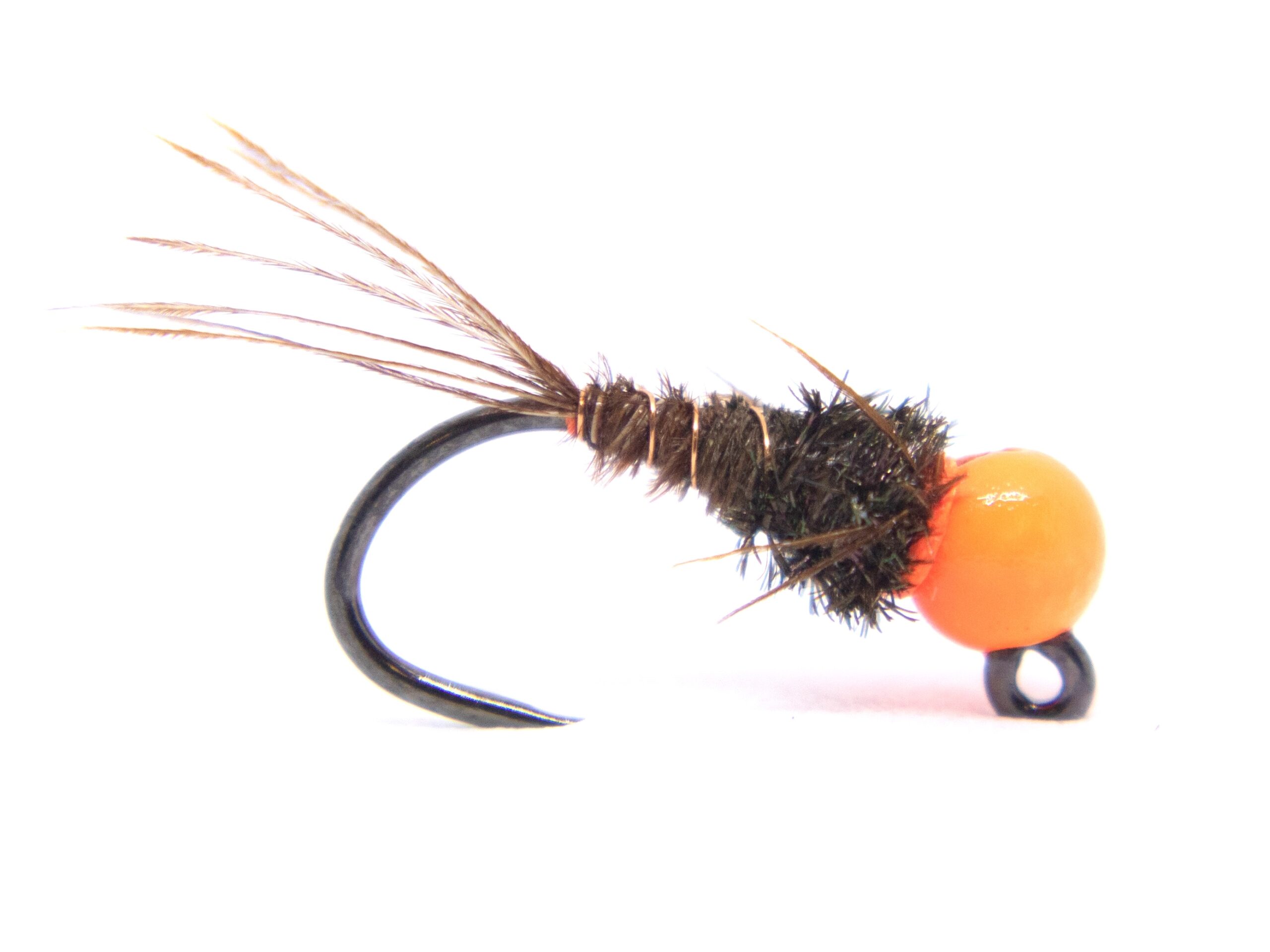
Orange bead PT
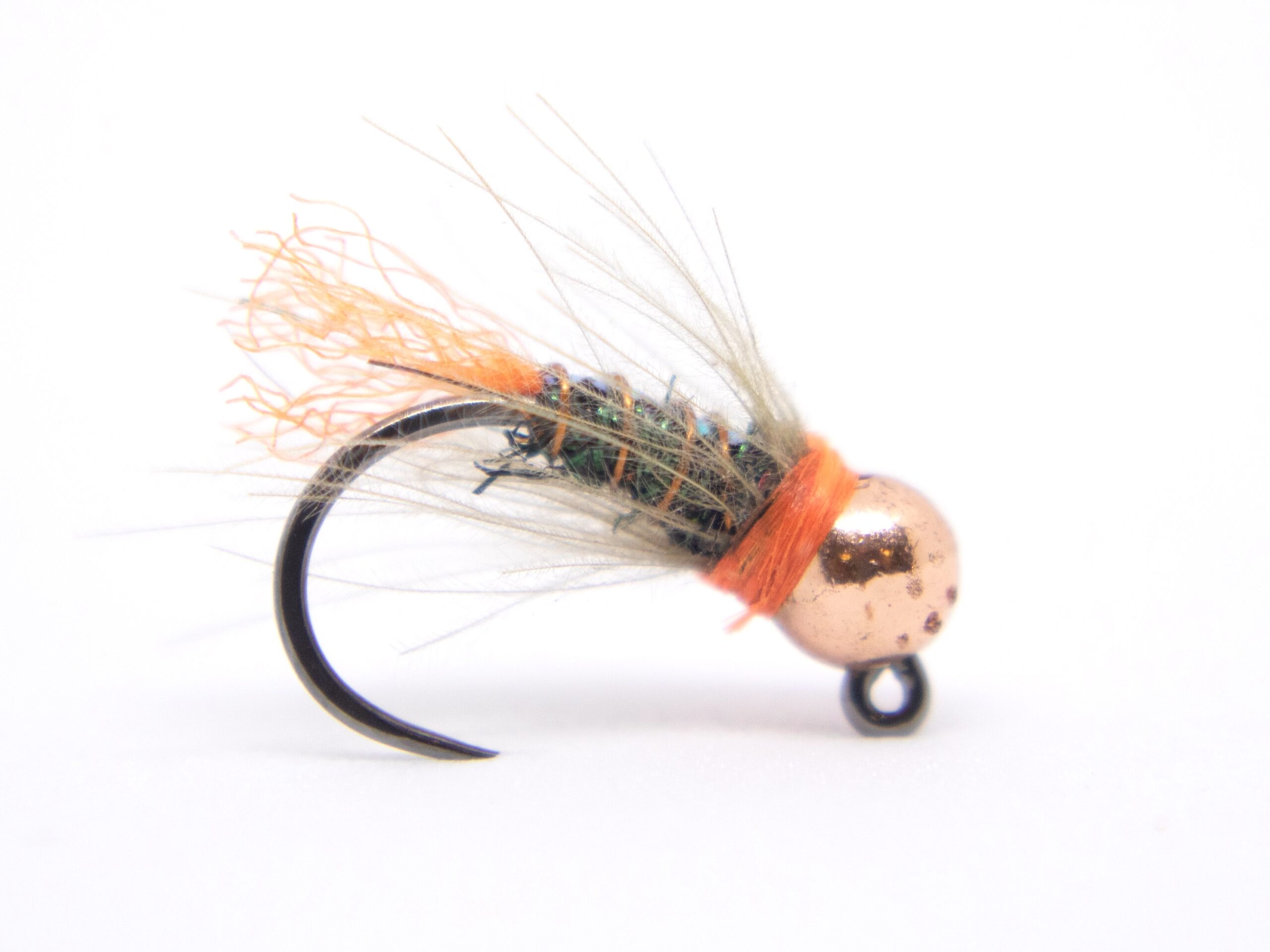
Blowtorch
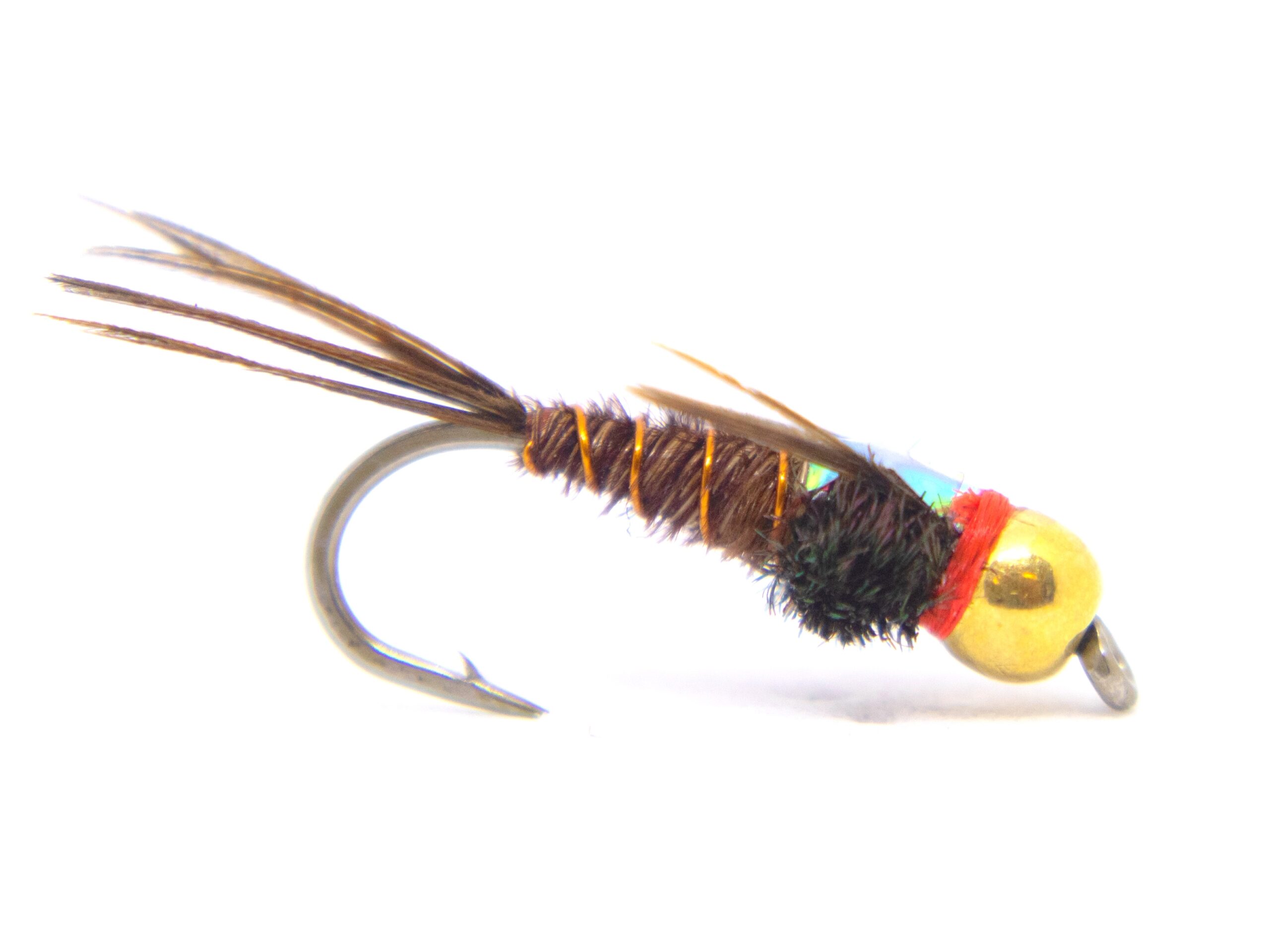
Flashback pheasant tail
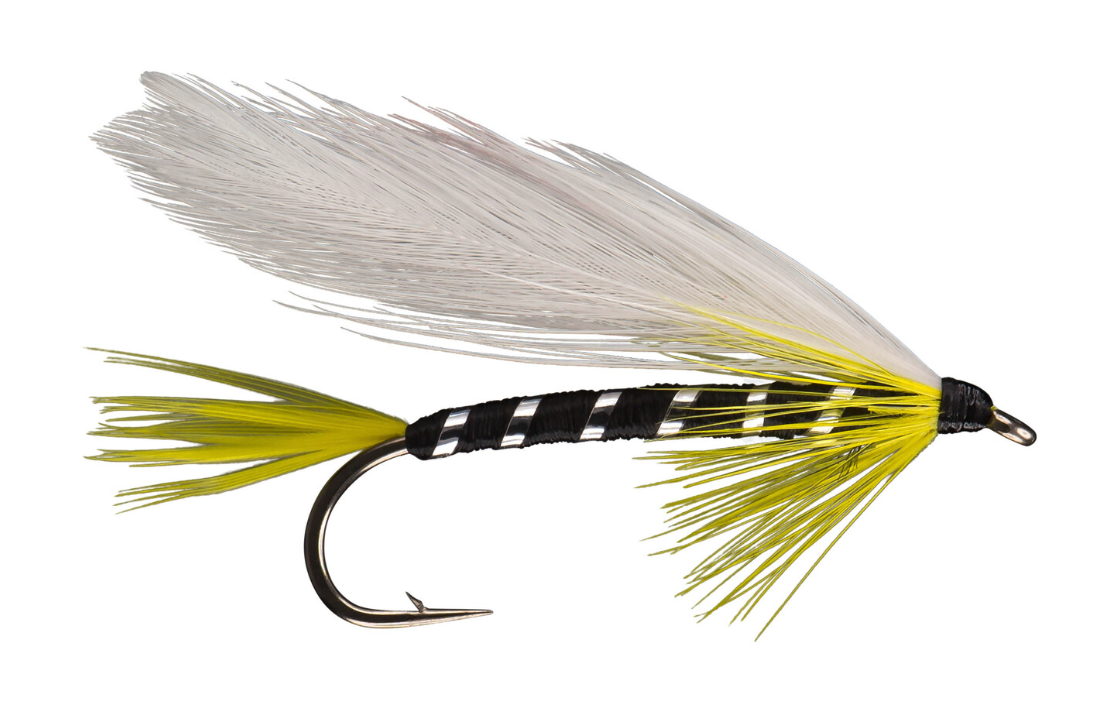
Black Ghost
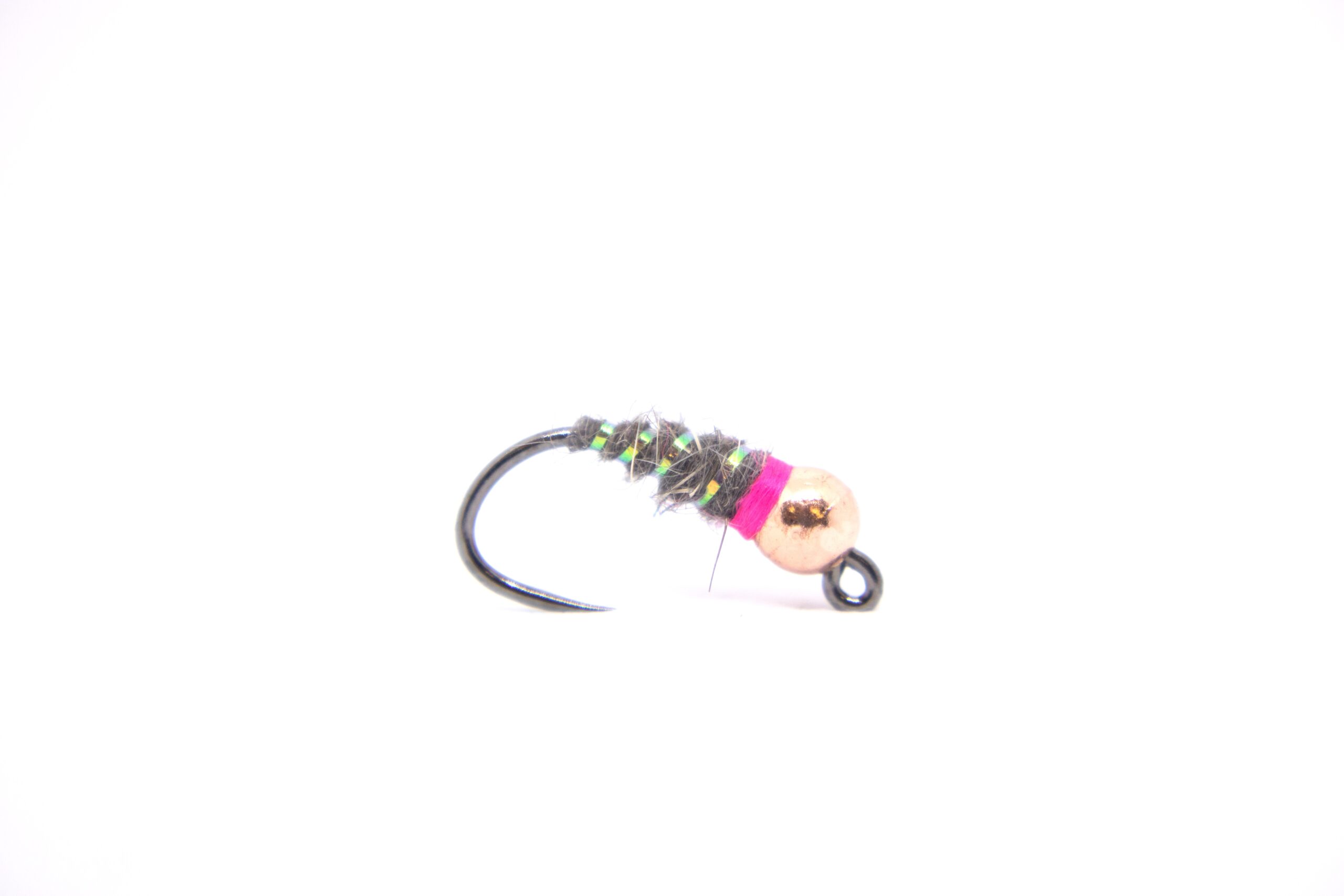
Sexy walts
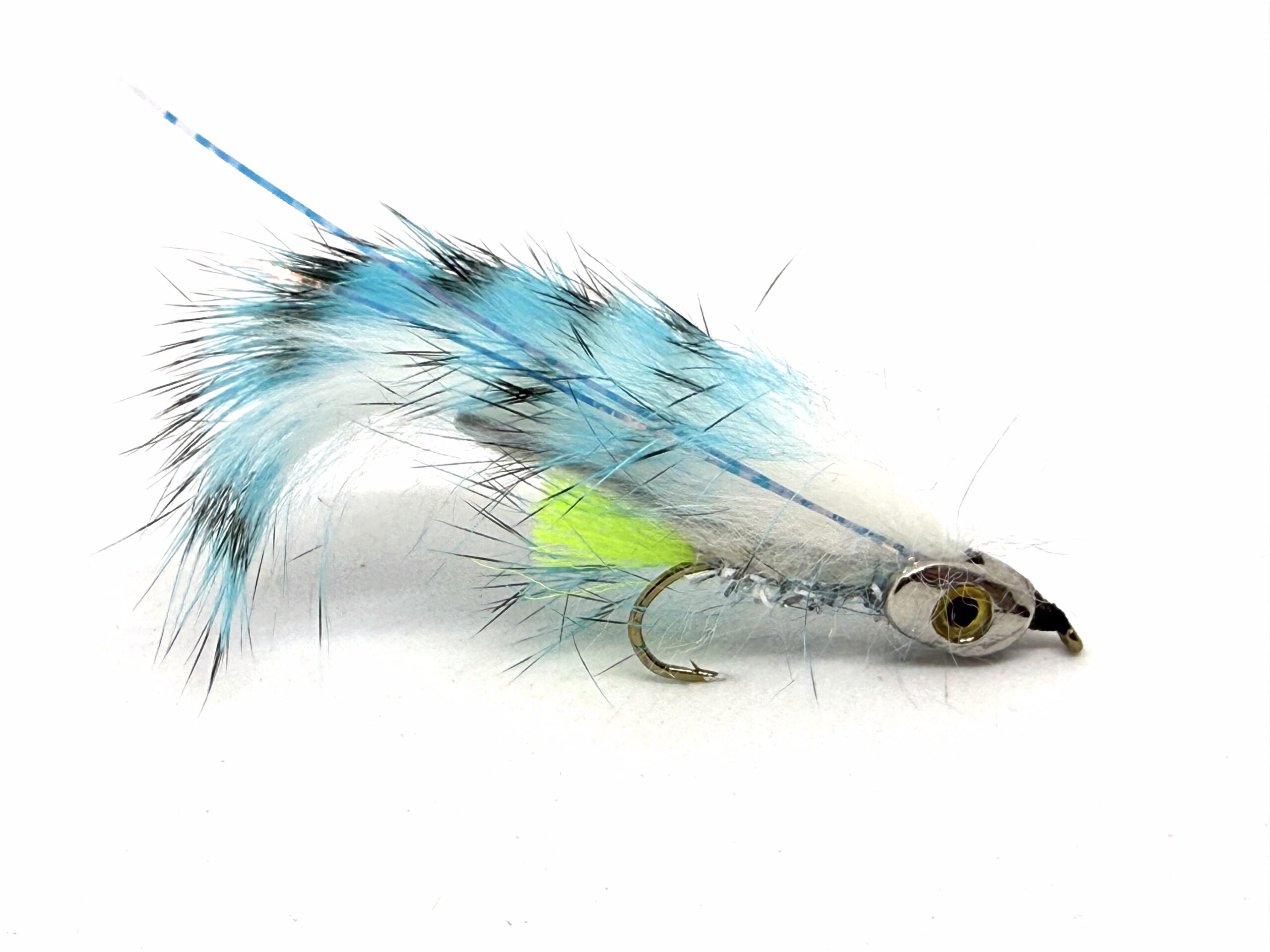
Strympa
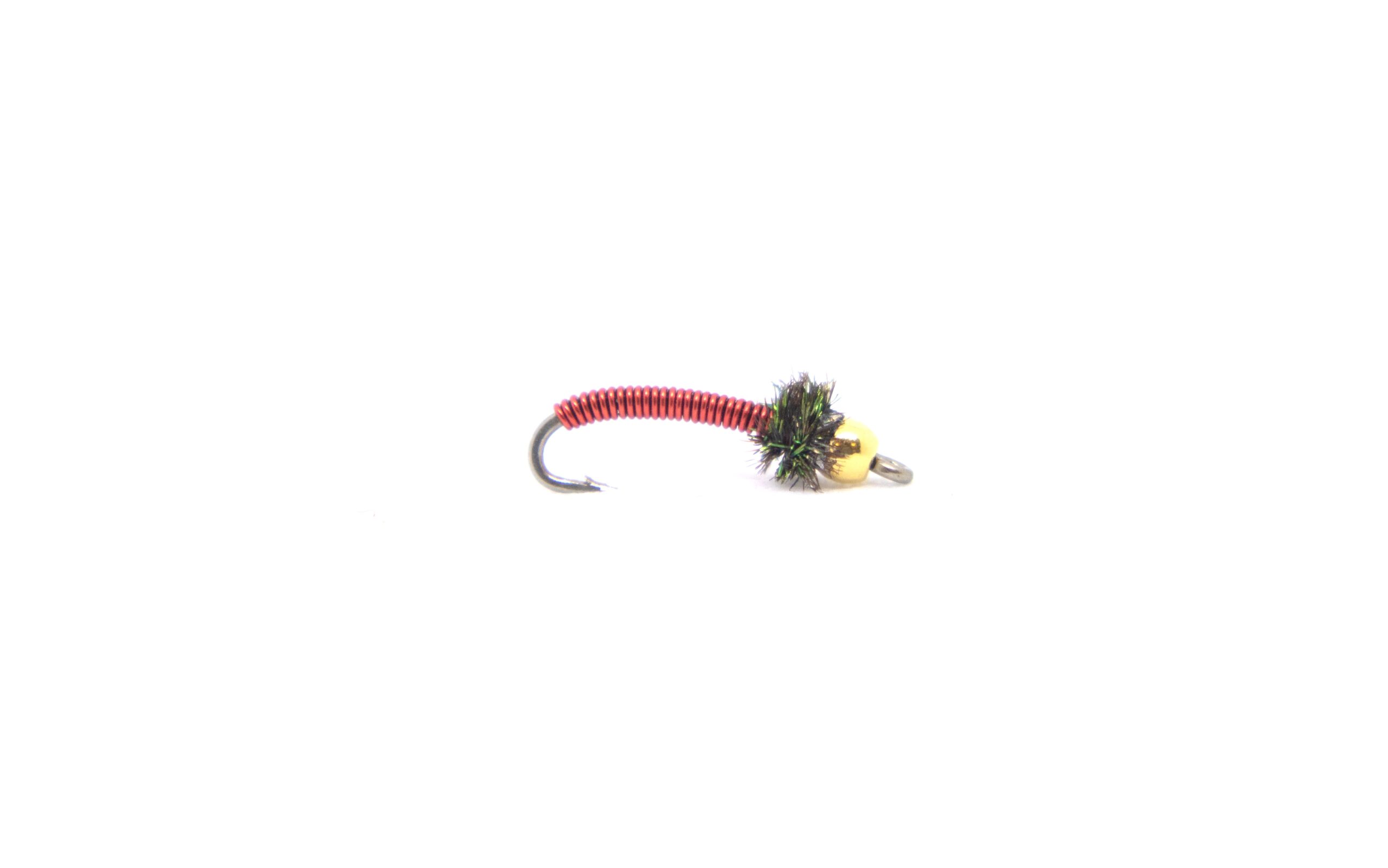
Bloodworm
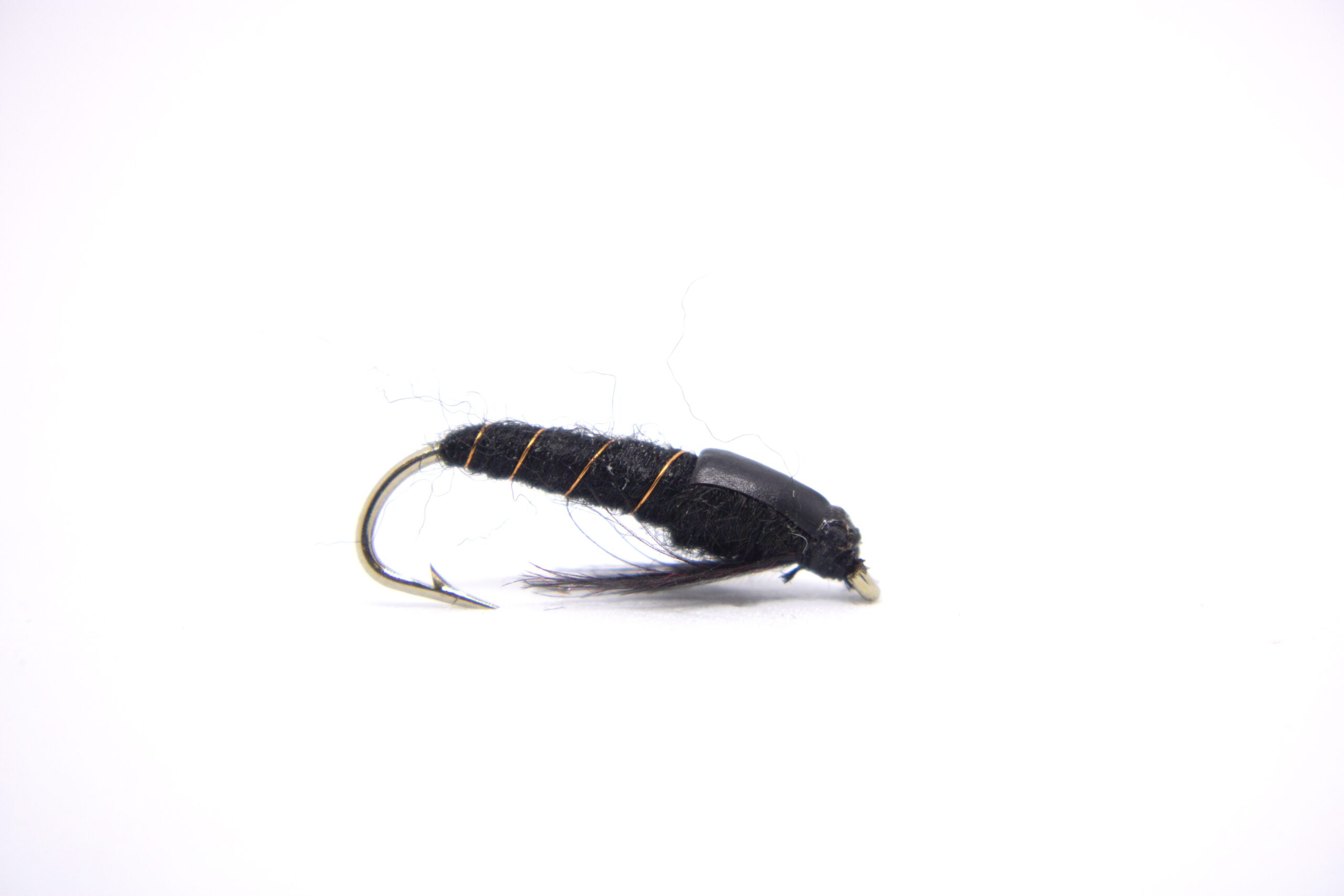
Langskeggur
That said, spring fishing can always surprise you.
I remember a particularly memorable moment on Brunná River during opening week two years ago. The upper section of Brunná is crystal clear and offers excellent sight-fishing opportunities.
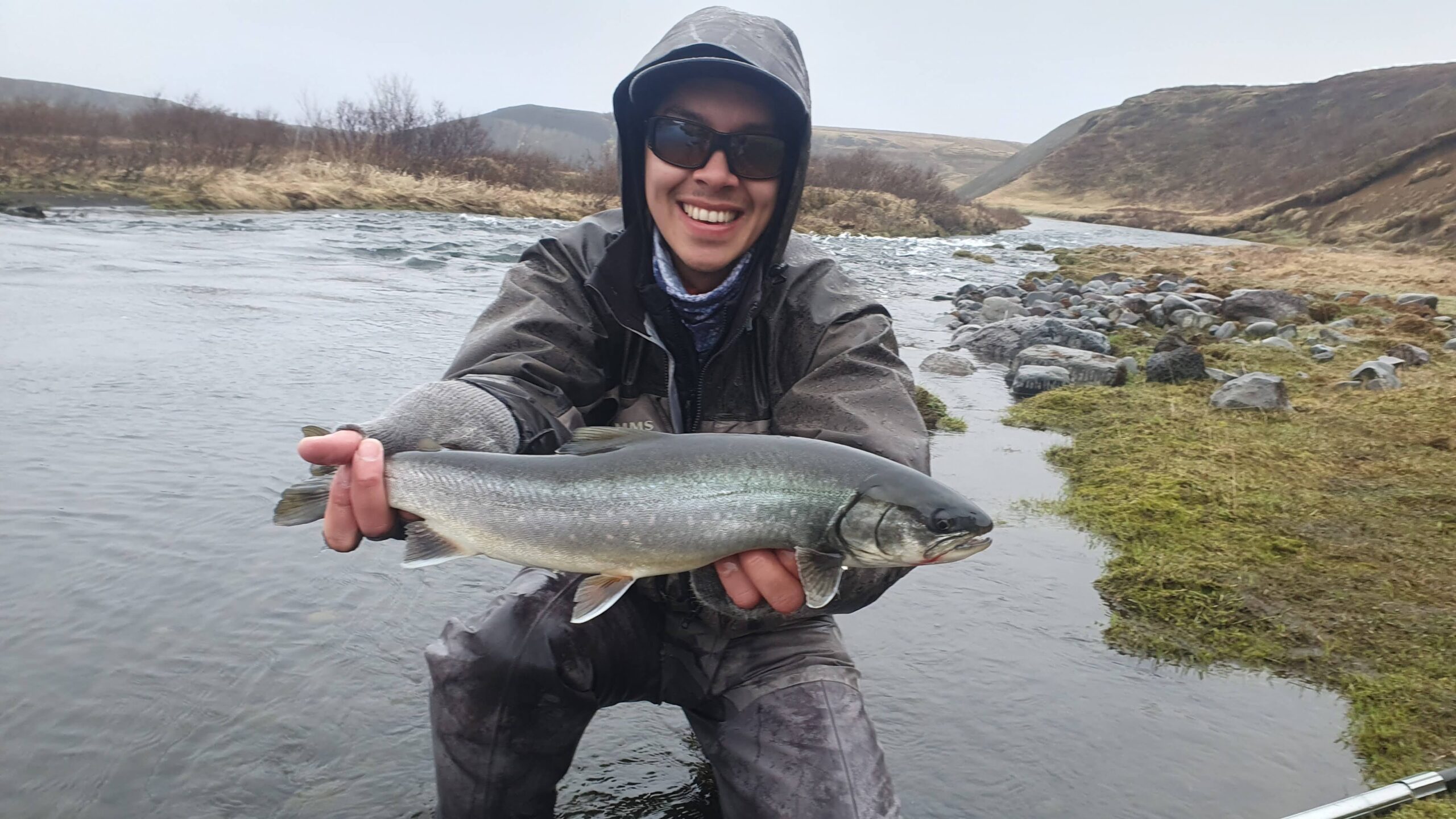
I was there with Tim Cammisa and Heather Cammisa. On the first day we came across a nice Arctic char feeding super actively in a pool. You could clearly see the small white flash of its mouth every time it ate and the white “nail polish” on its fins as it fed over the black lava sand bottom.
It looked like the fish was eating something every five seconds.
Perfect, right?
Not exactly.
For two full hours, we changed flies, rigs, and techniques. Indicators, euro-nymphing setups, squirmies to zebra midges — you name it. The char ignored every single fly.
We did catch plenty of fish in other pools that day, including some beautiful sea-run browns and char, but that one fish stayed in our minds.
The next day we went back.
Sure enough, the char was still there in exactly the same spot.
Another hour passed while we worked through the remaining flies in our boxes. Eventually Heather tied on a Black France Fly, one of their favorites.
She made a perfect cast.
We could see the fly drifting straight toward the char.
And then it happened.
The char moved and took the fly.
After three hours of trying, it finally ate. The fish was stunning, it had an incredibly vibrant red belly and fins.
It wasn’t the biggest fish we caught on that trip, but it was by far the most memorable.
The lesson? Even though a #12 or #14 hotspot pheasant tail or blowtorch will usually get the job done in spring, it always pays to carry a wide variety of patterns and be ready for anything.
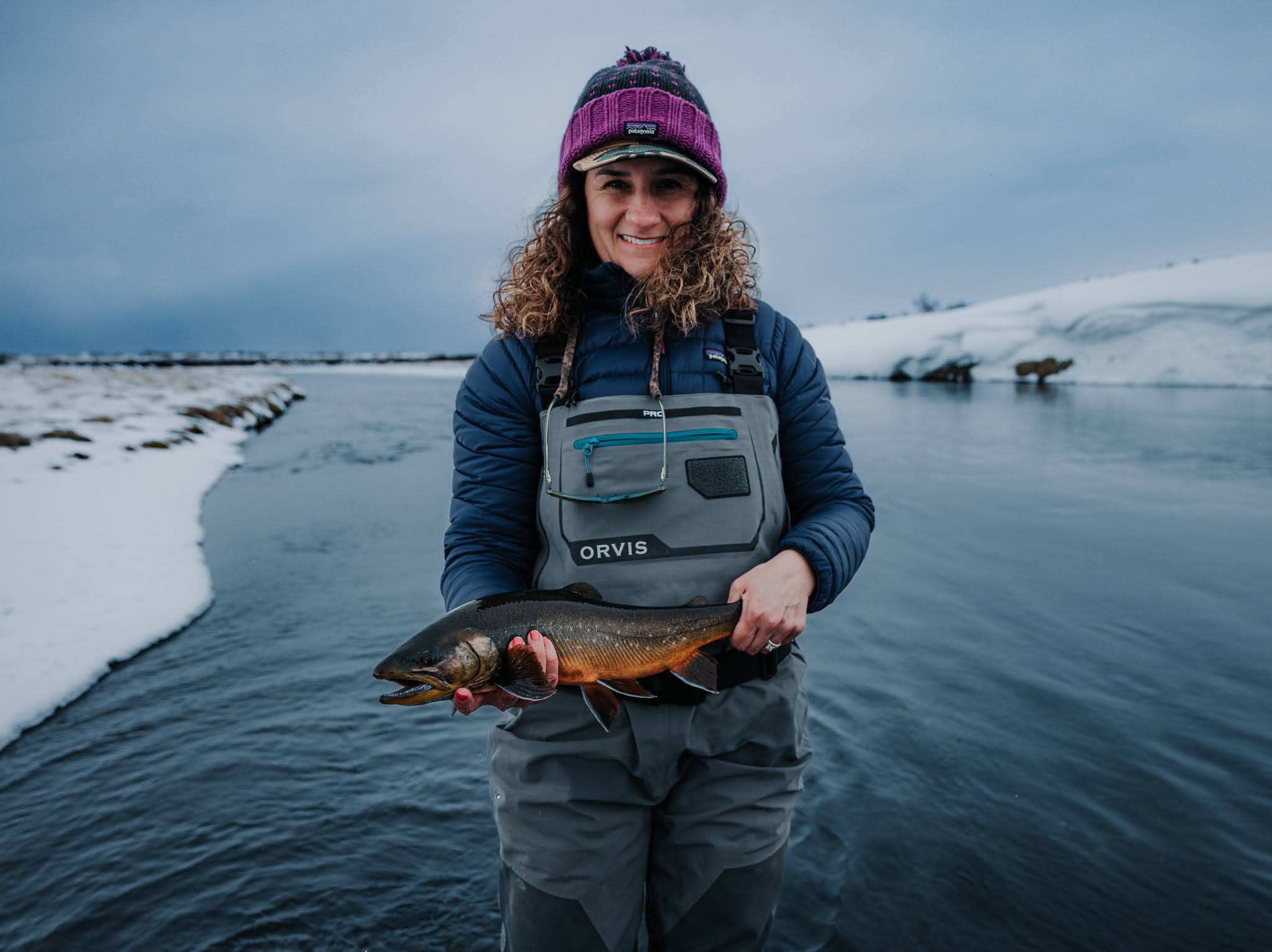
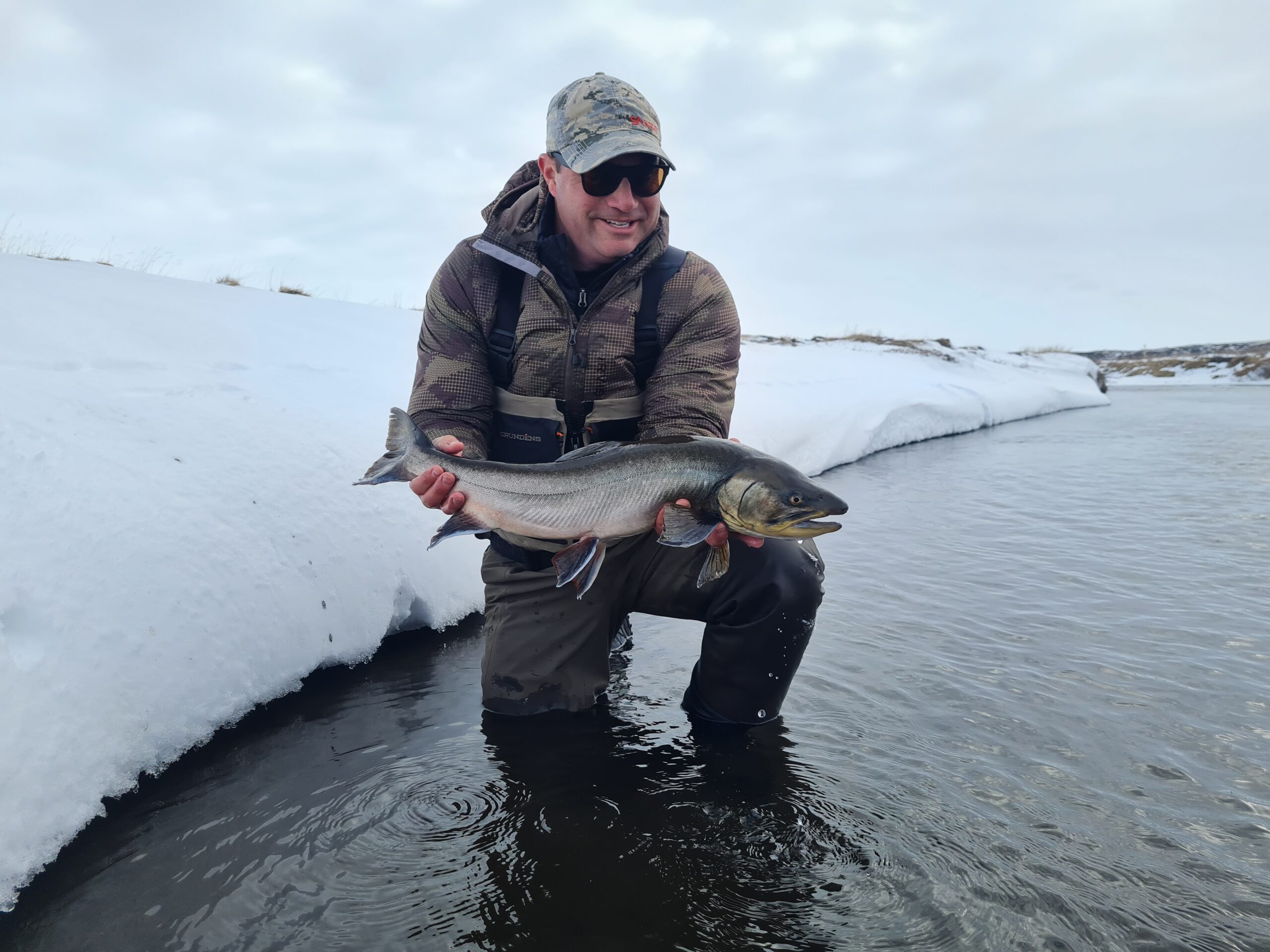
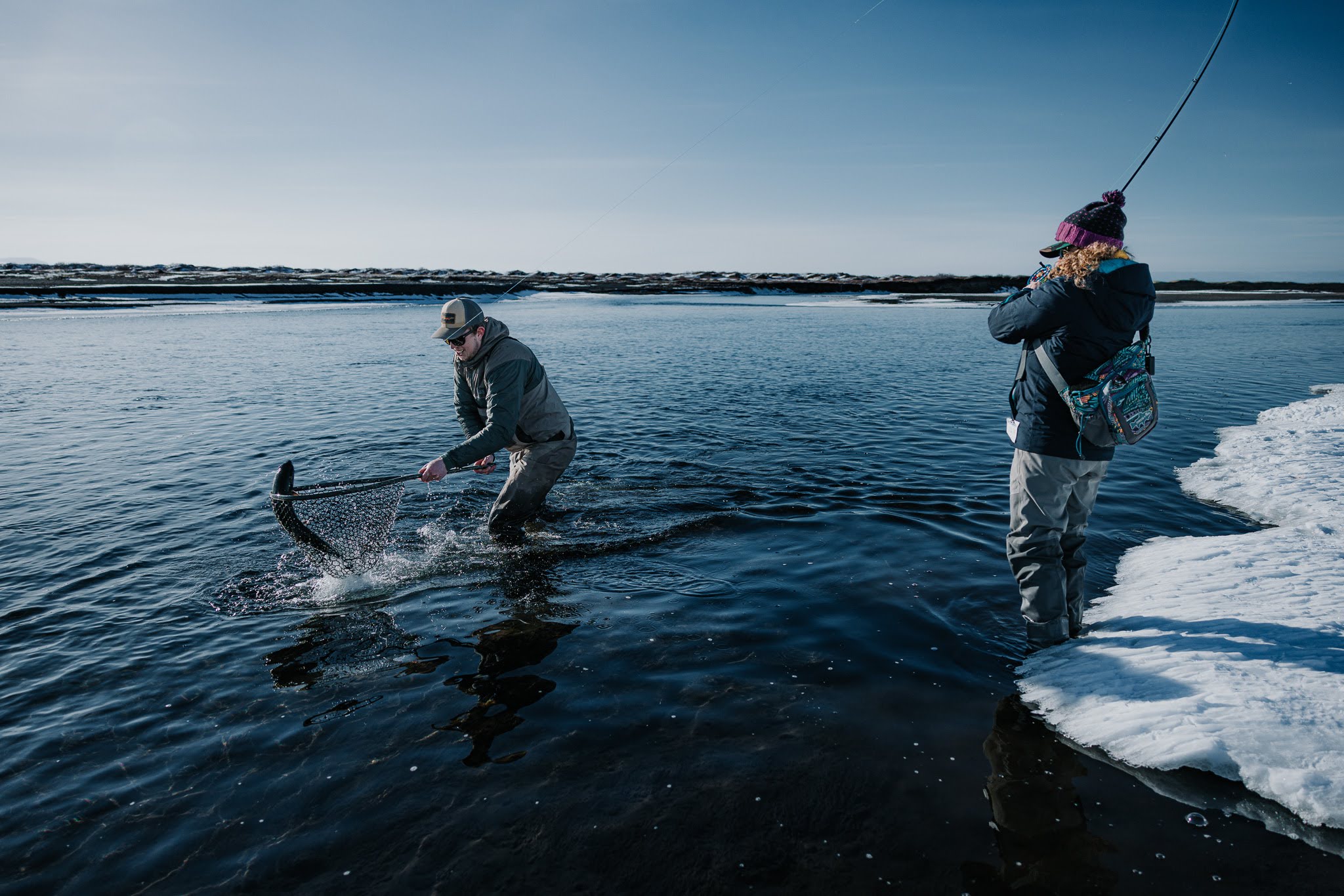
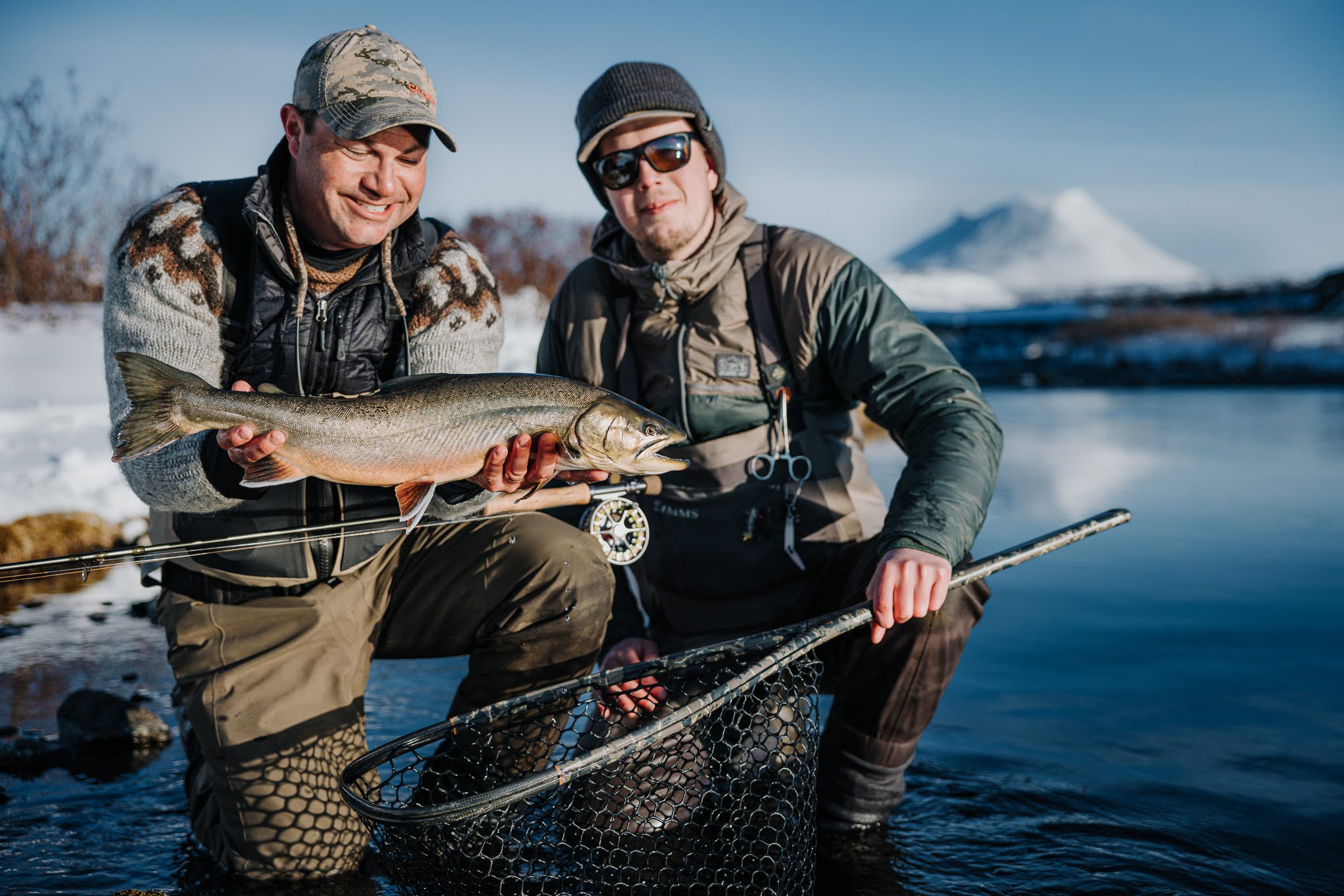
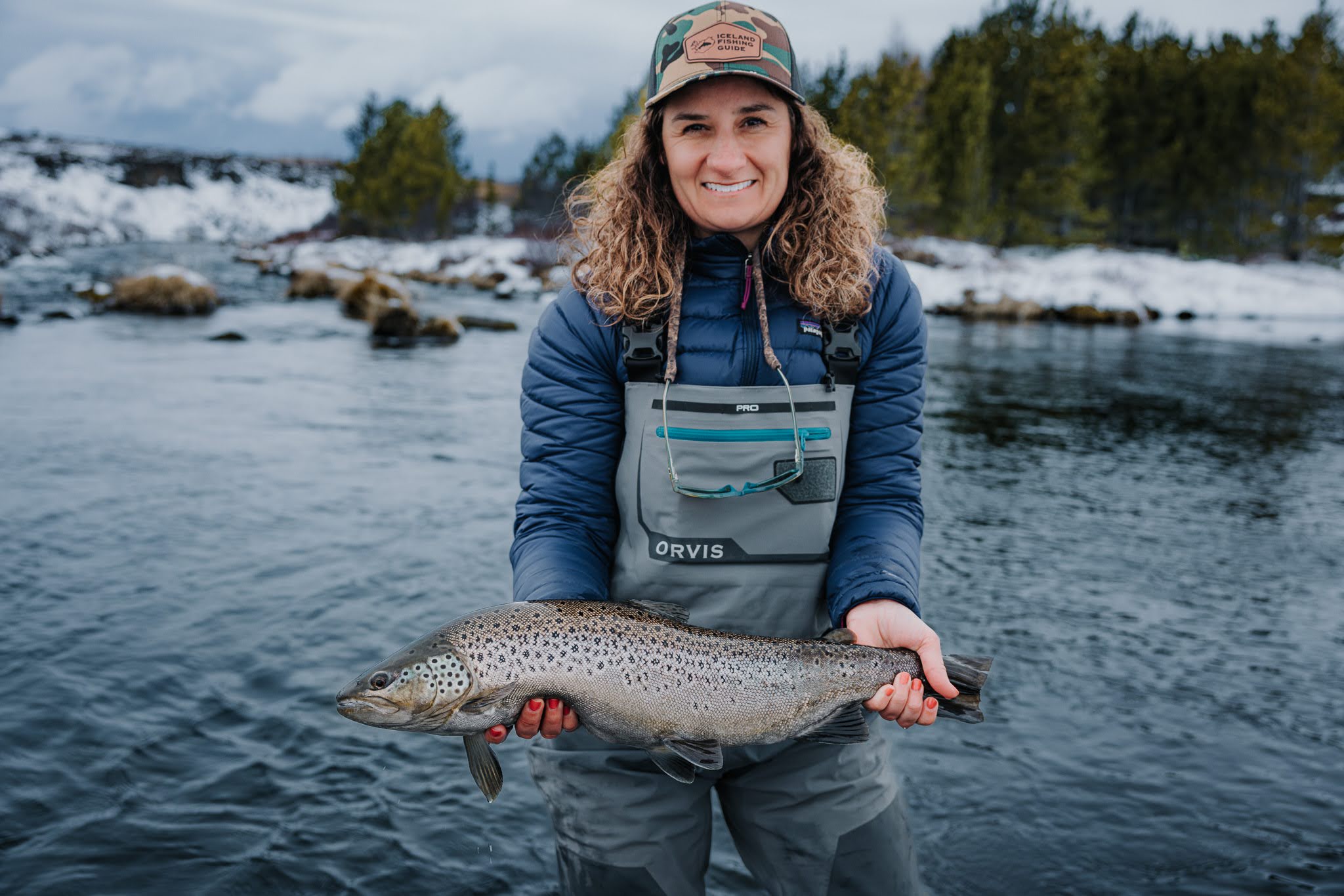
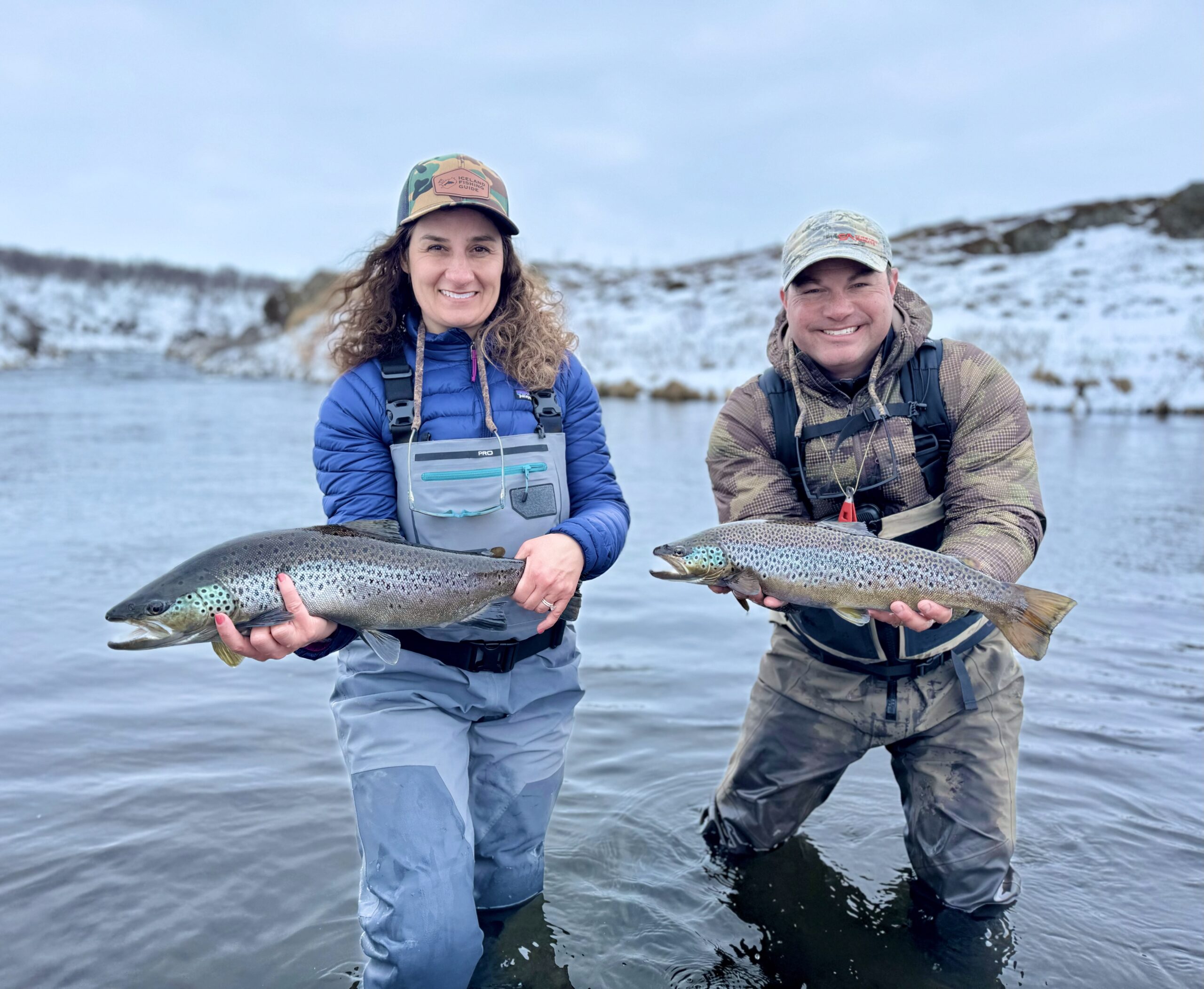
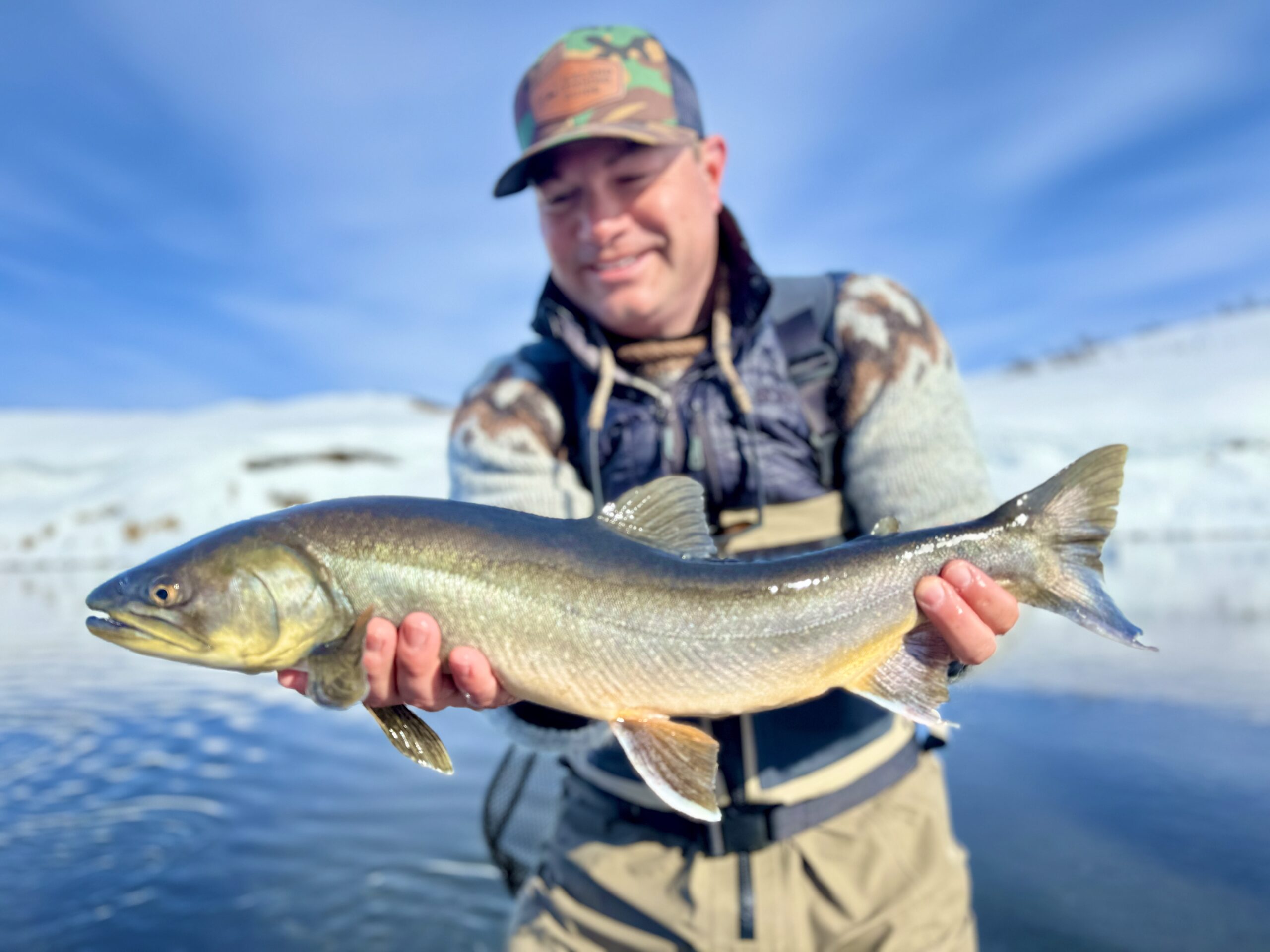
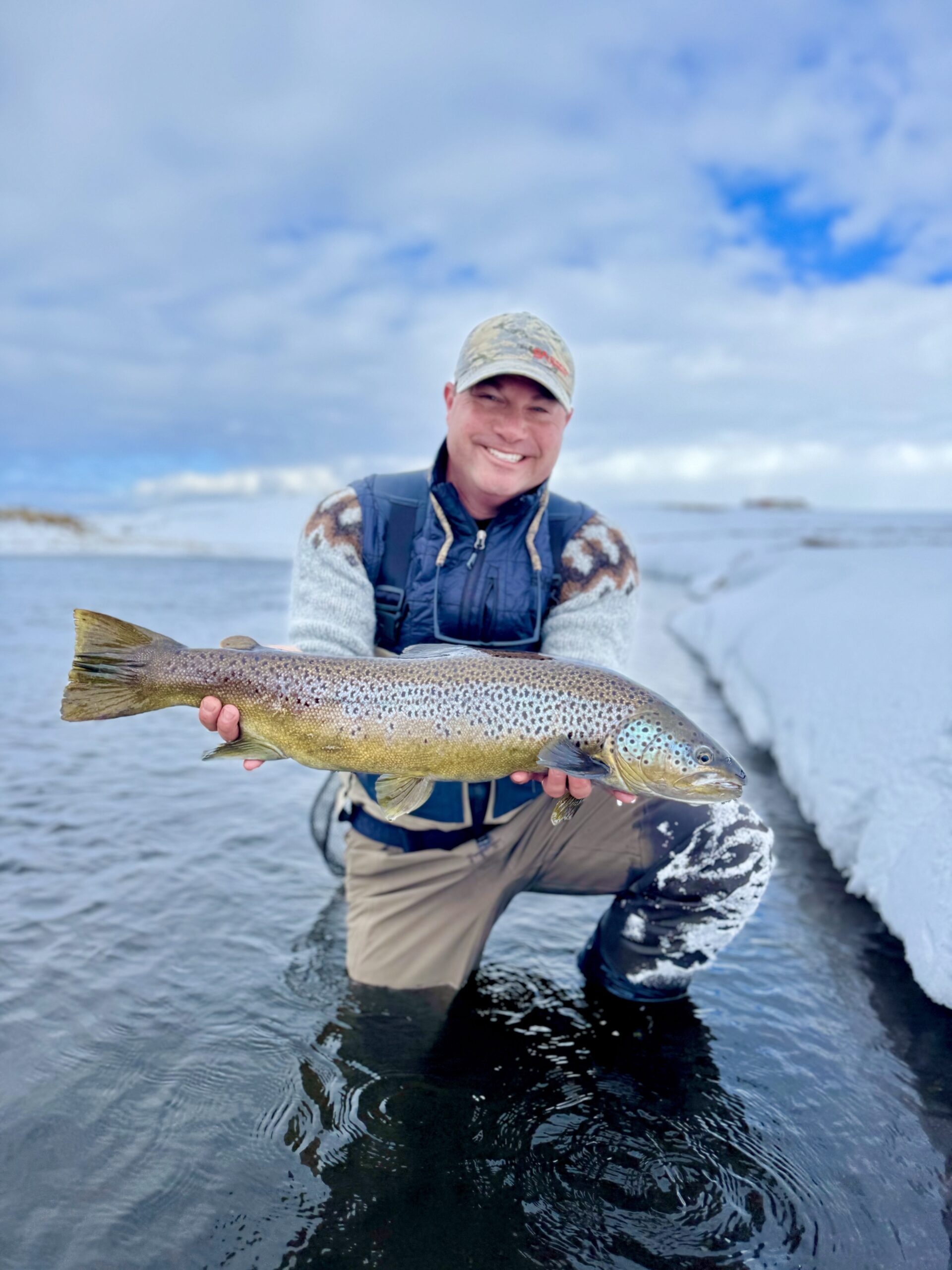
First image is the char we spent 3 hours on before heather caught it on the France Fly, the following images are a few of the other fish they caught that trip.
Brothers on the fly fished our rivers a few years ago, they fished river Mýrarkvísl and Brunná and caught some impressive ctaches. This short movie shows well how frequently conditions can change in spring.
Where We Fish in Spring – and a little bit about the rivers
Litlaá and Lake Skjálftavatn
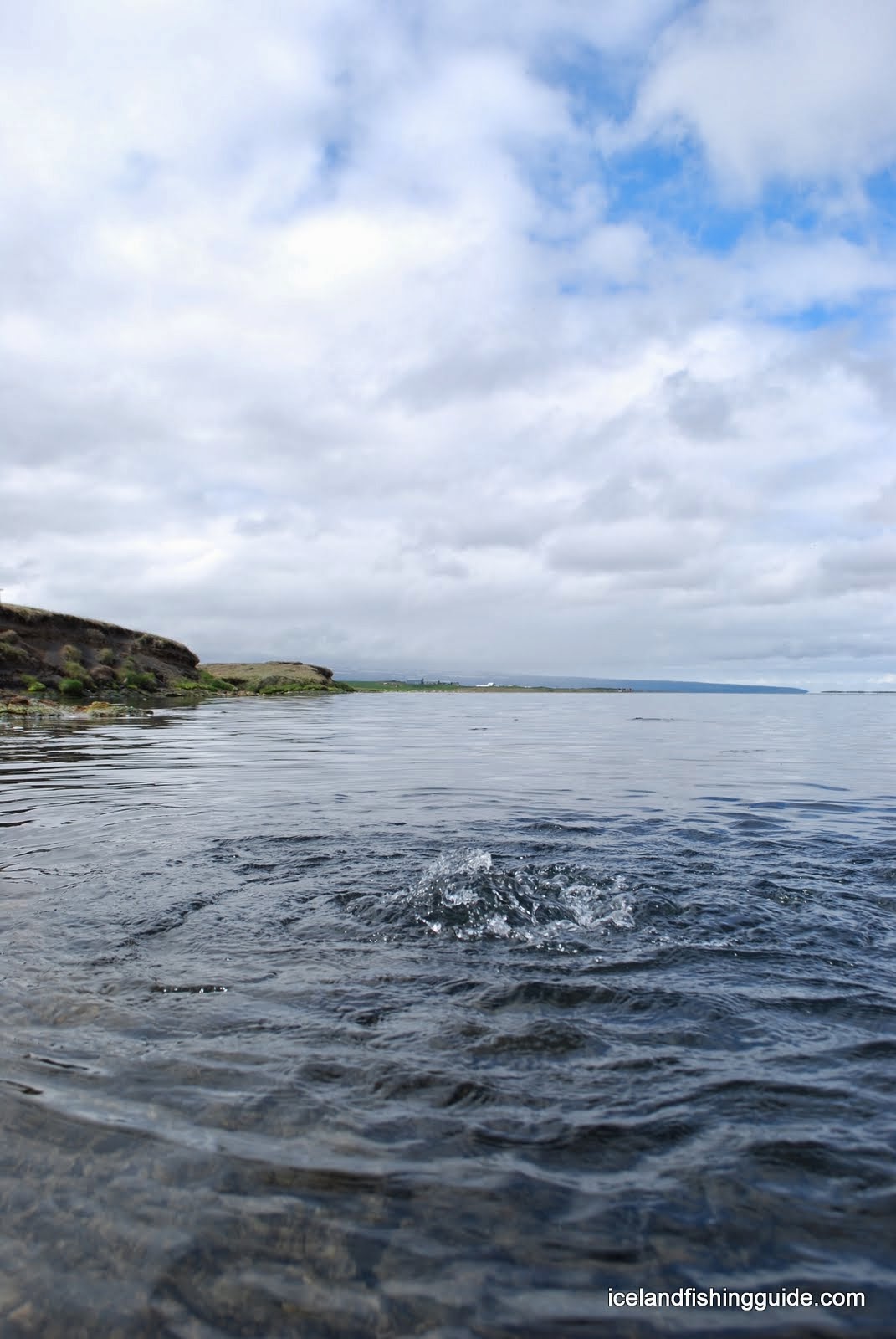
Litlaá is a unique and highly productive trout river fed directly by Lake Skjálftavatn, often called the “earthquake lake.”
The river allows five rods, while two rods fish the lake, creating a low-pressure system with plenty of space for anglers.
One of the defining features of Litlaá is a geothermal branch that flows into the river. This warm inflow prevents the river from freezing during winter and provides a steady food supply throughout the year. As a result, the system holds exceptionally strong brown trout, large sea-run browns, and healthy Arctic char.
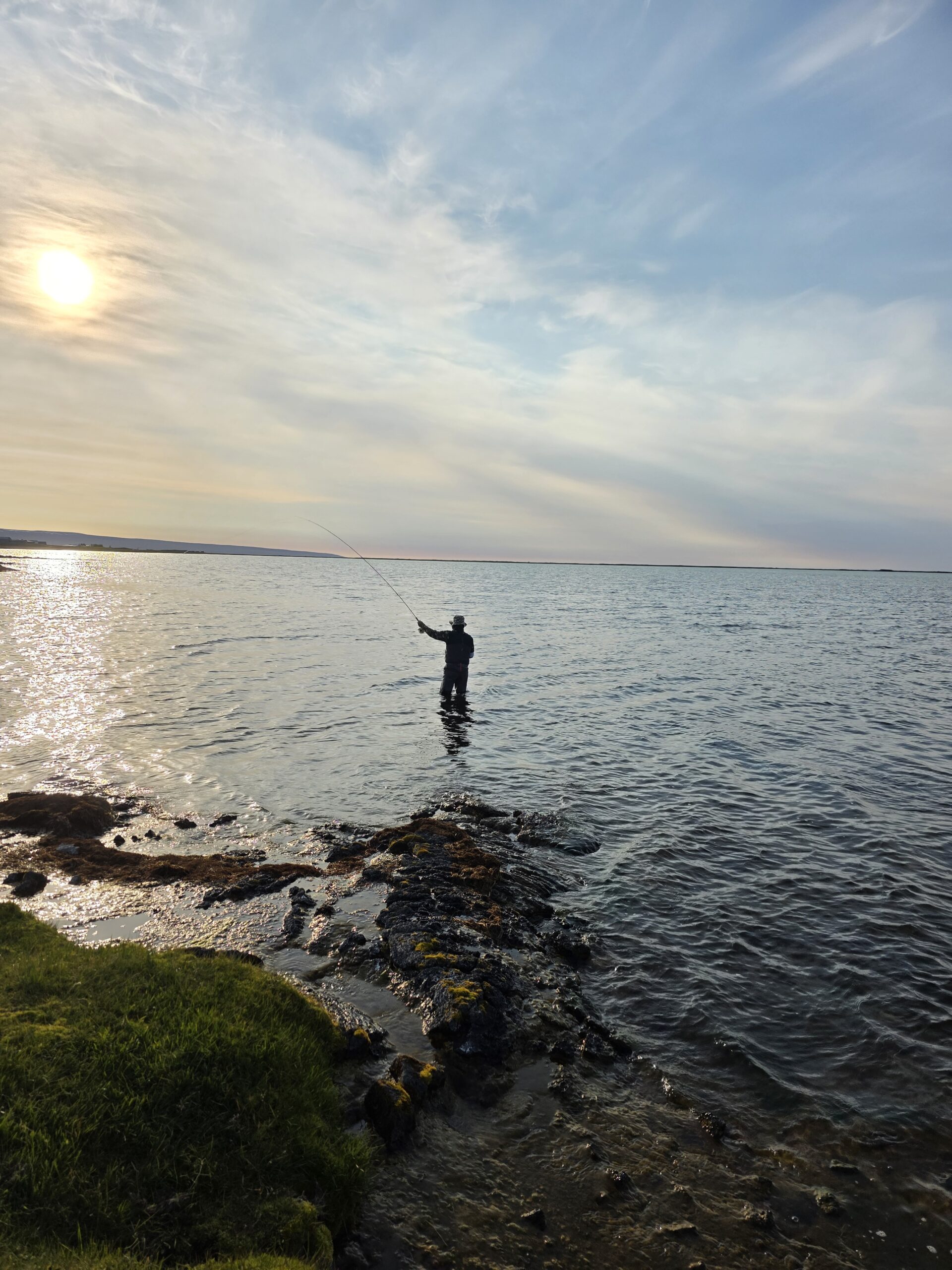
Lake Skjálftavatn itself is very shallow, which helps produce large, well-conditioned trout. During warmer periods, Arctic char gather near cold spring inflows in the lake, sometimes stacking up in large numbers.
When that happens, the fishing can be spectacular. Char in Skjálftavatn have been caught up to 90 cm, which is exceptionally large for the species.
Together, Litlaá and Skjálftavatn create a diverse fishery that offers both technical river fishing and exciting stillwater opportunities.
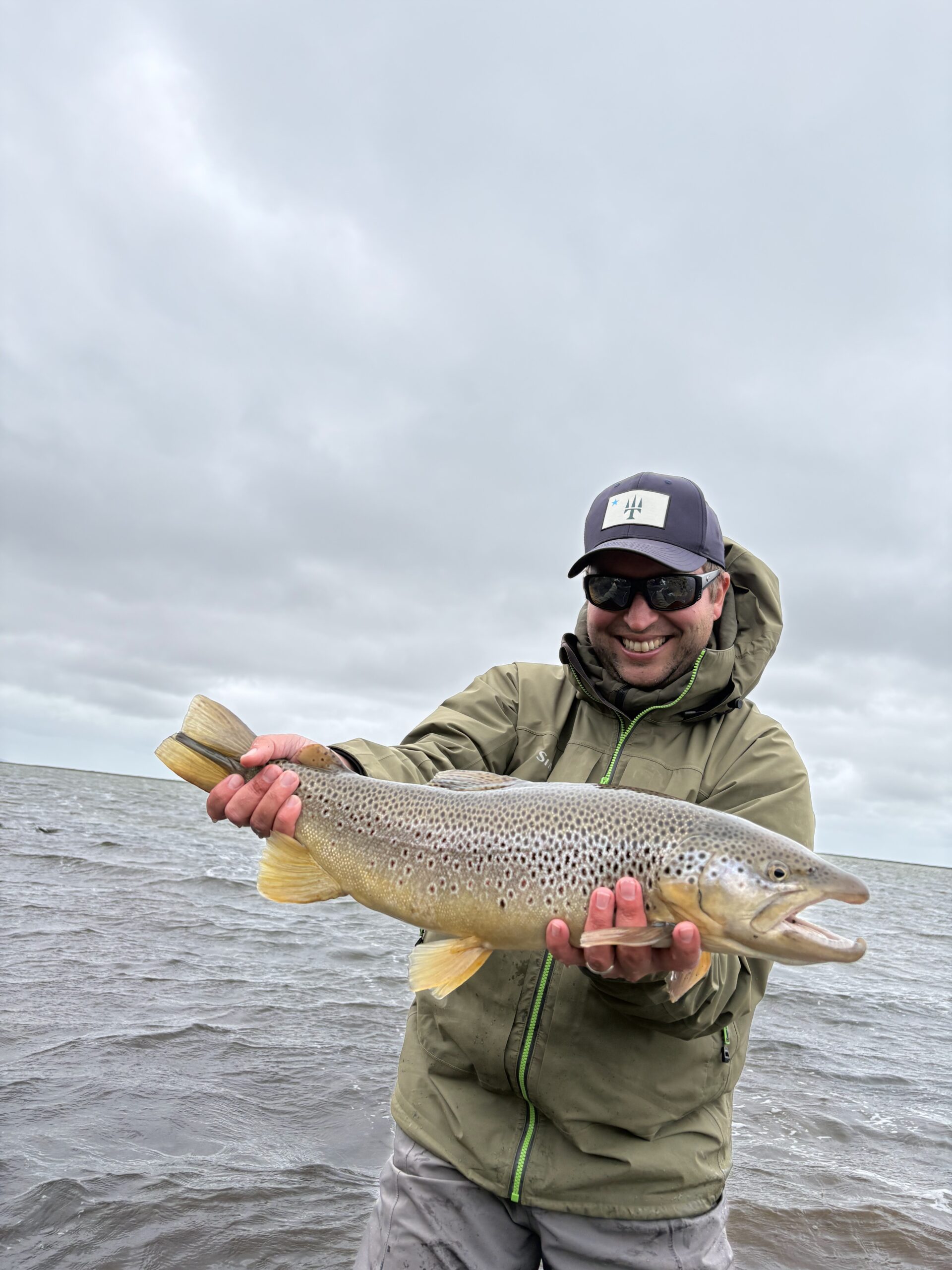
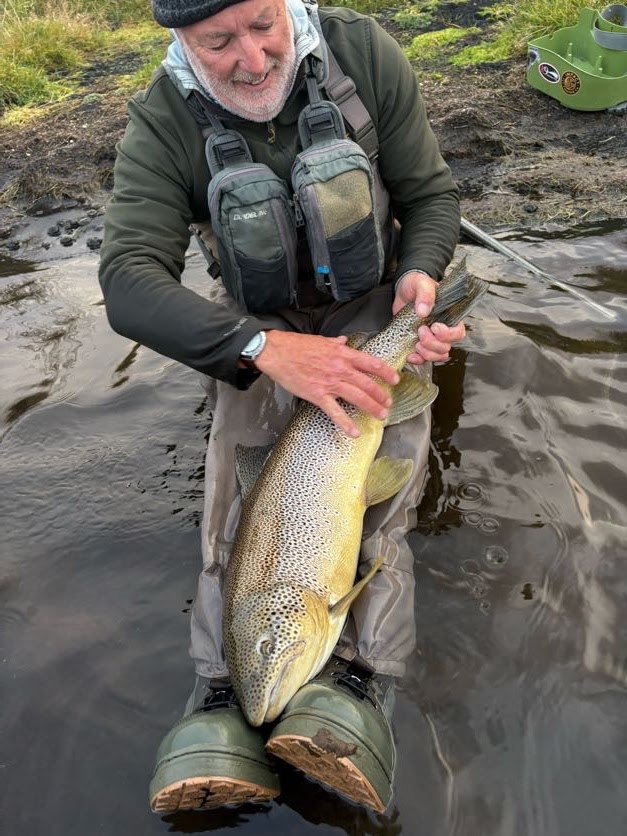
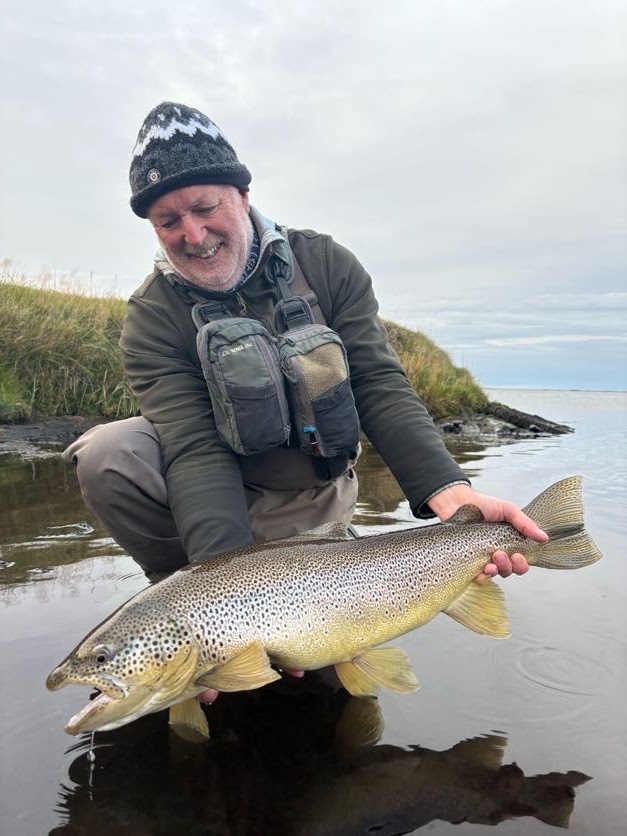
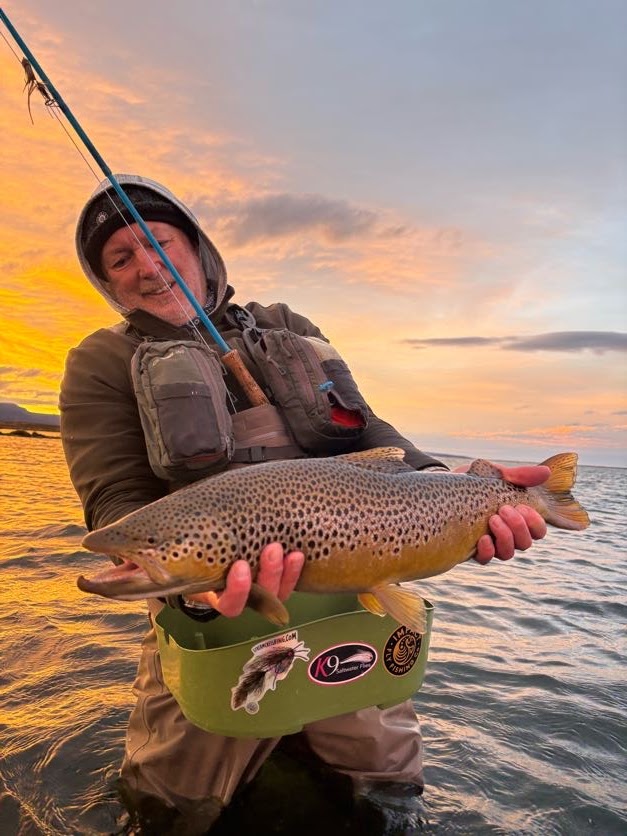
Mýrarkvísl
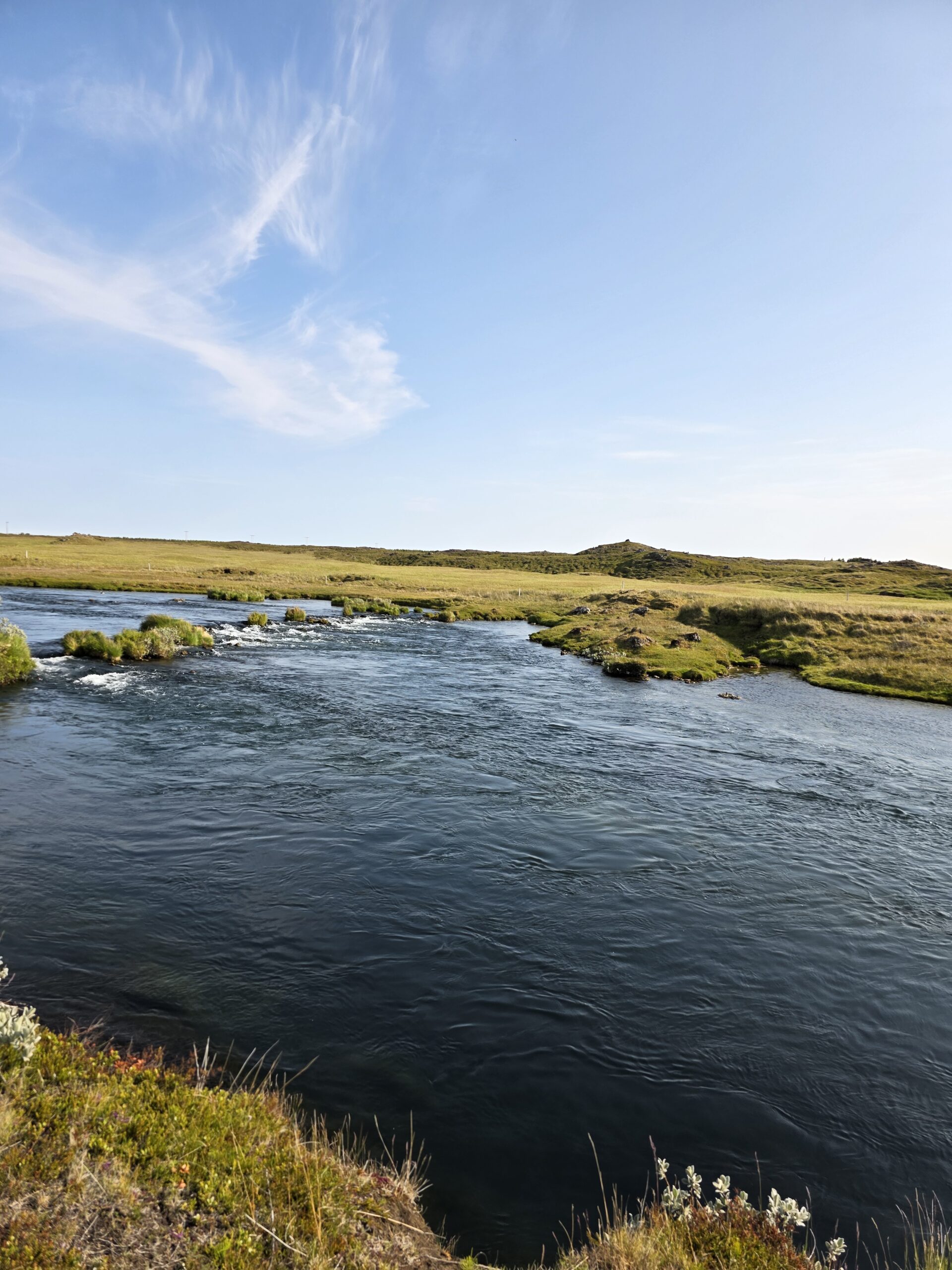
Nestled in beautiful Icelandic landscapes, Mýrarkvísl offers a mix of peaceful surroundings and highly productive trout fishing.
The river is relatively small but holds excellent numbers of brown trout, along with summer runs of Atlantic salmon.
The lower section typically holds fewer fish but larger trout and features a beautiful canyon where sight fishing is often possible.
The upper section flows through open tundra and is where we usually focus when targeting numbers of fish. This area features pocket water, flatter stretches, and deeper pools — with no houses in sight and mountains surrounding the valley.
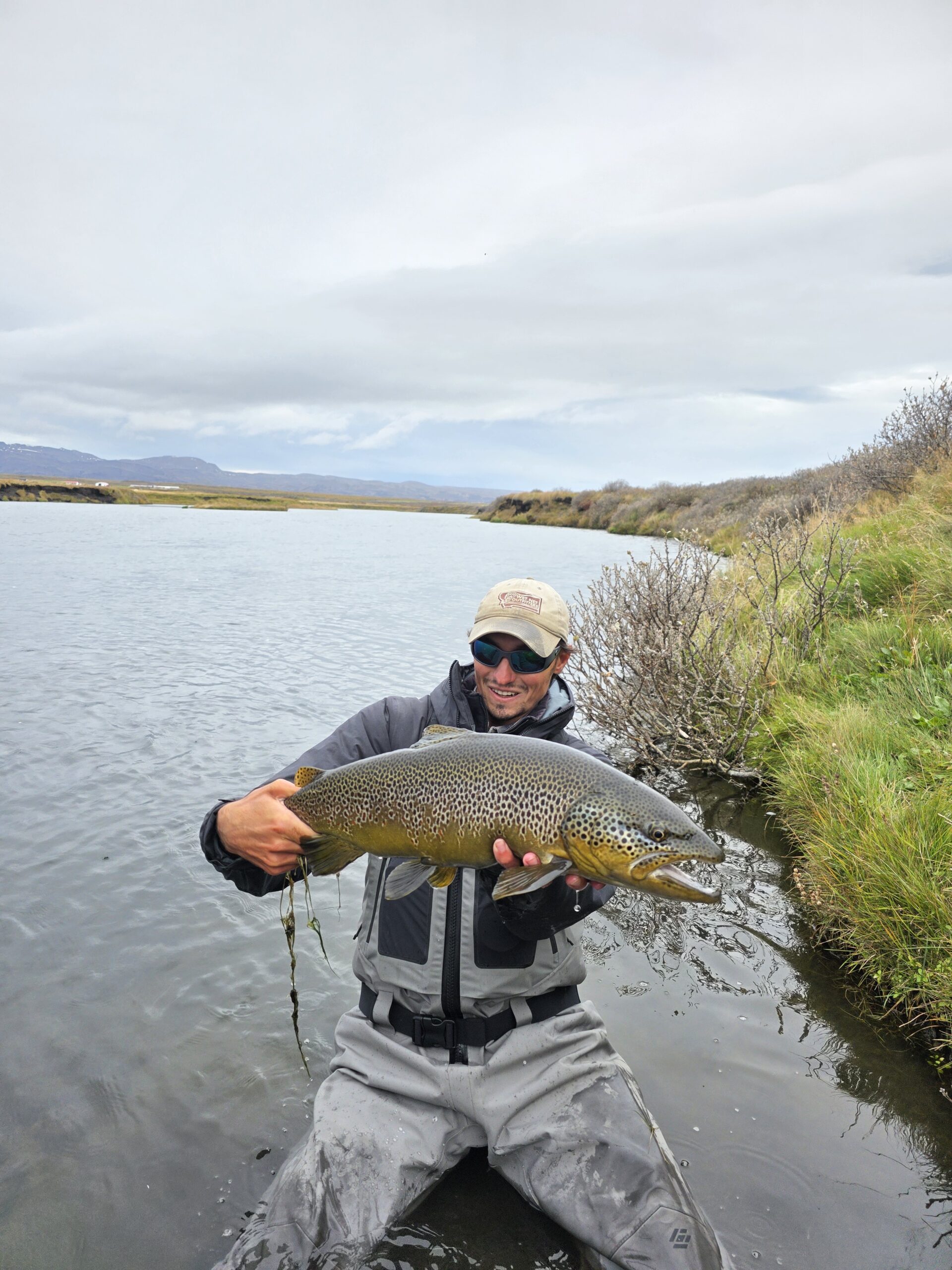
Here anglers commonly catch trout in the 16–20 inch range, and experienced anglers often land 5–15 fish per session.
The river allows only four rods per day across approximately 25 km of fishable water, giving anglers plenty of room to explore.
Mýrarkvísl is fed by a relatively shallow lake that holds large numbers of Arctic char. Because the lake is shallow, it warms quickly compared to mountain-fed systems, which helps improve fishing conditions early in the season.
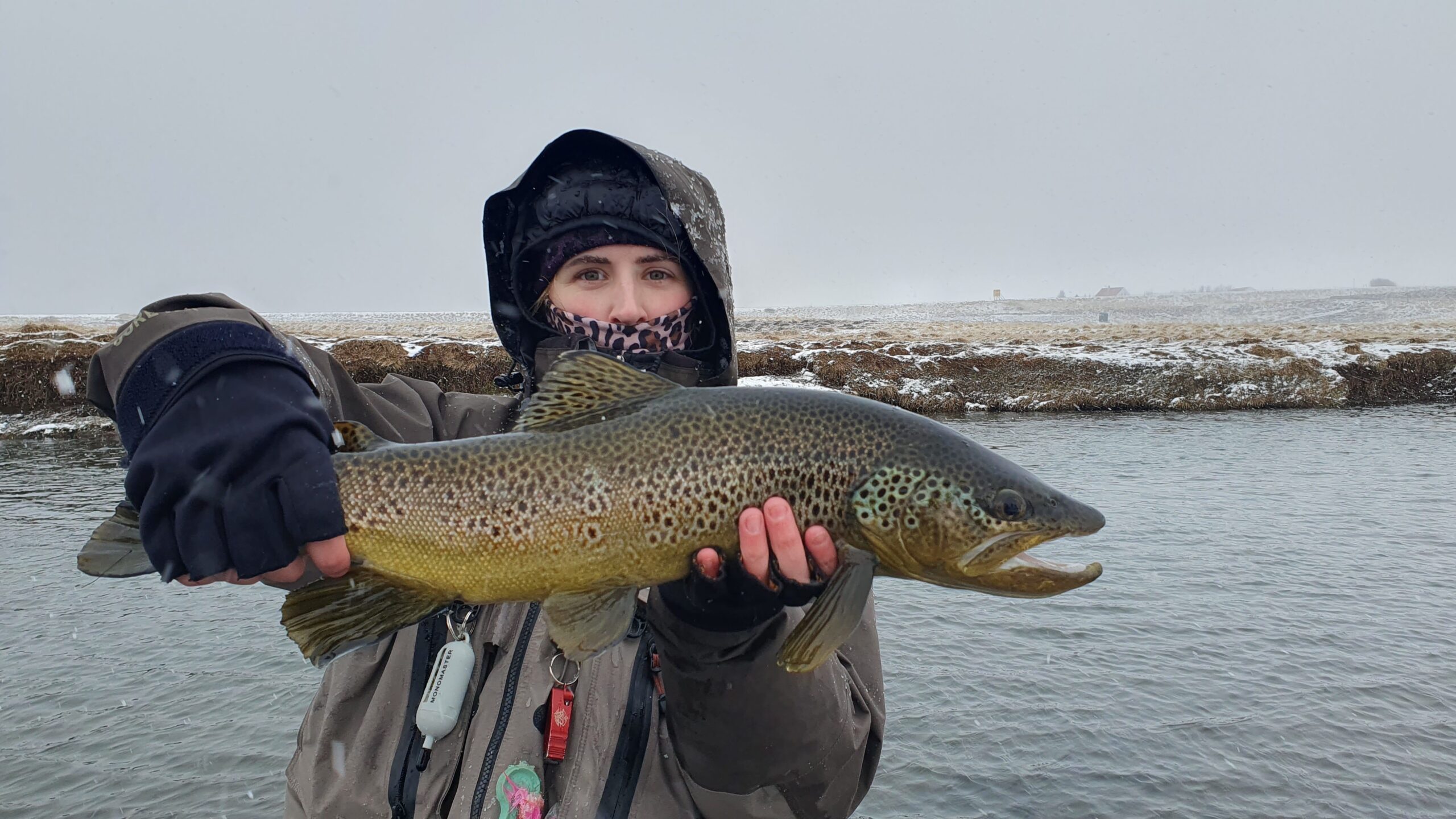
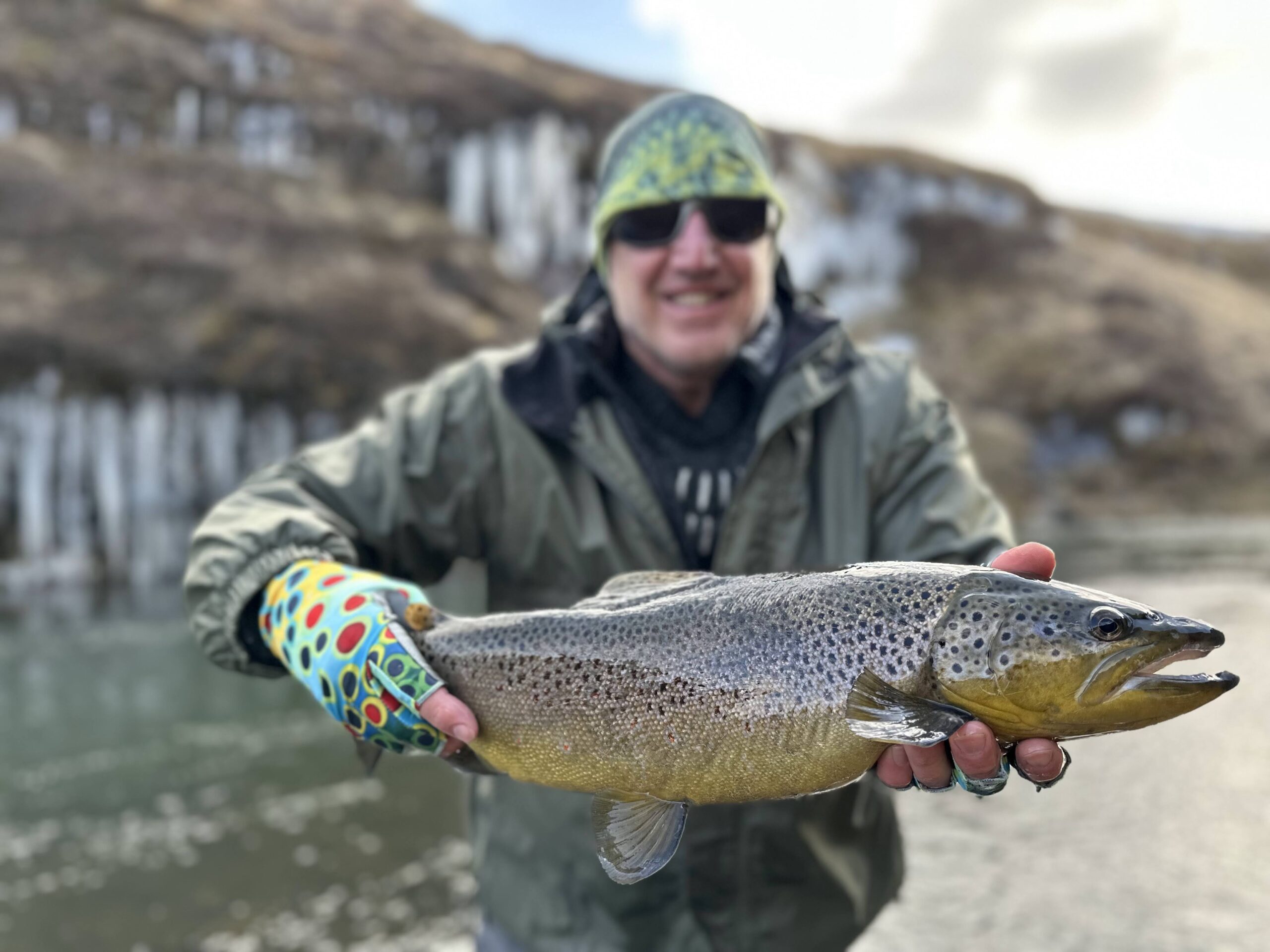
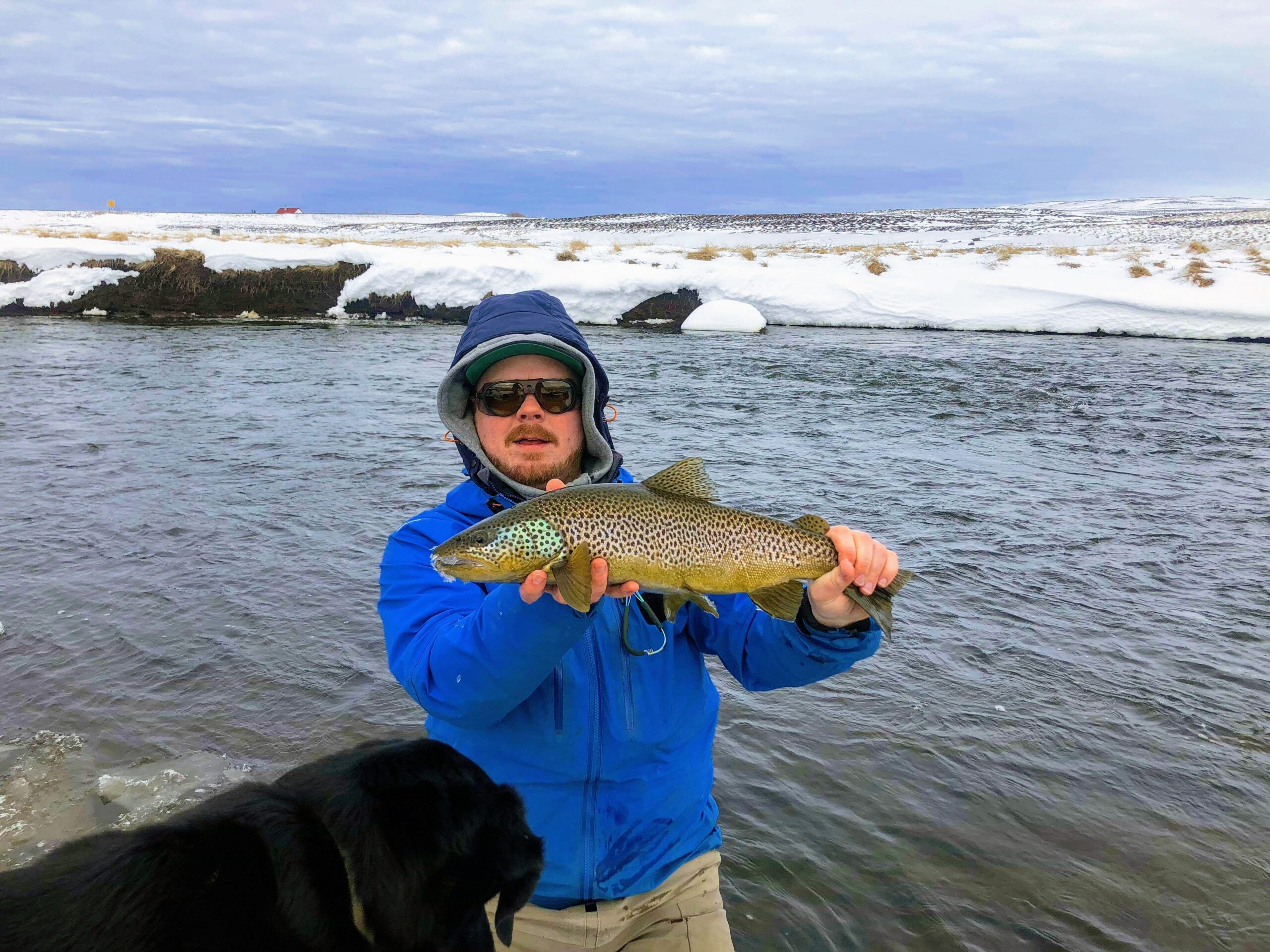
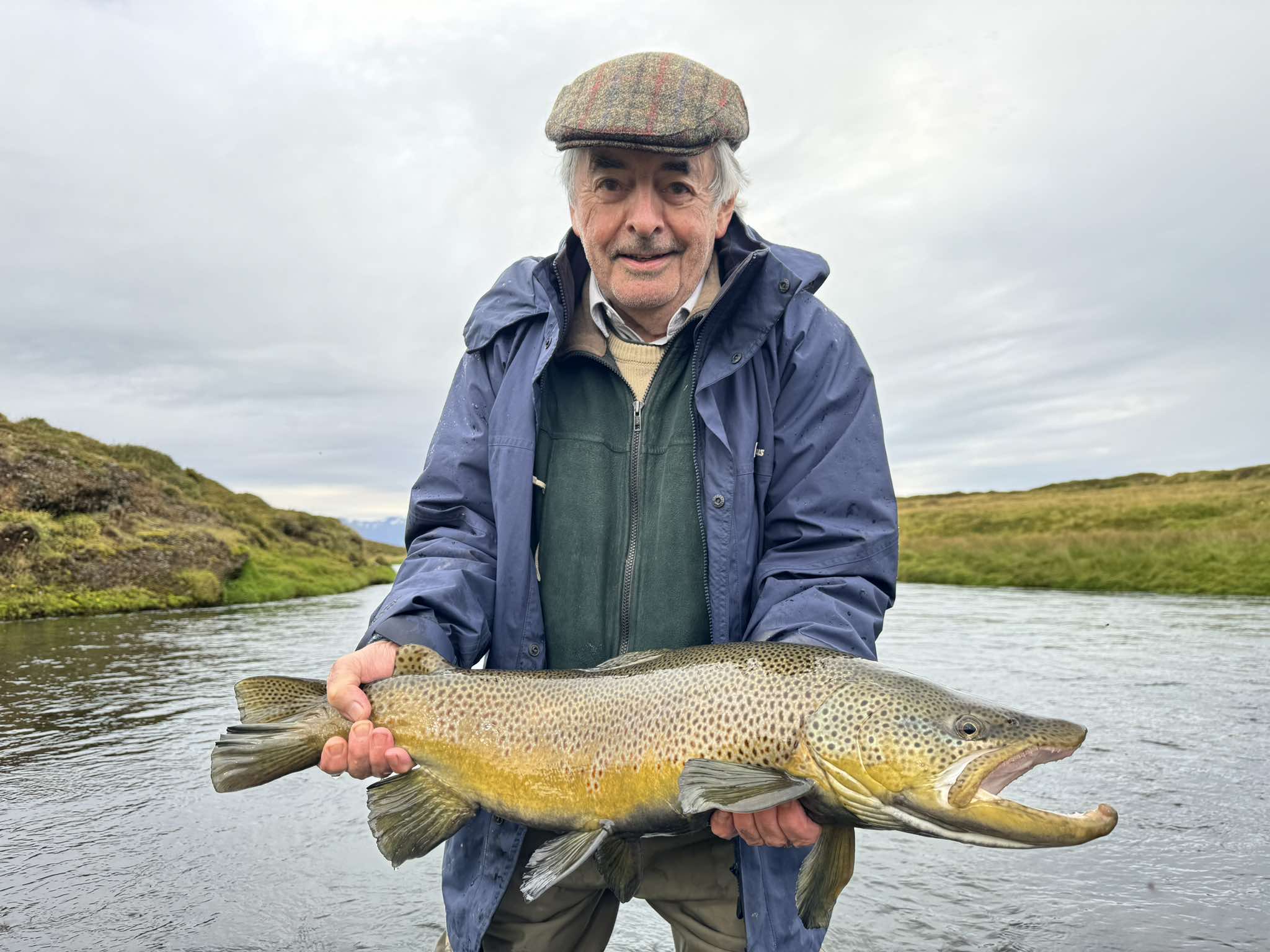
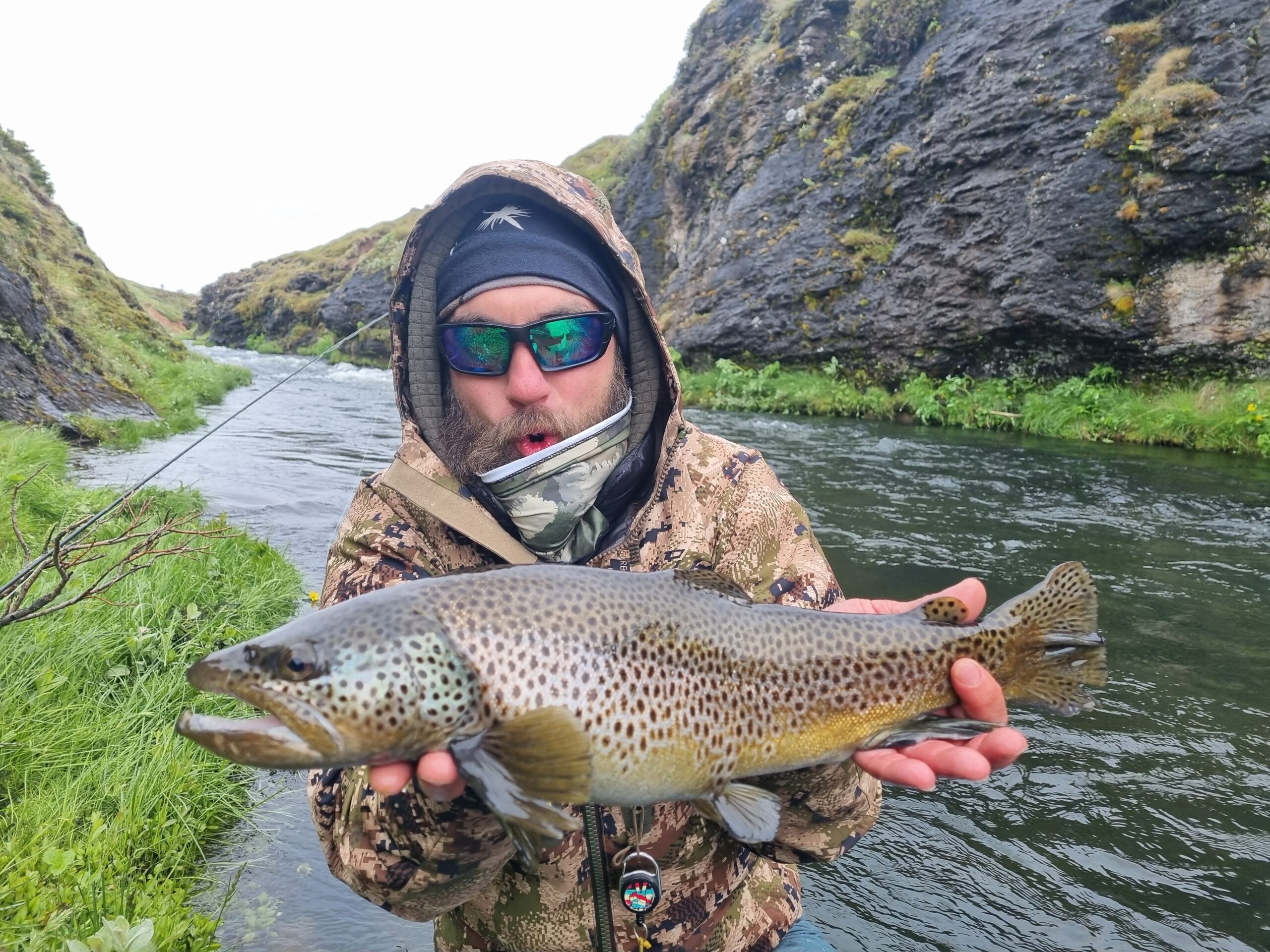

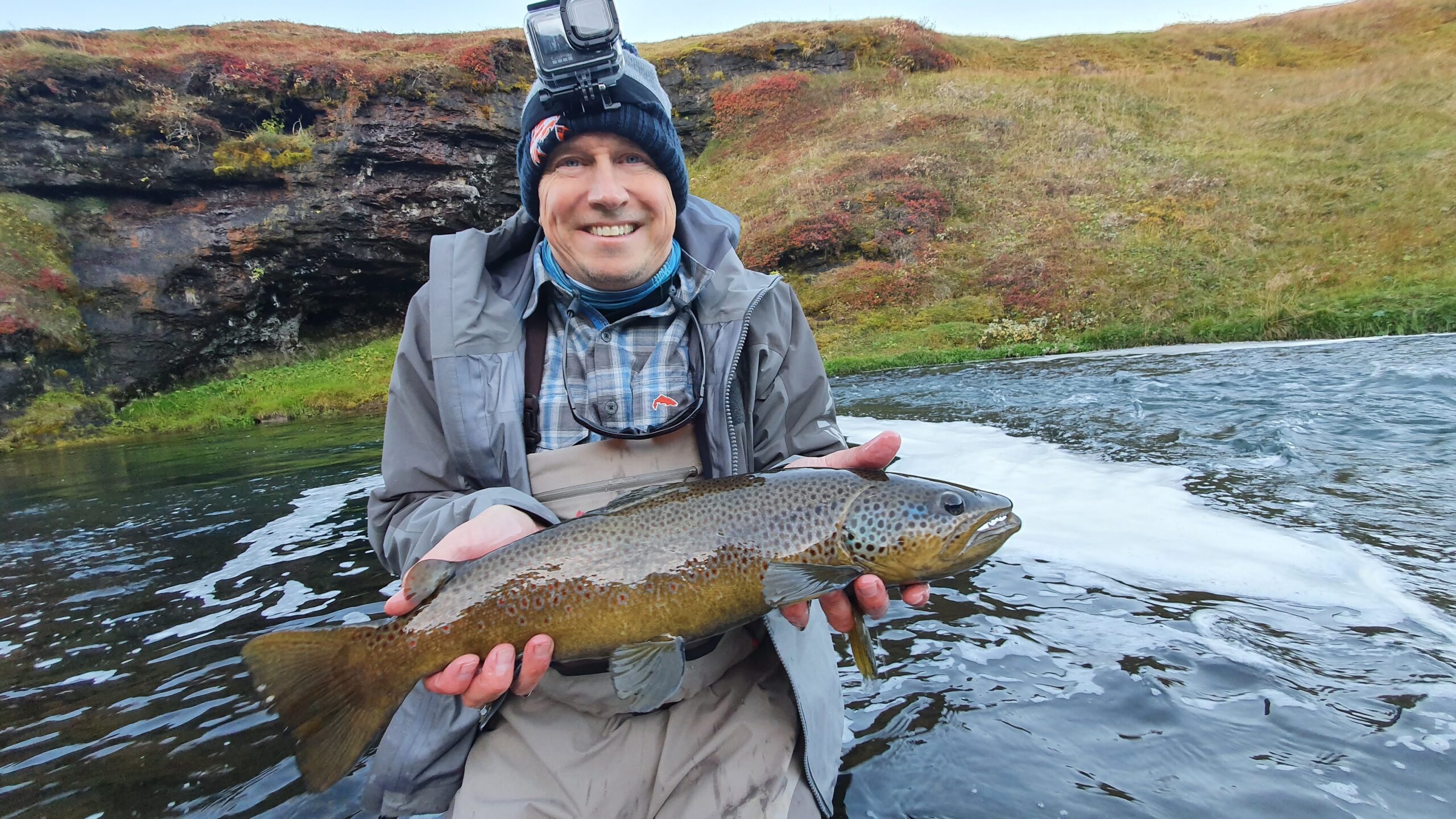
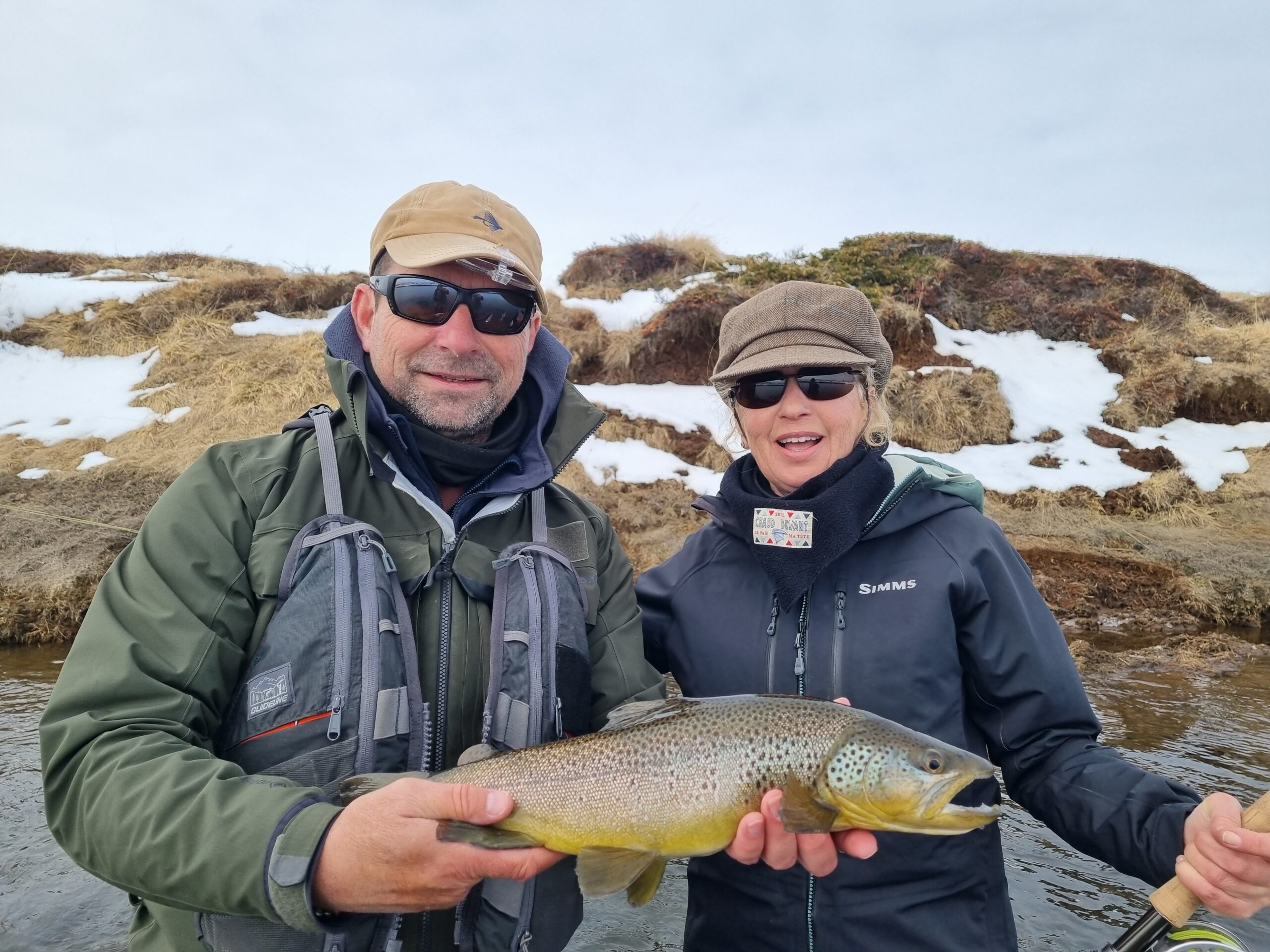
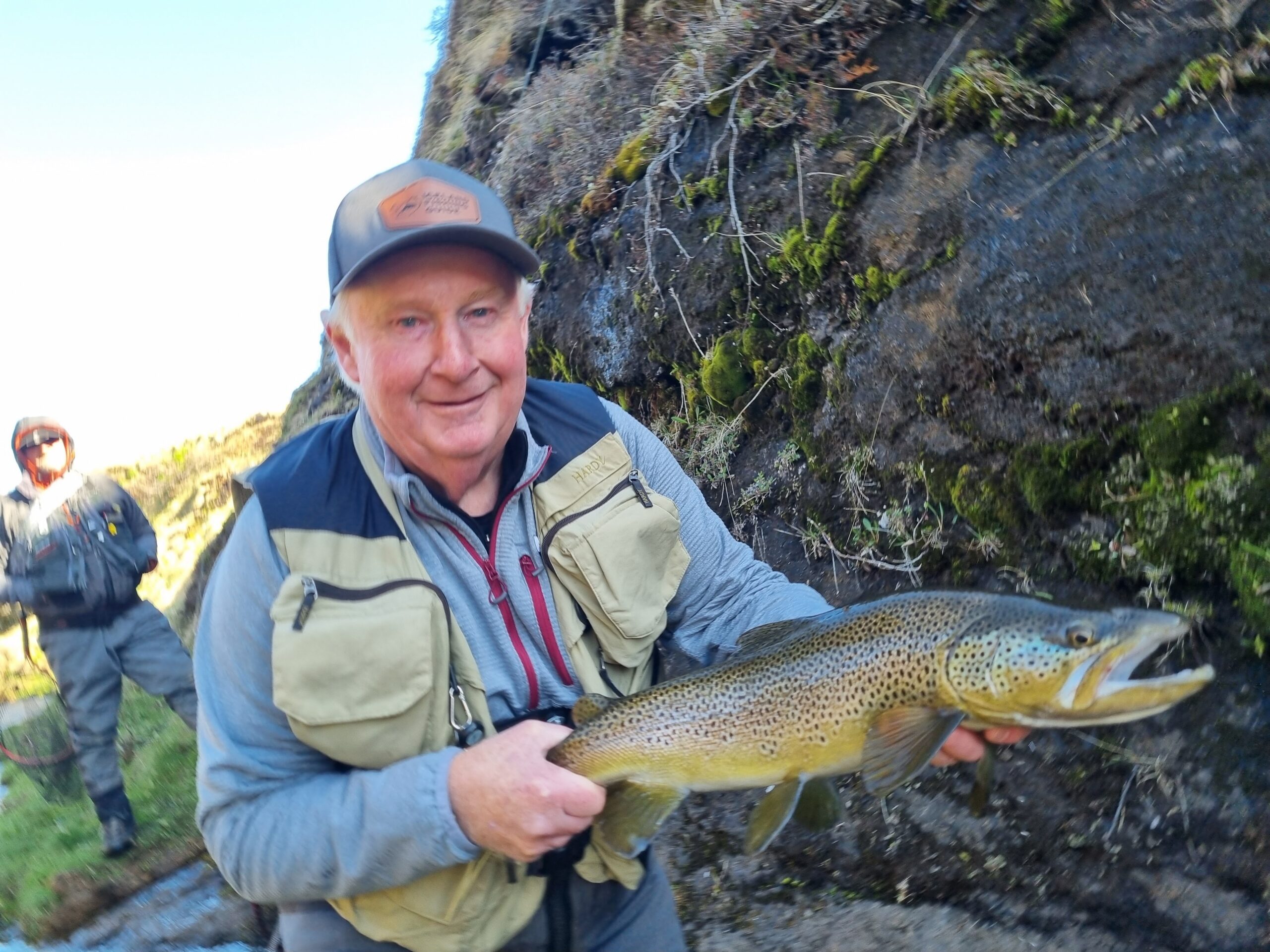
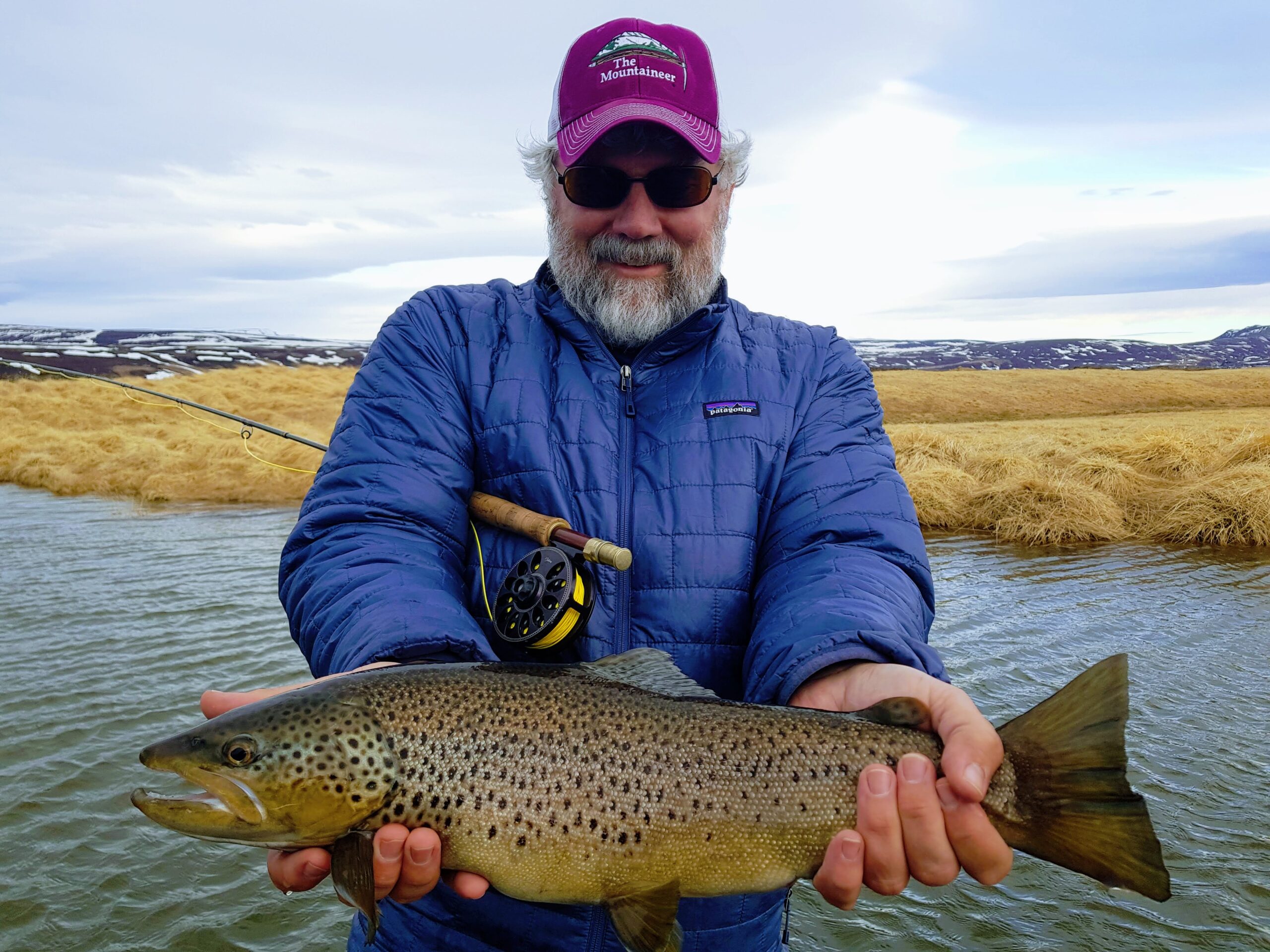
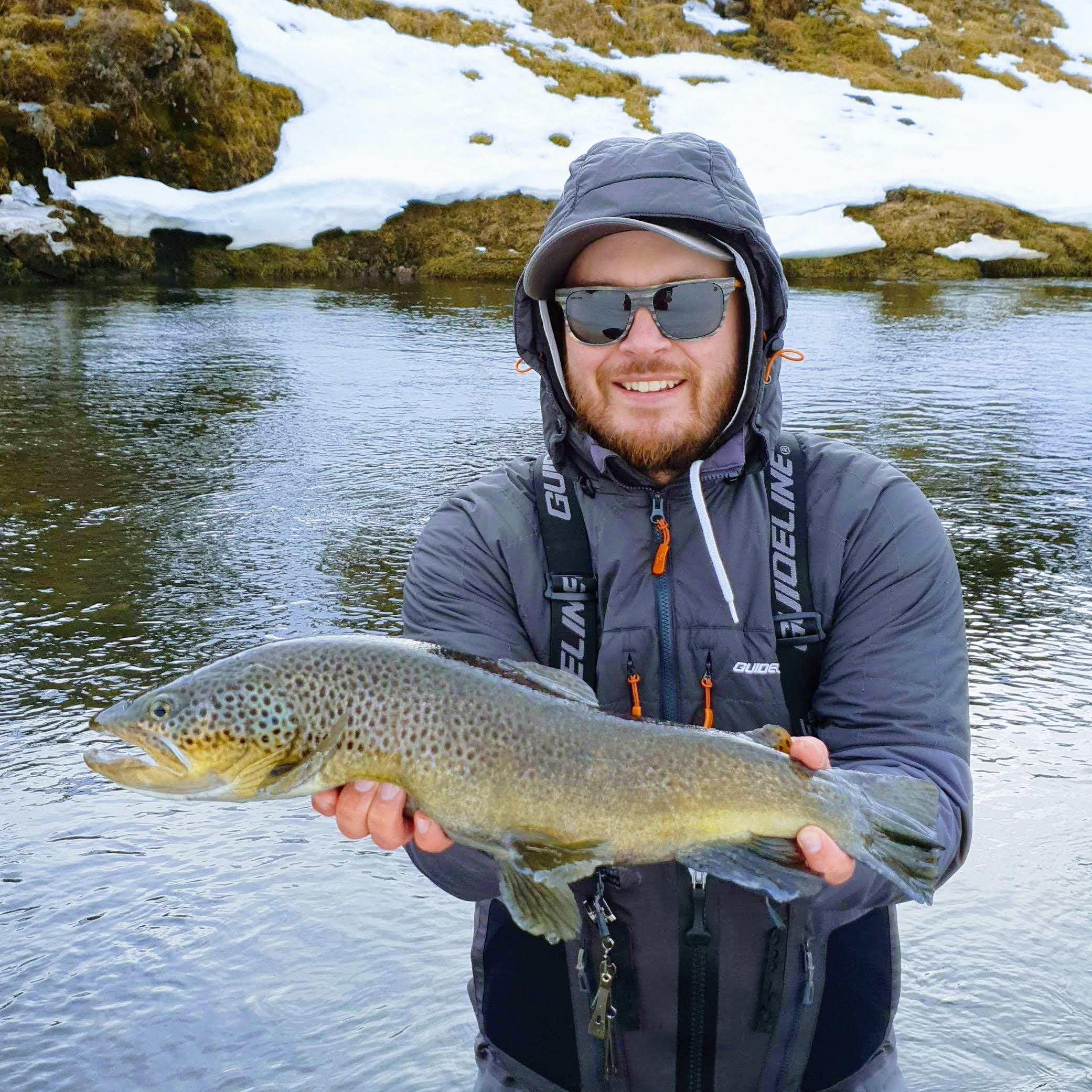
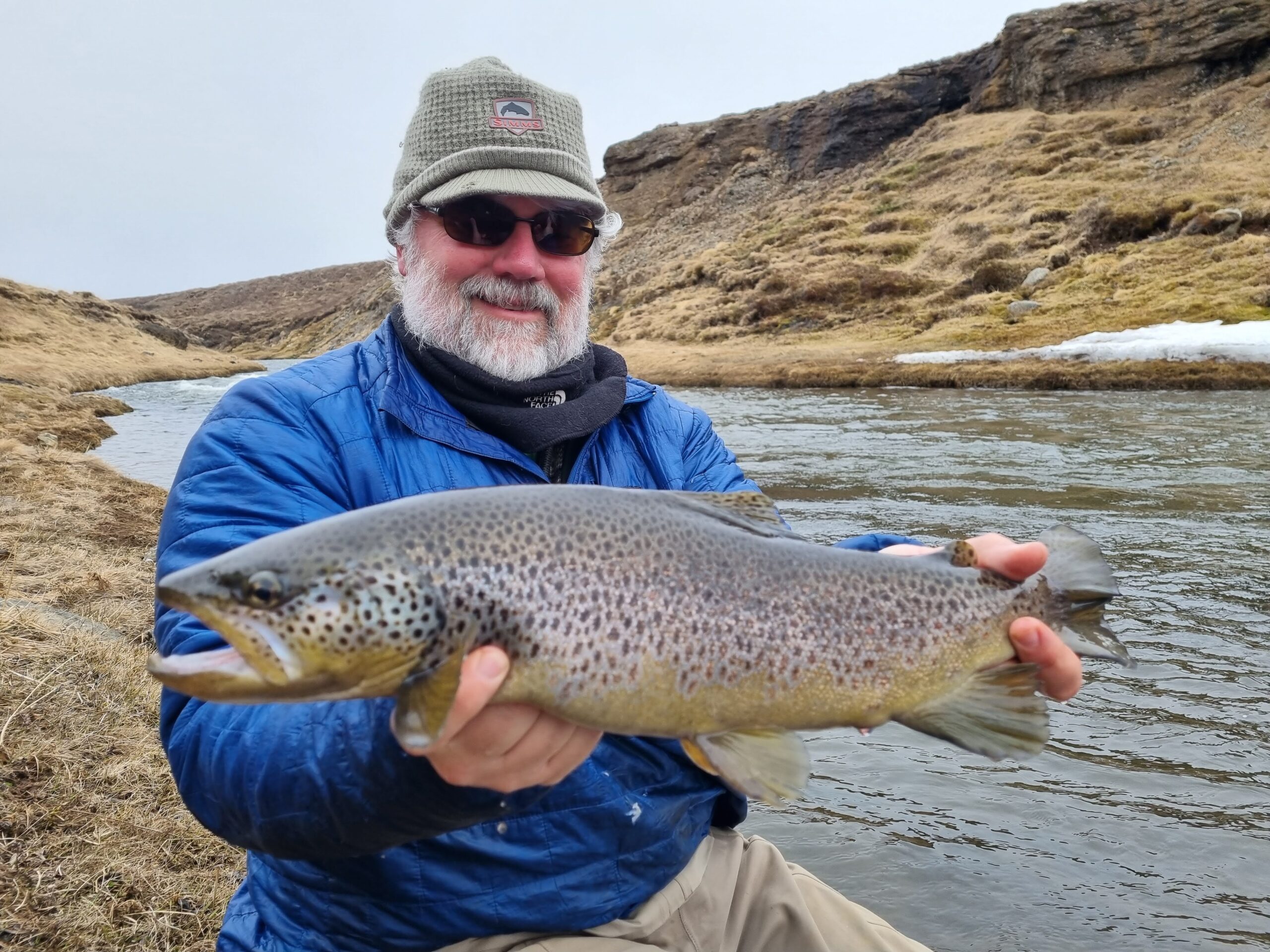
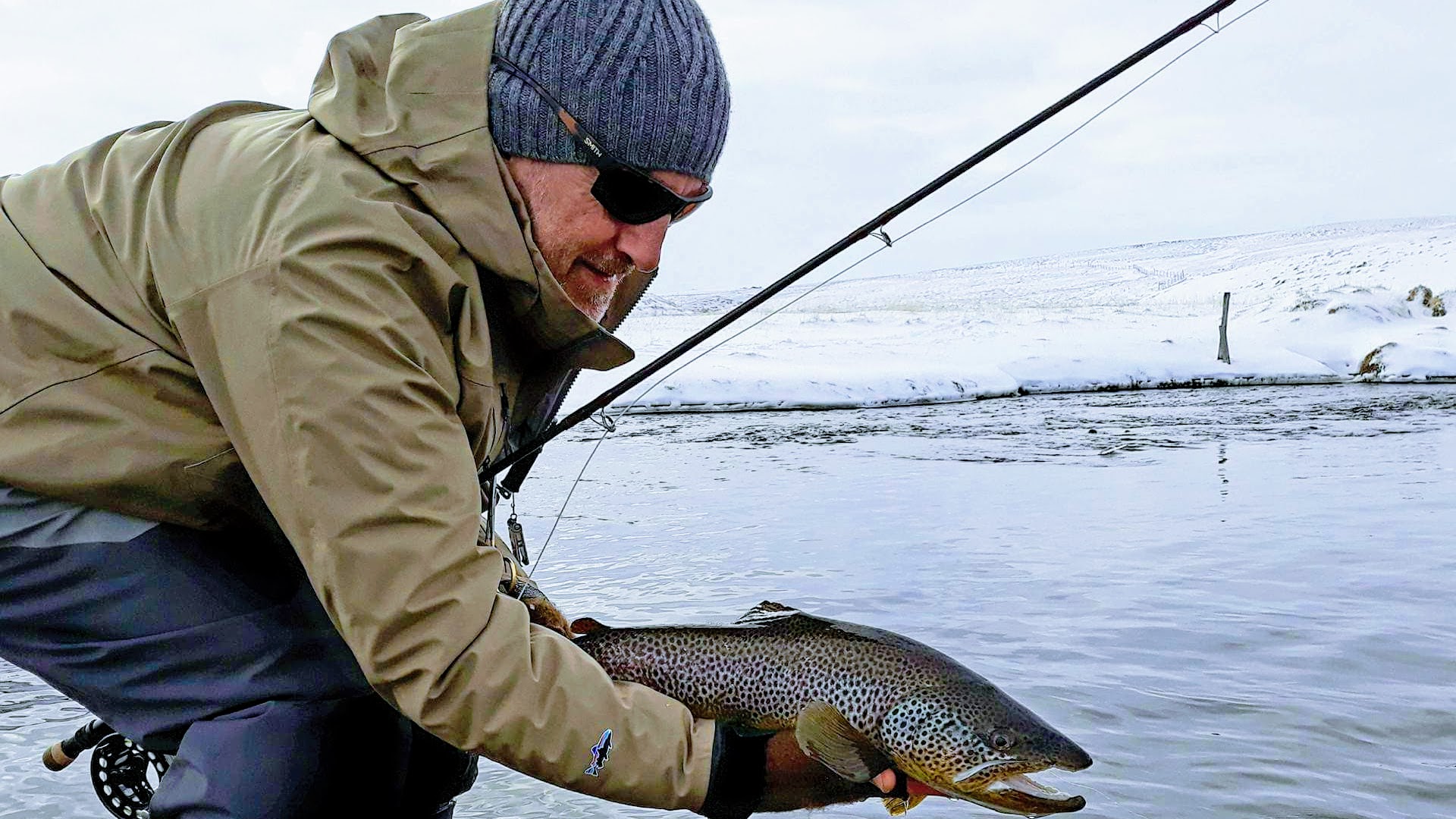
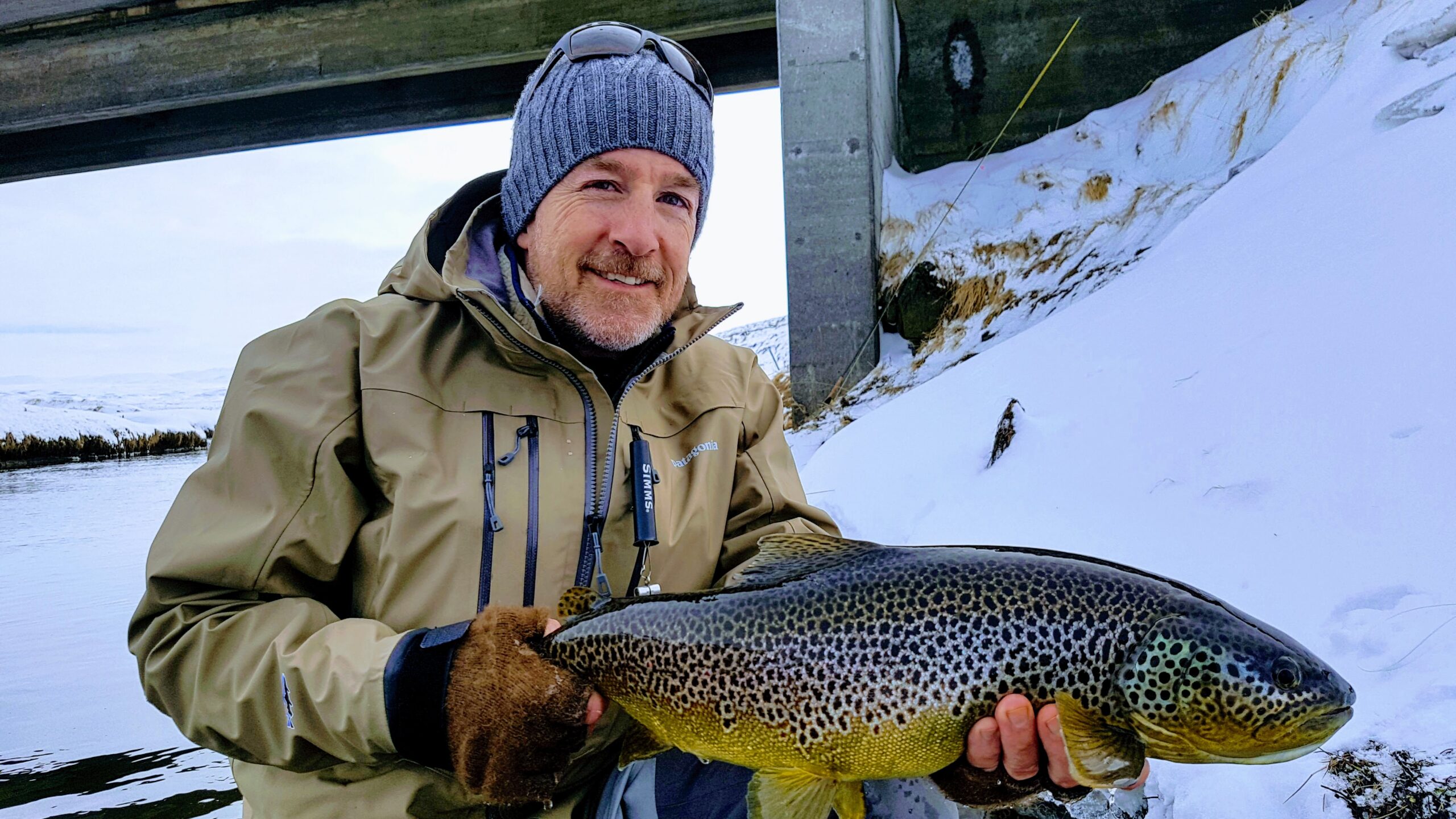
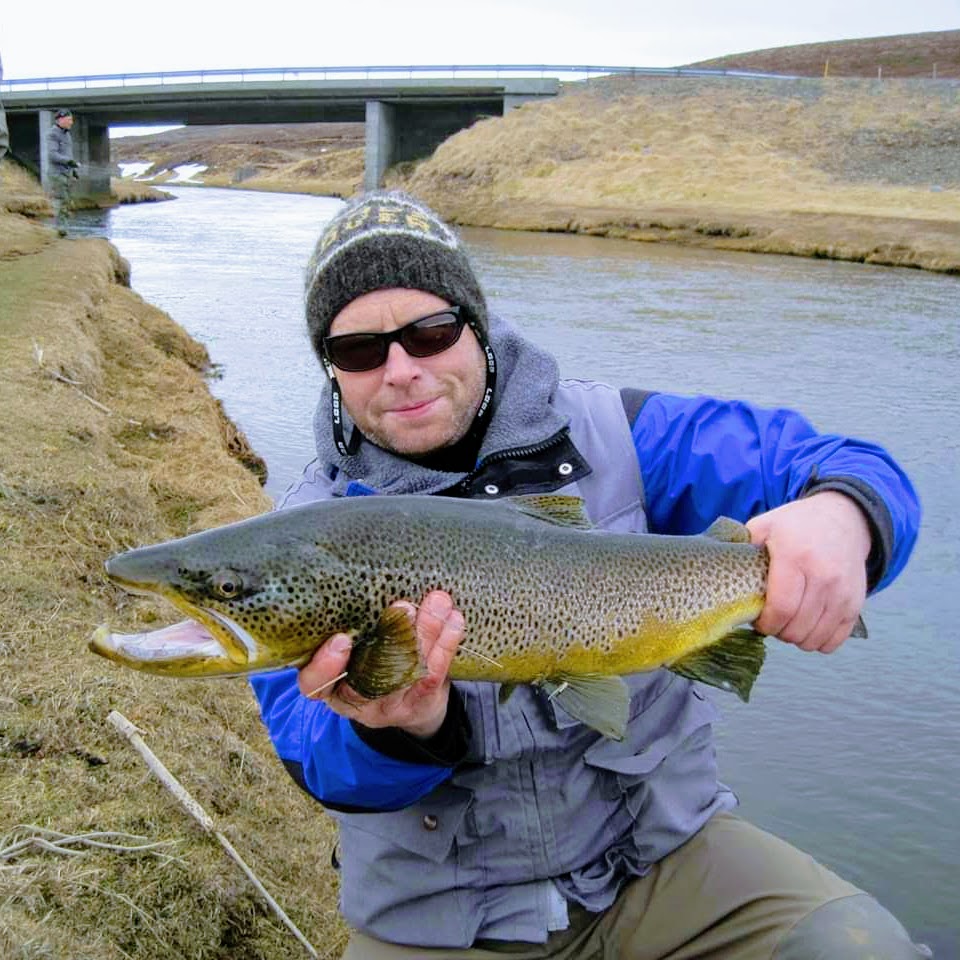
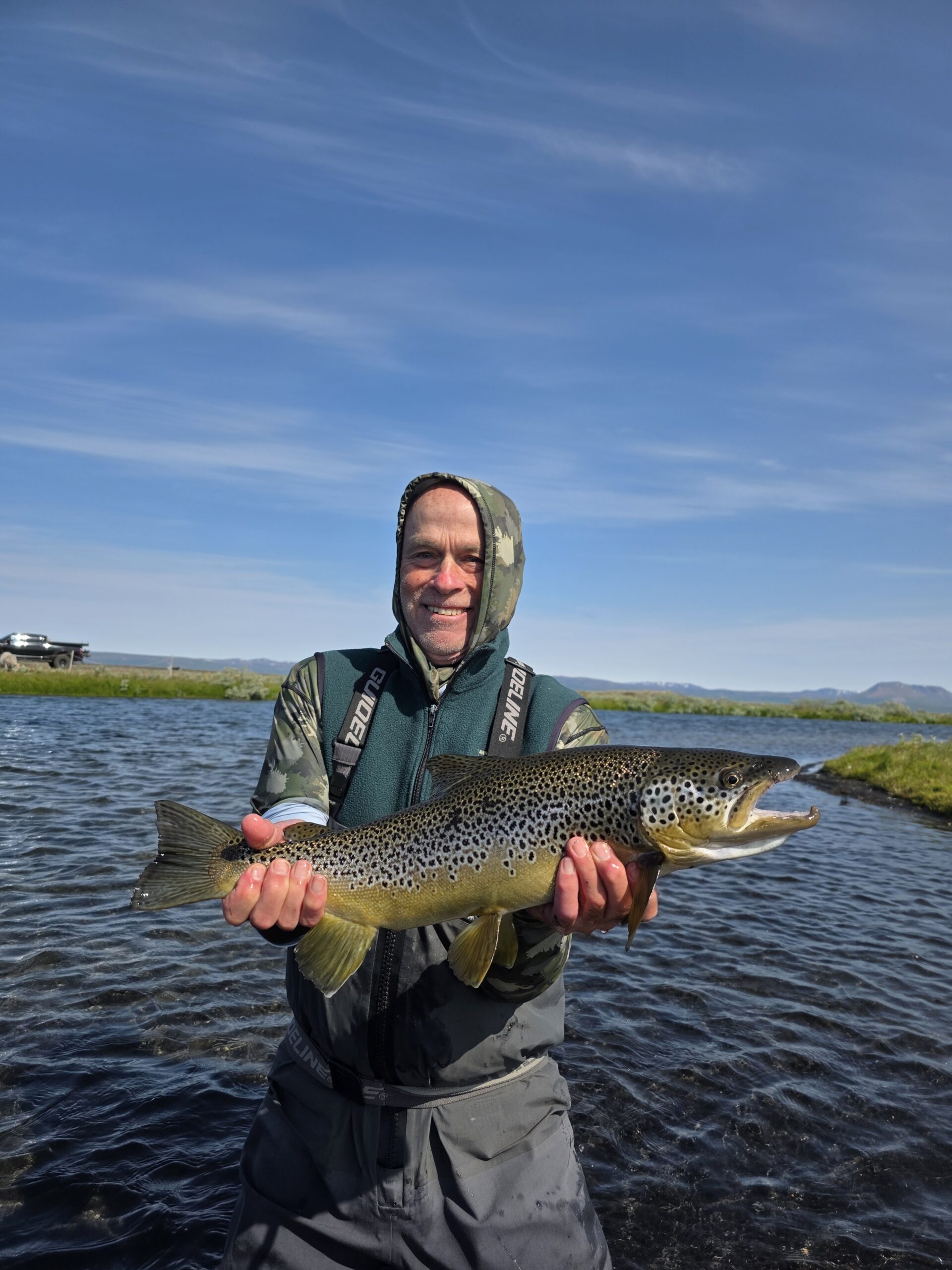
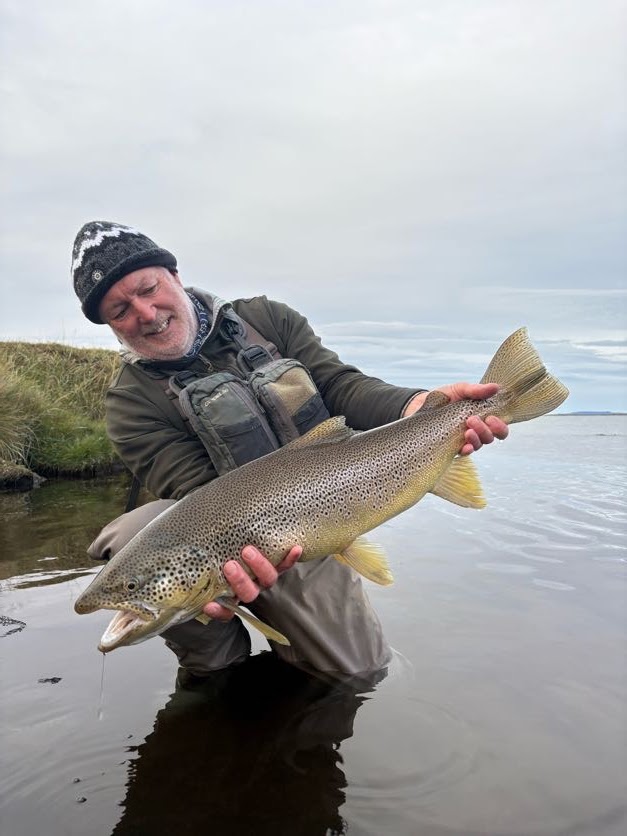
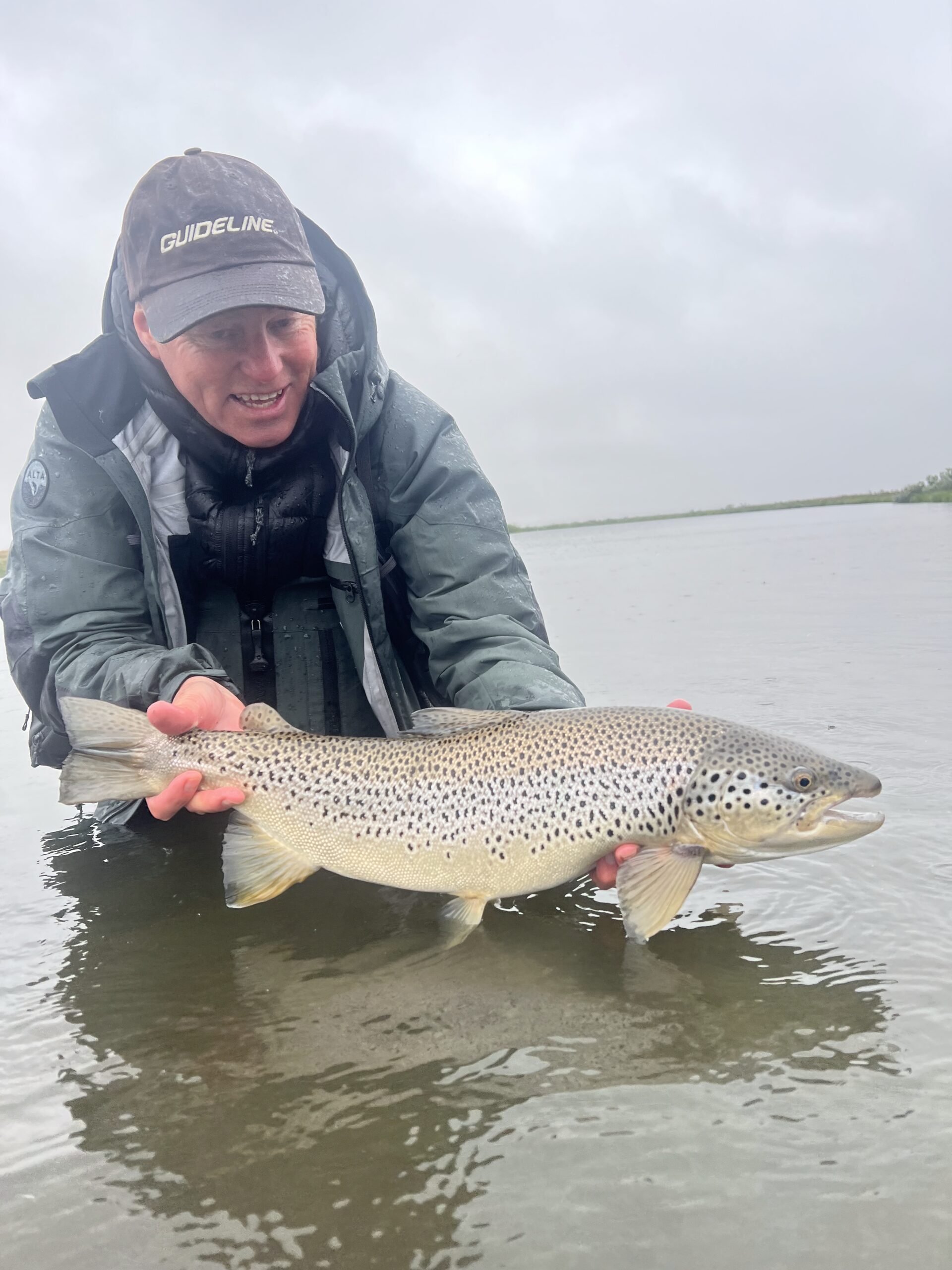
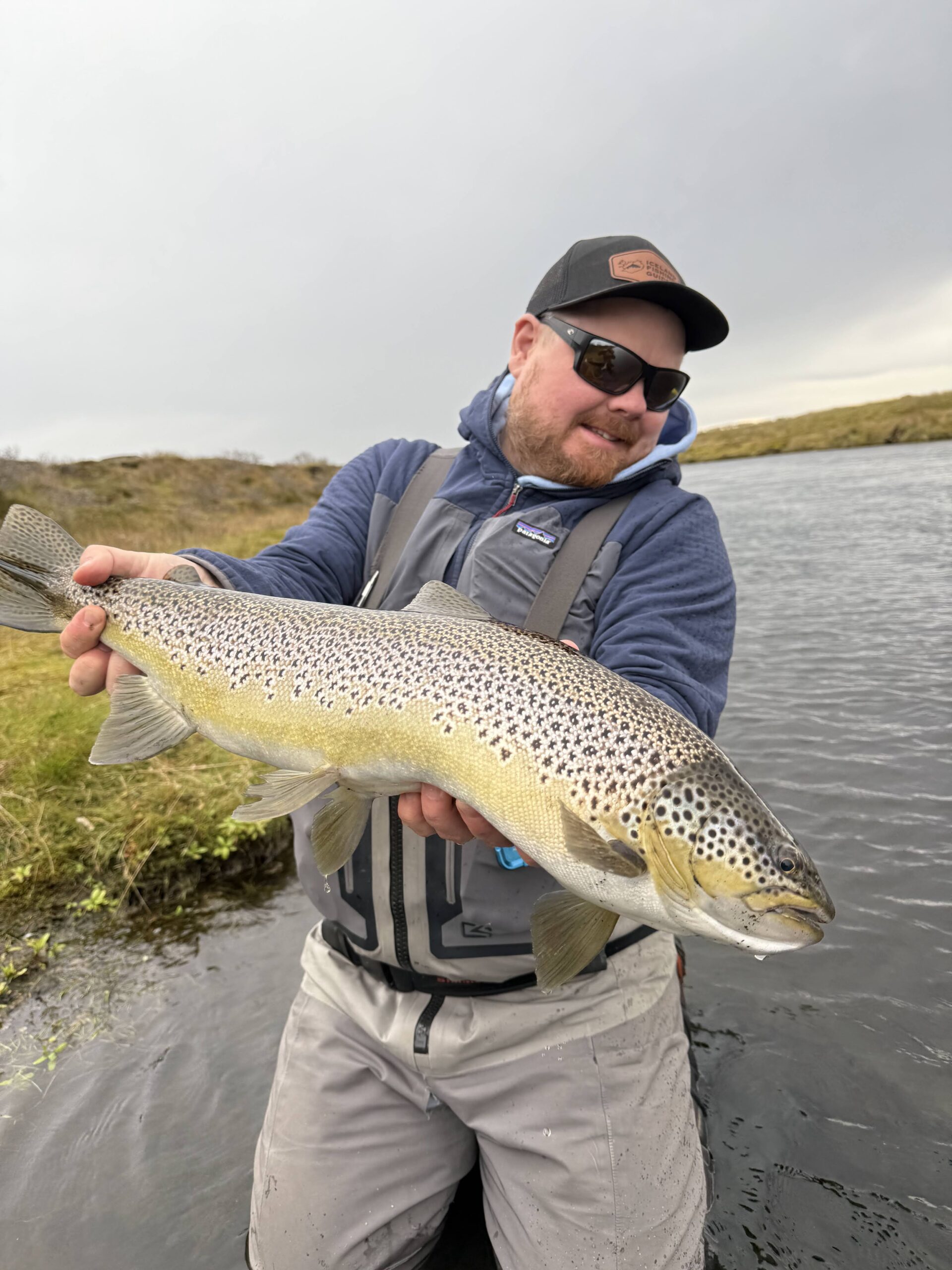
A few photos form spring fishing on river Mýrarkvísl
Reykjadalsá
Reykjadalsá is one of Northern Iceland’s most productive trout rivers.
Stretching about 35 km, the river begins by flowing through wide plains, offering ideal conditions for dry fly fishing later in the season. As it continues upstream, it becomes faster and eventually cuts through a spectacular canyon.
In spring we mainly target numbers of trout here, typically in the 14–19 inch range, though fish over 20 inches are caught regularly.
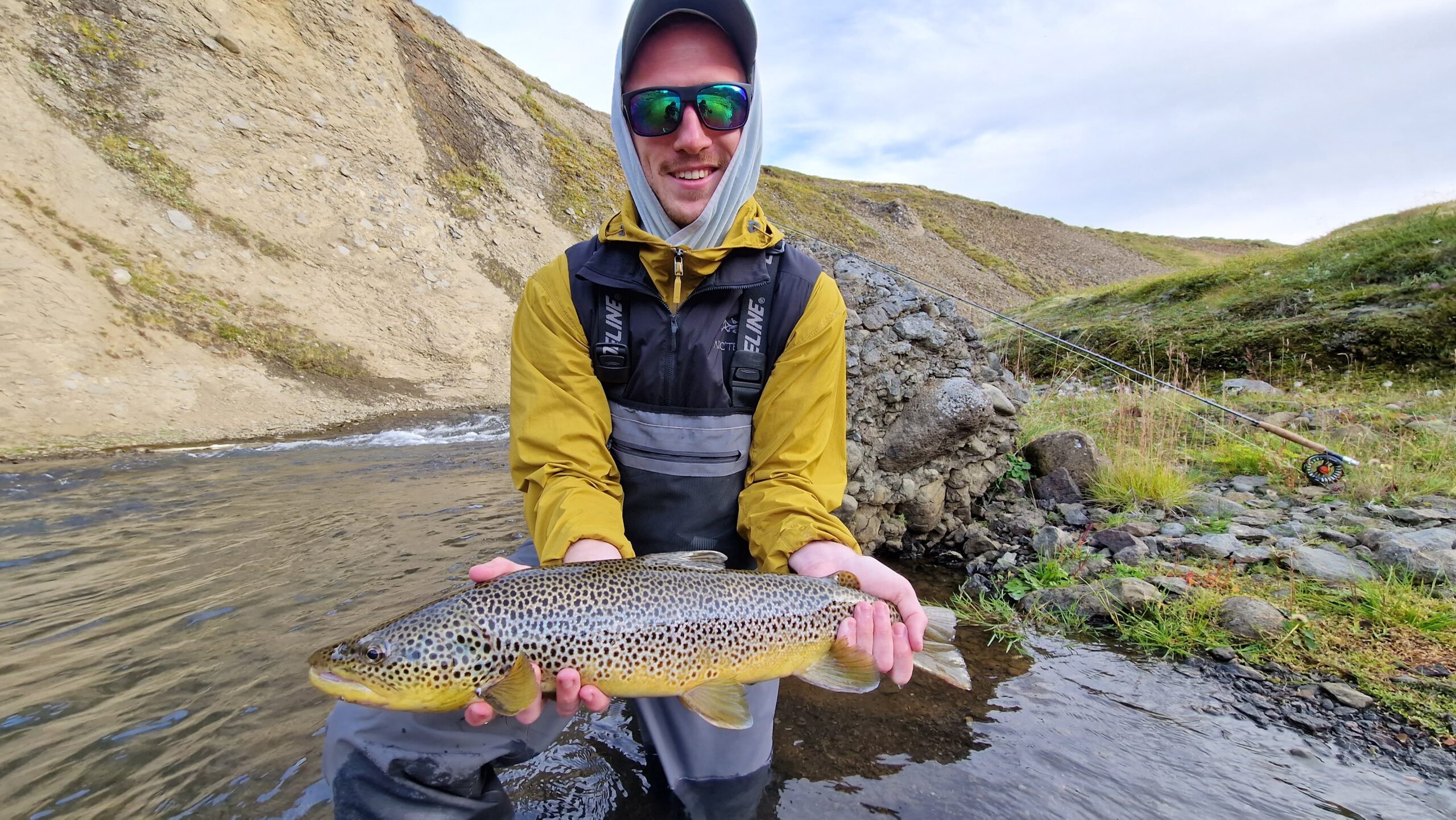
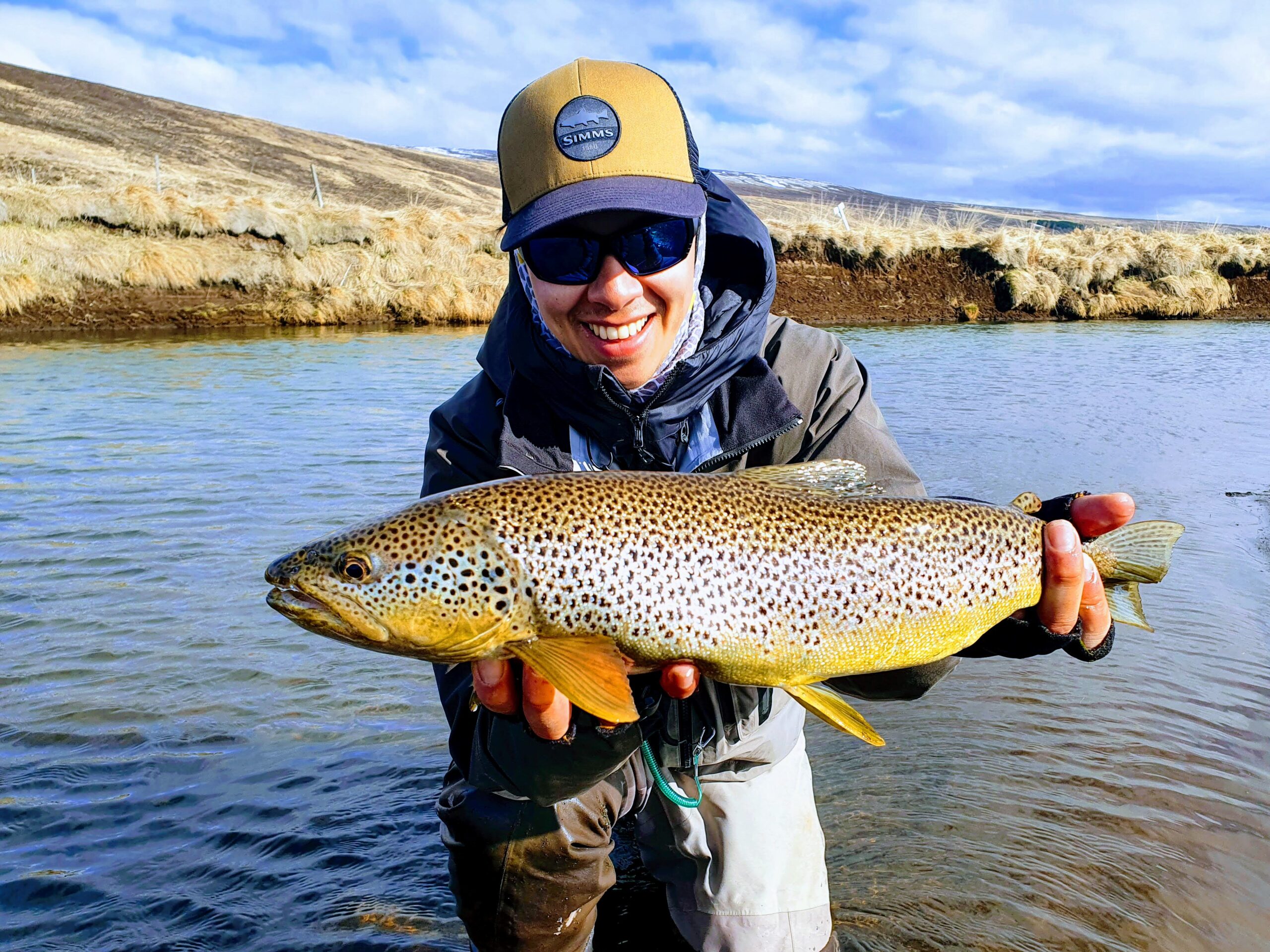
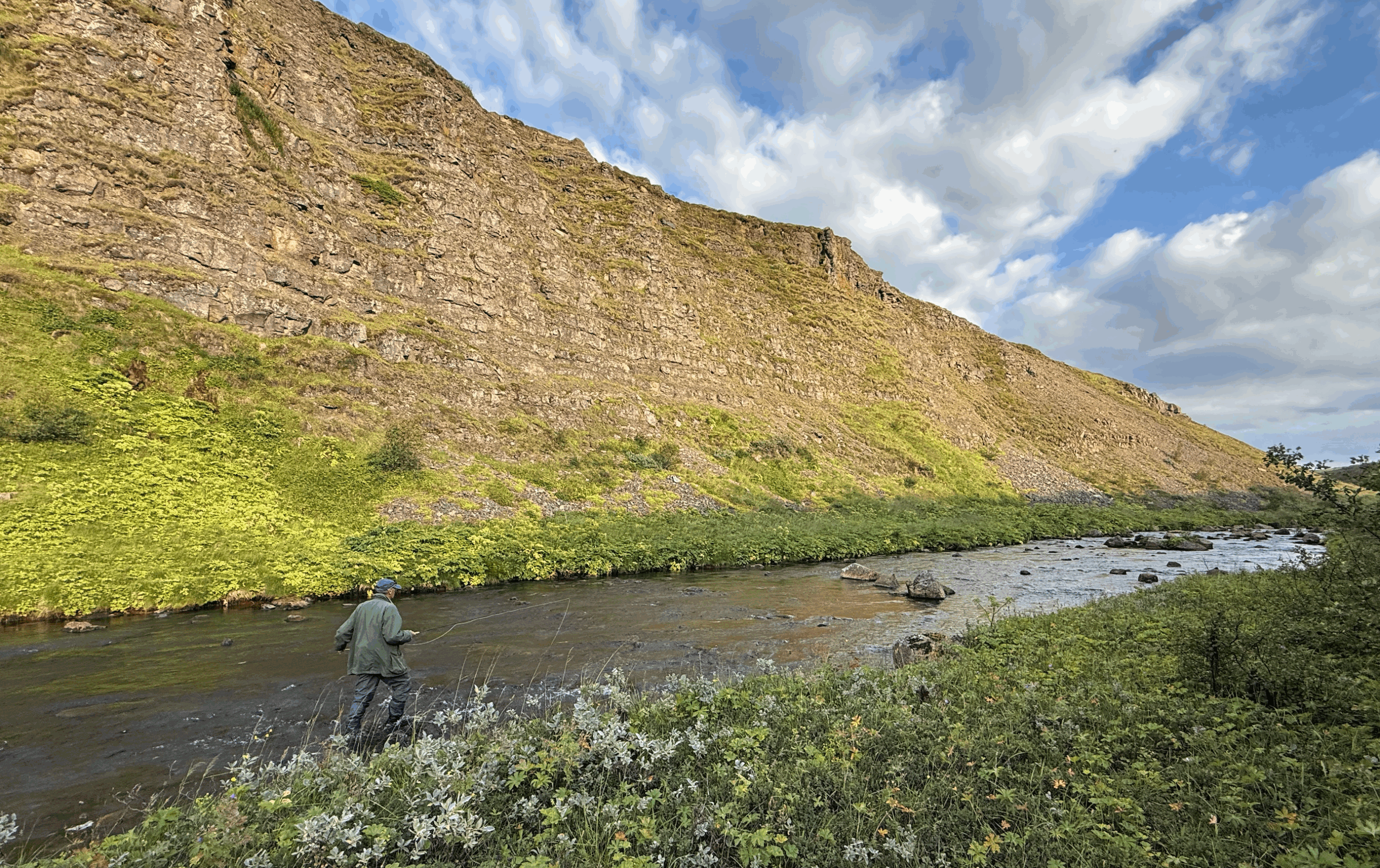
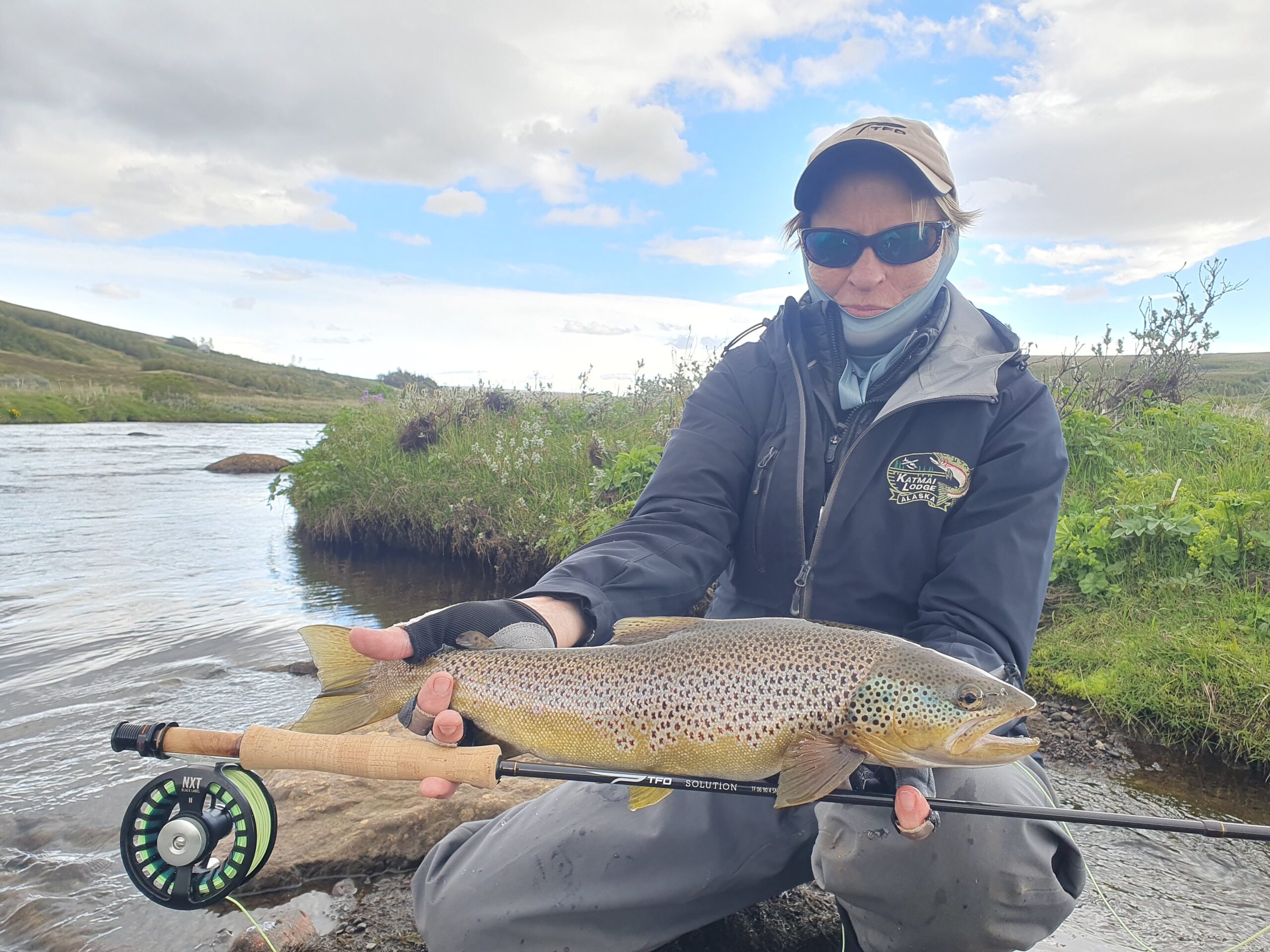
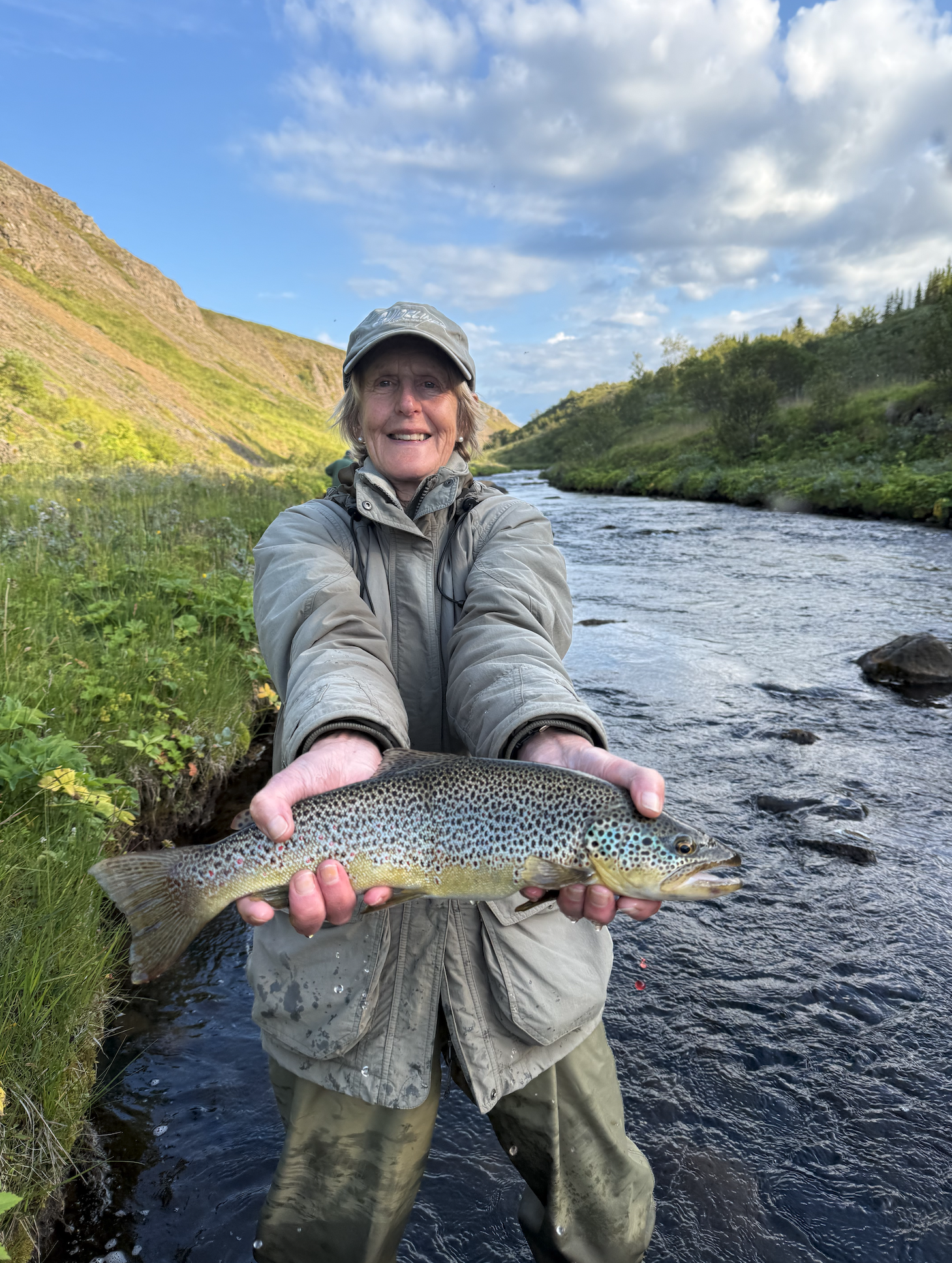
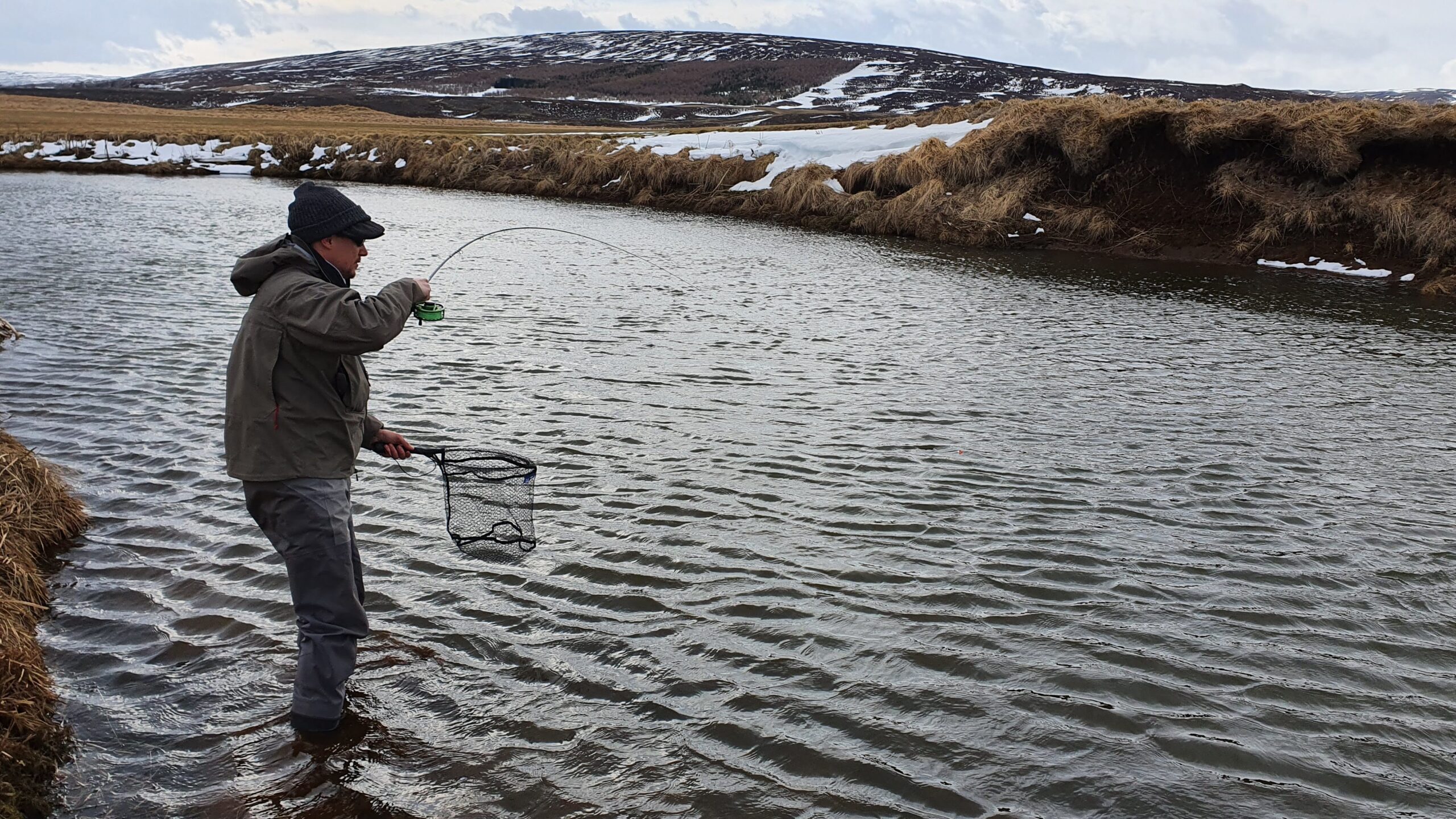
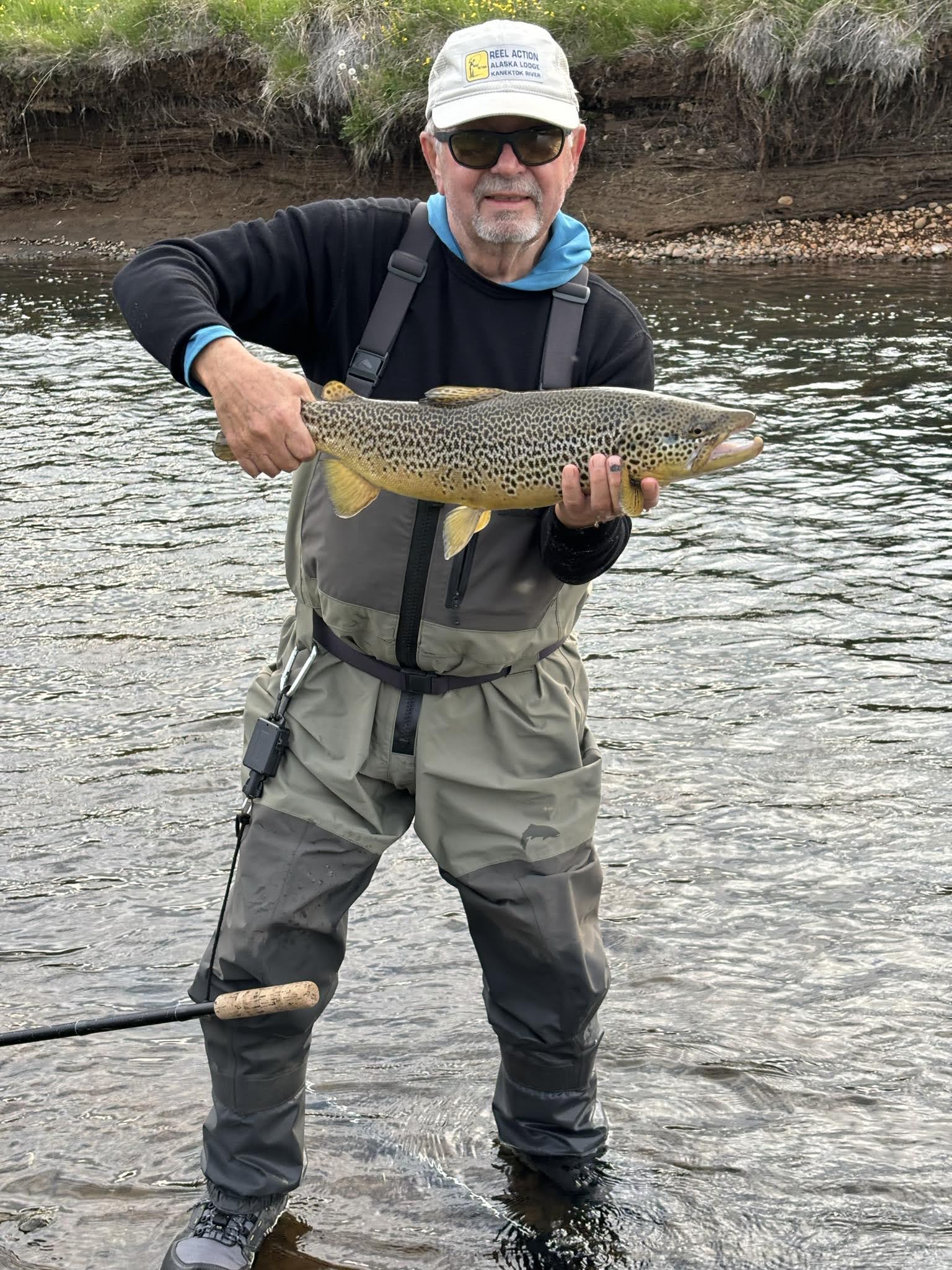
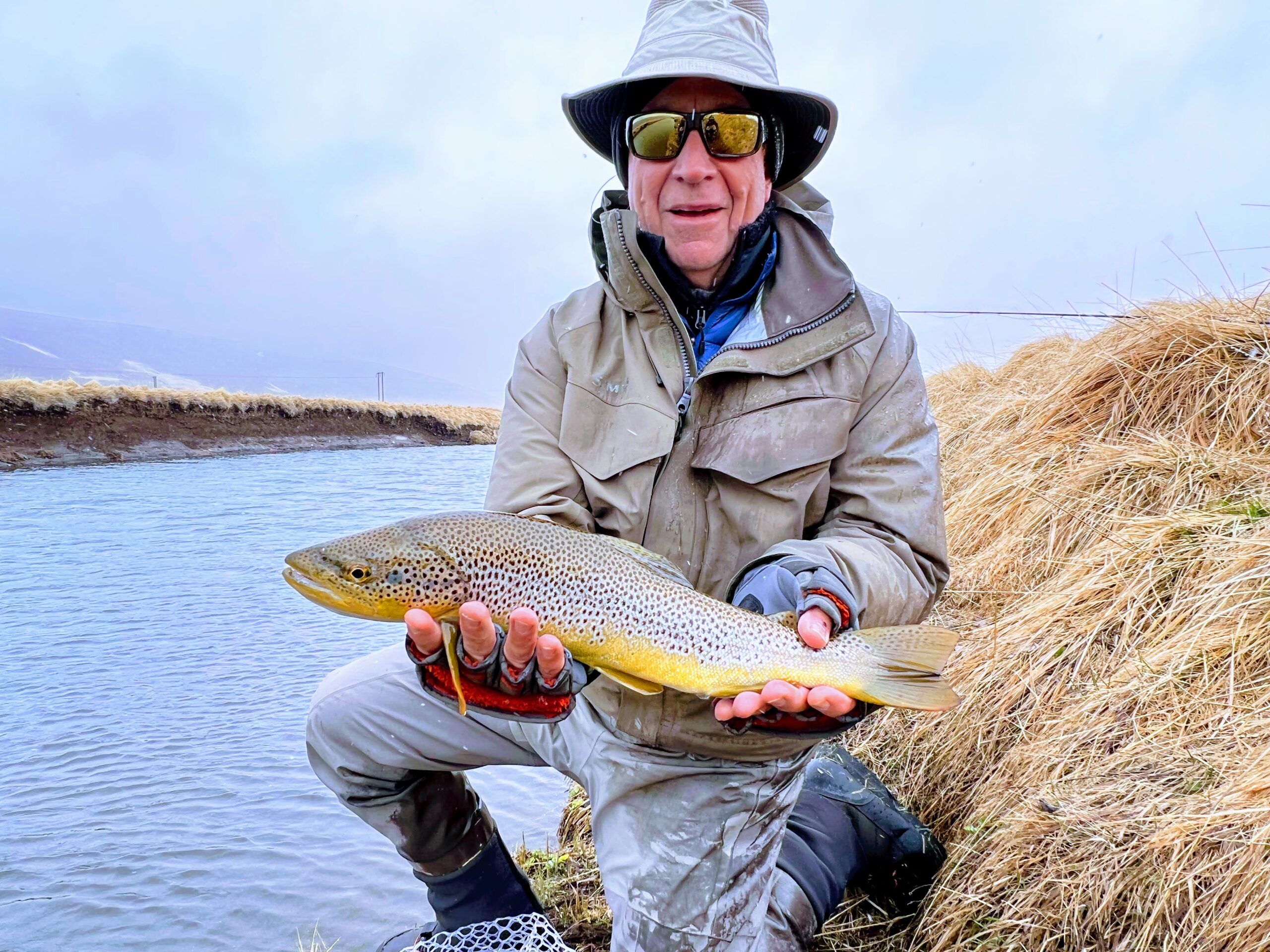
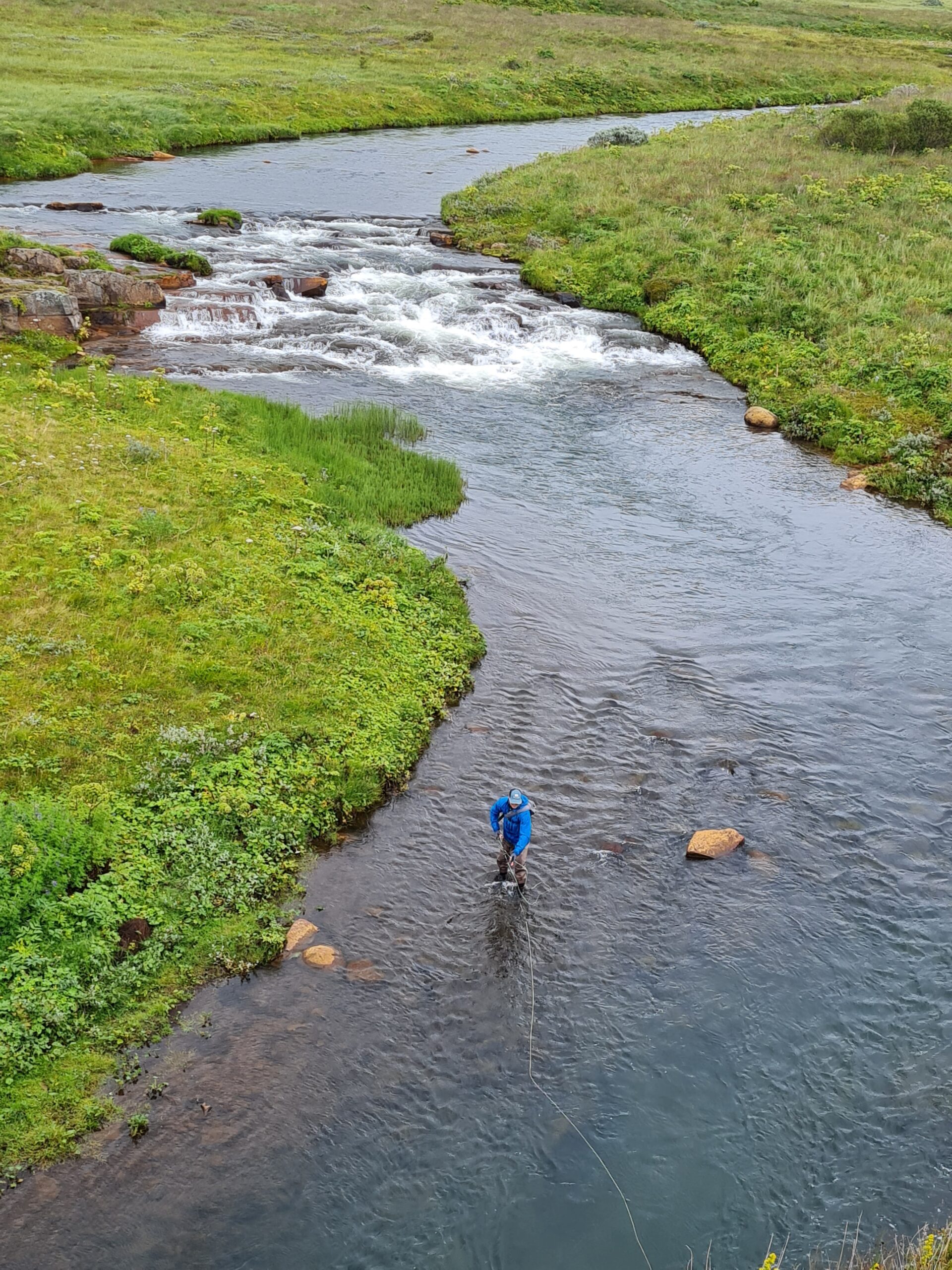
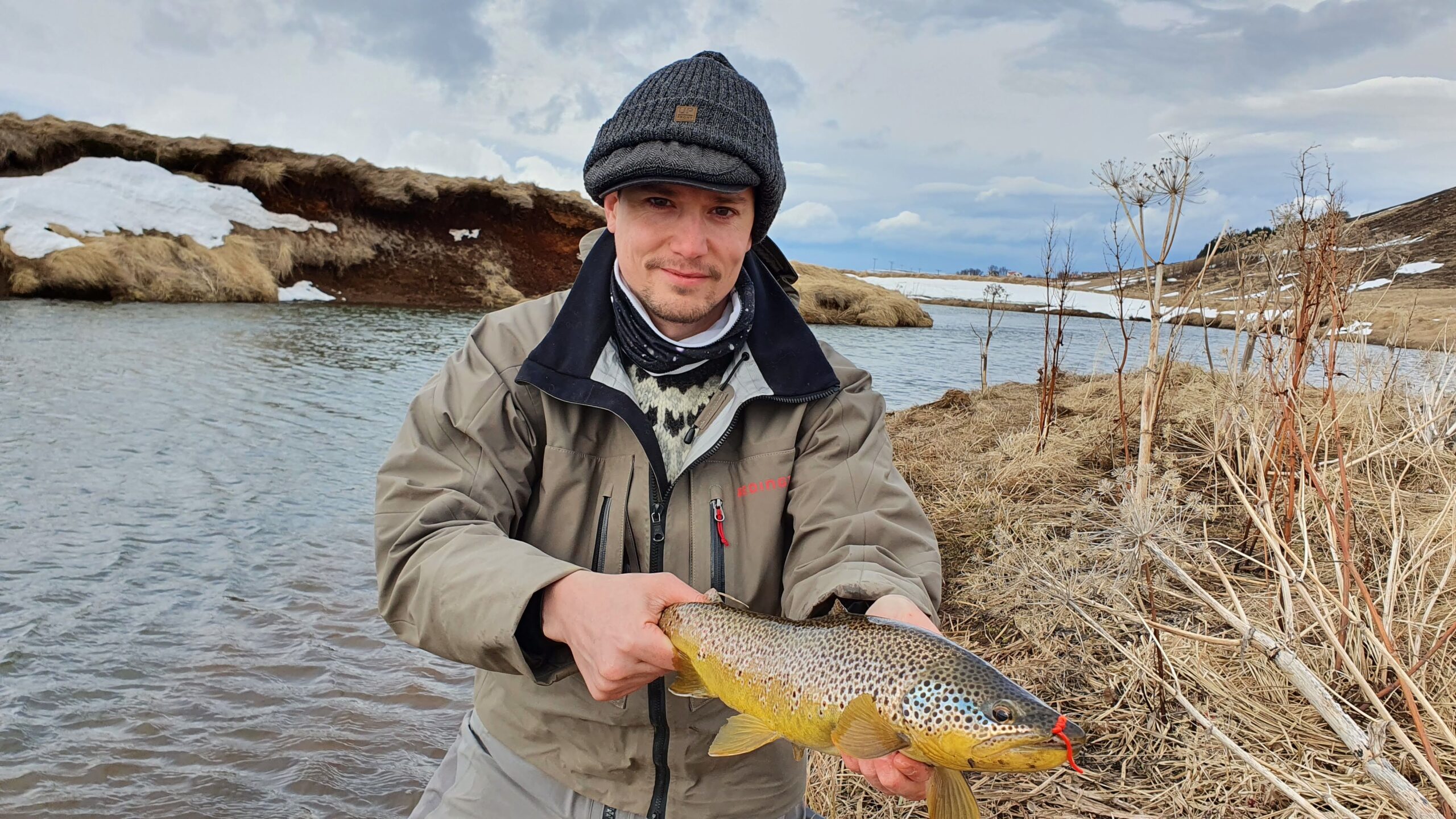

Photos from the trout fishing on river Reykjadalsá
Brunná
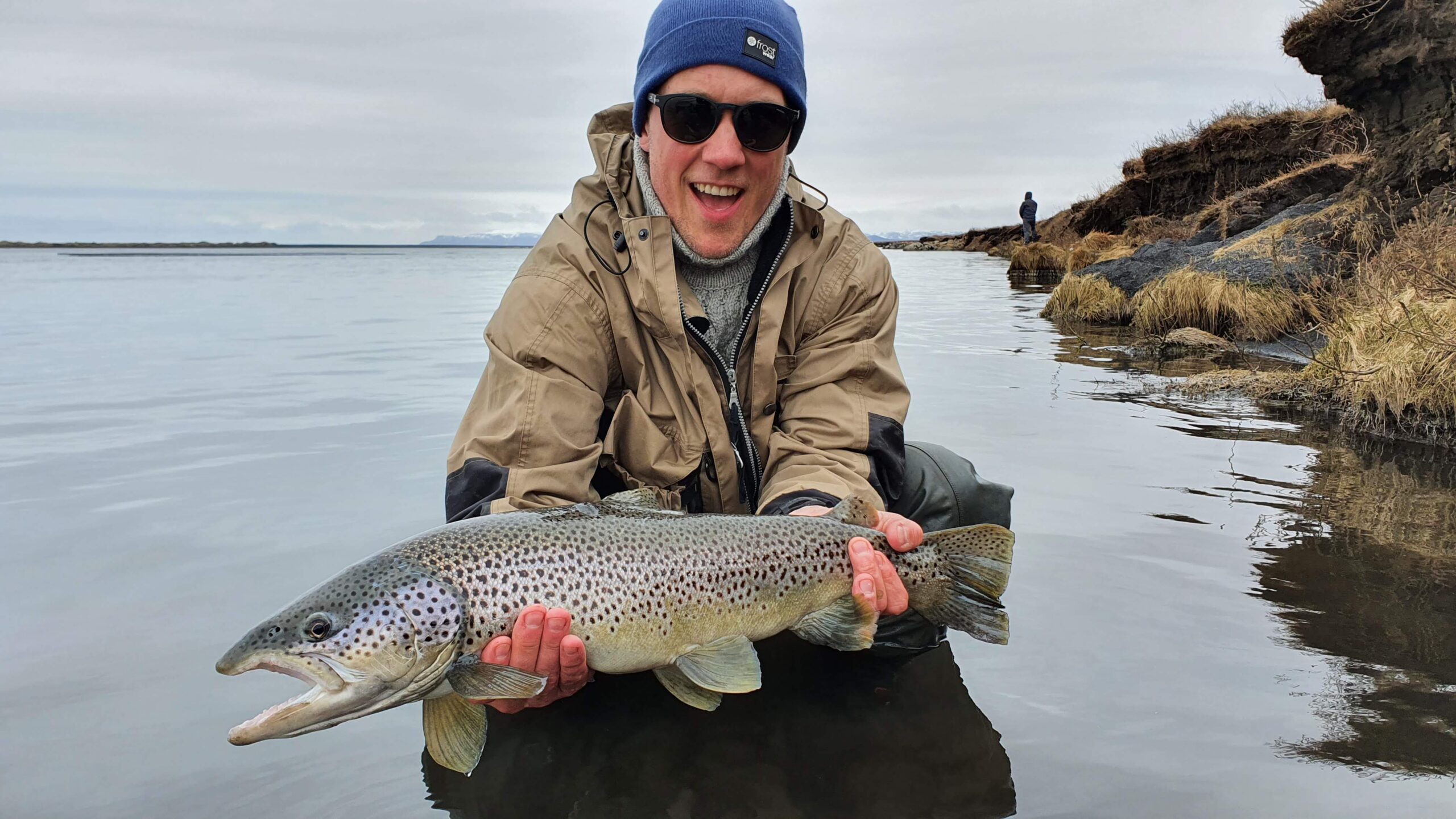
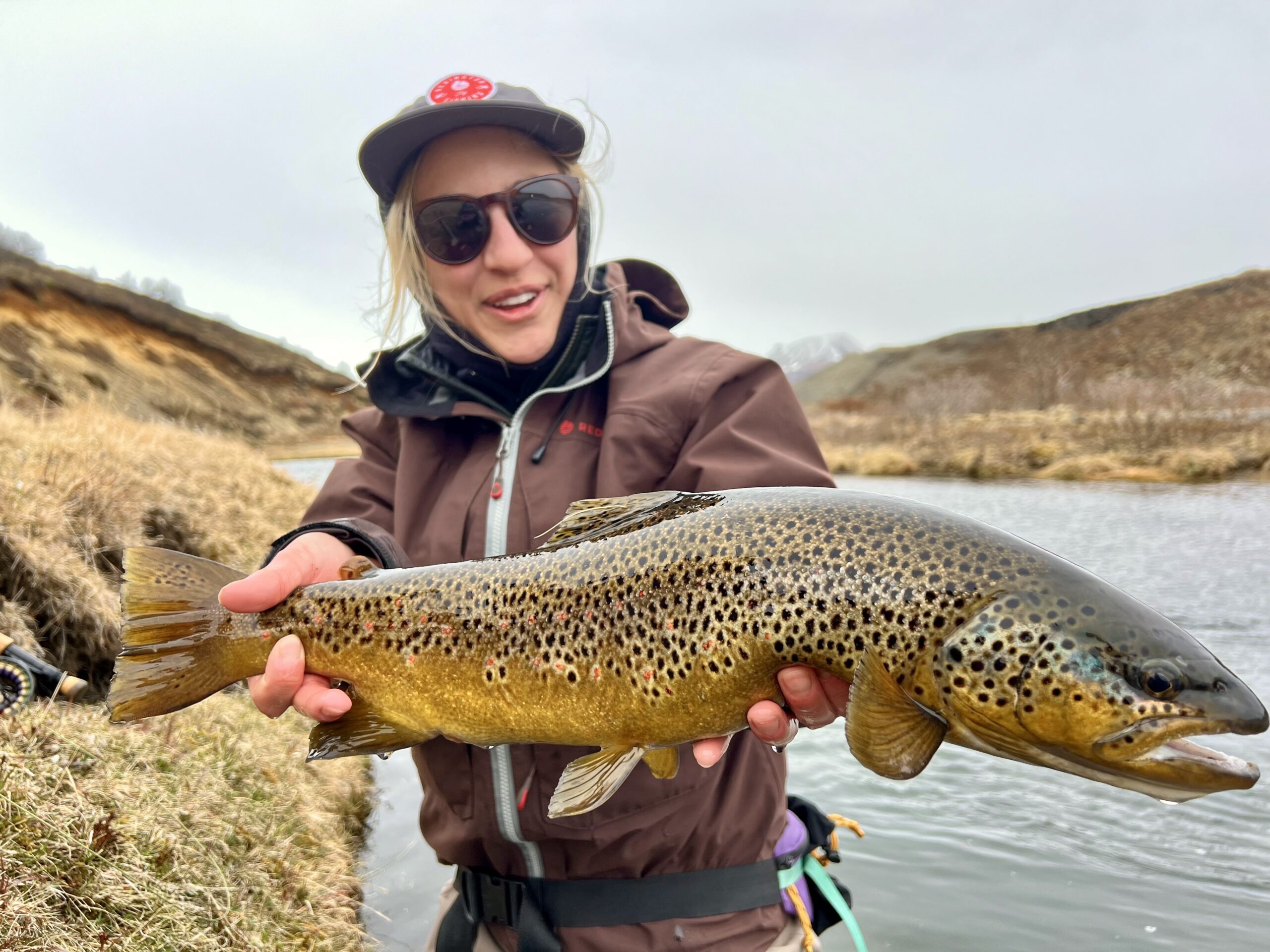
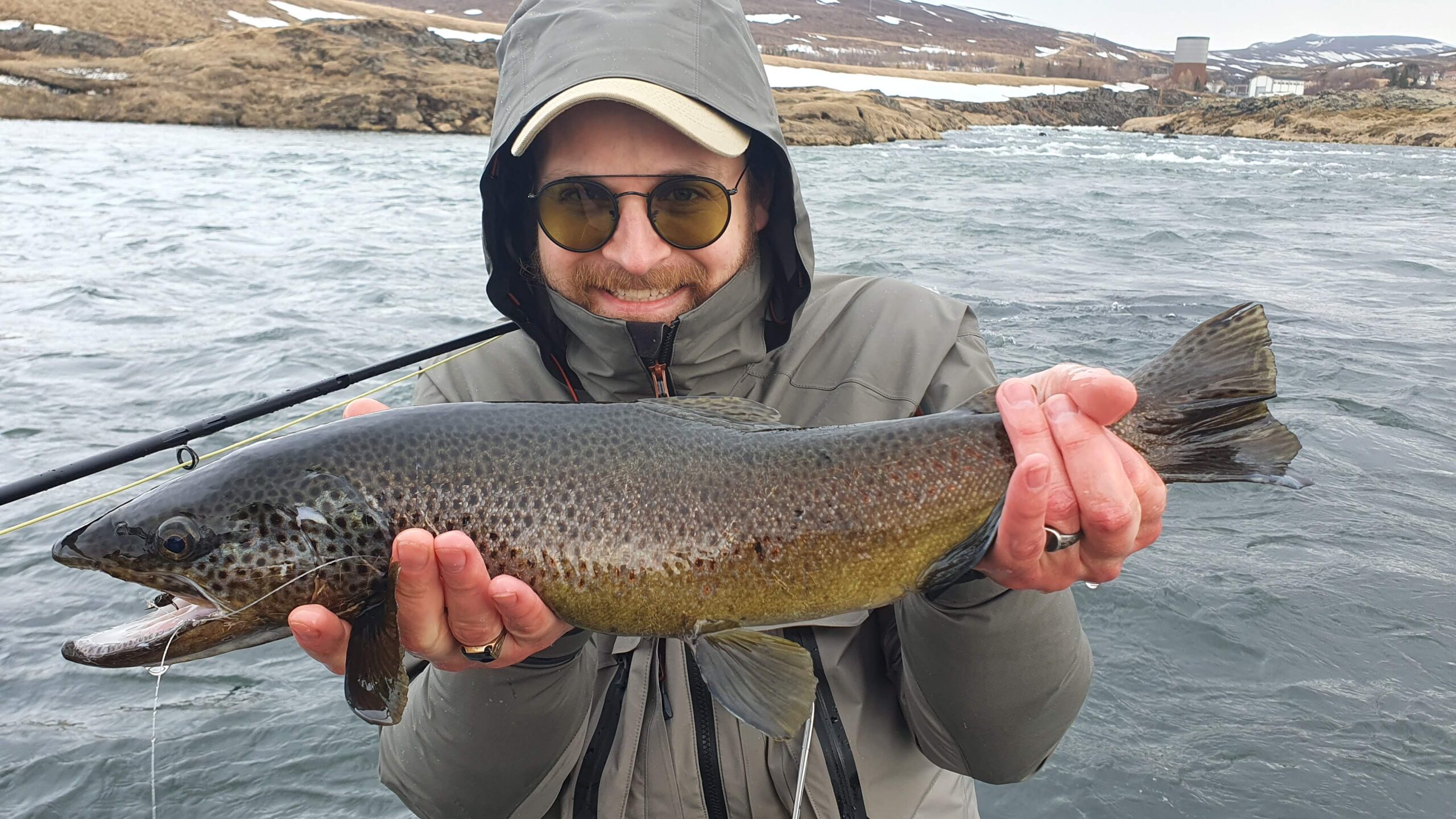
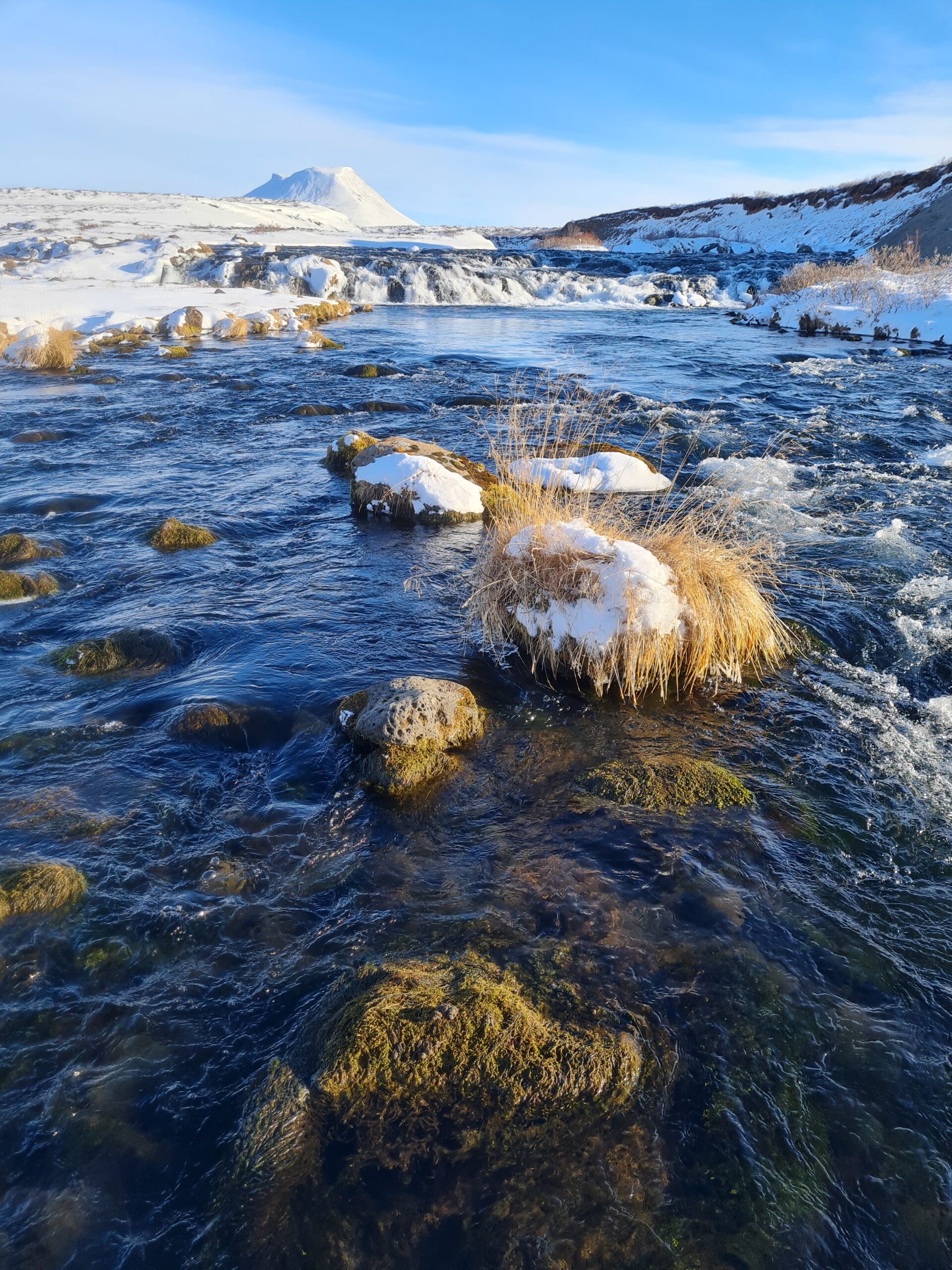
Brunná is one of the most spectacular rivers in the region.
The river flows through beautiful brush-covered landscapes before eventually joining a branch of the glacier-fed Jökulsá River. At this junction, a dramatic boundary forms between the clear Brunná water and the sediment-rich glacial water, creating a unique and productive environment.
For anglers chasing trophy brown trout, Brunná is hard to beat.
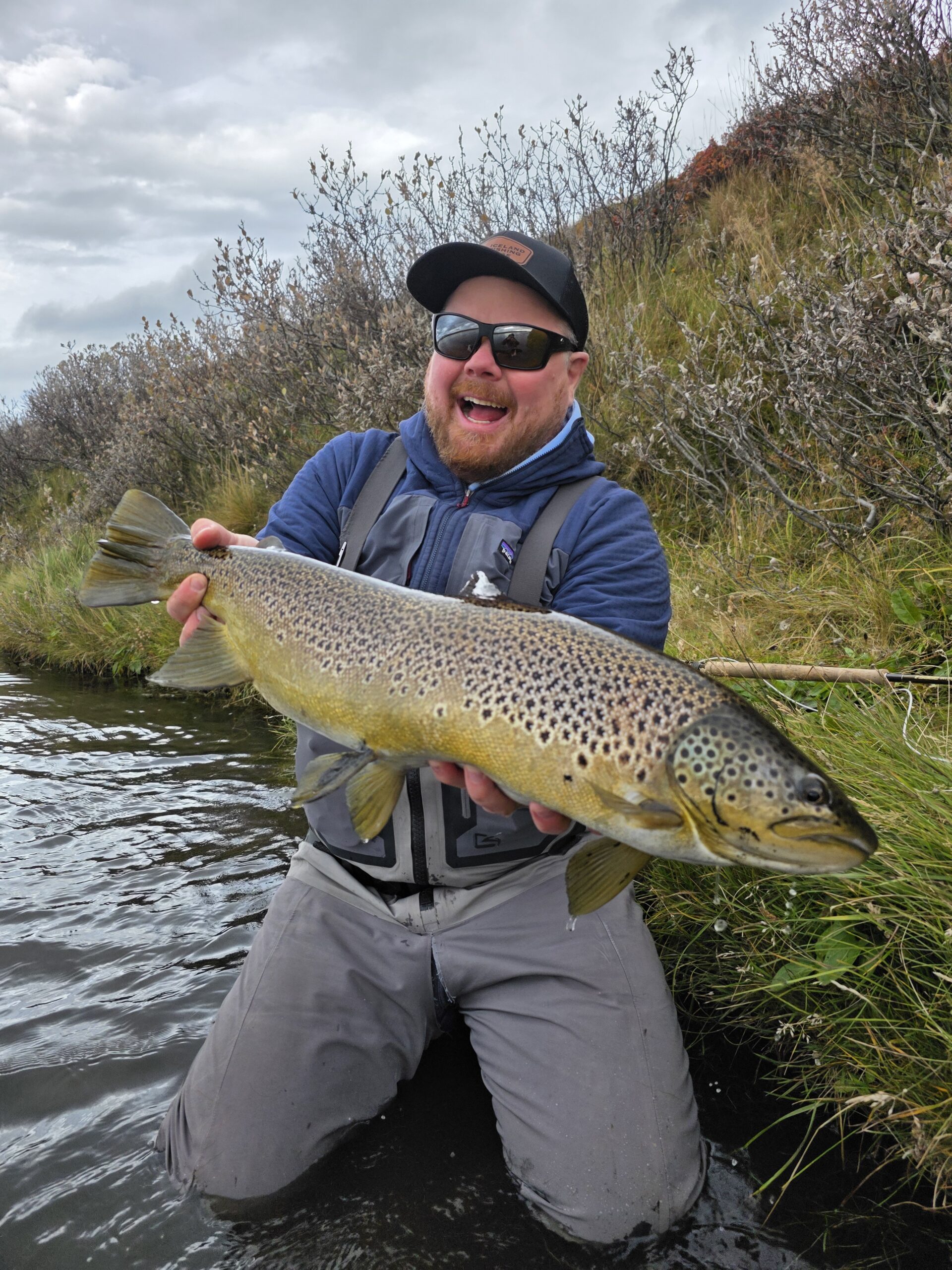
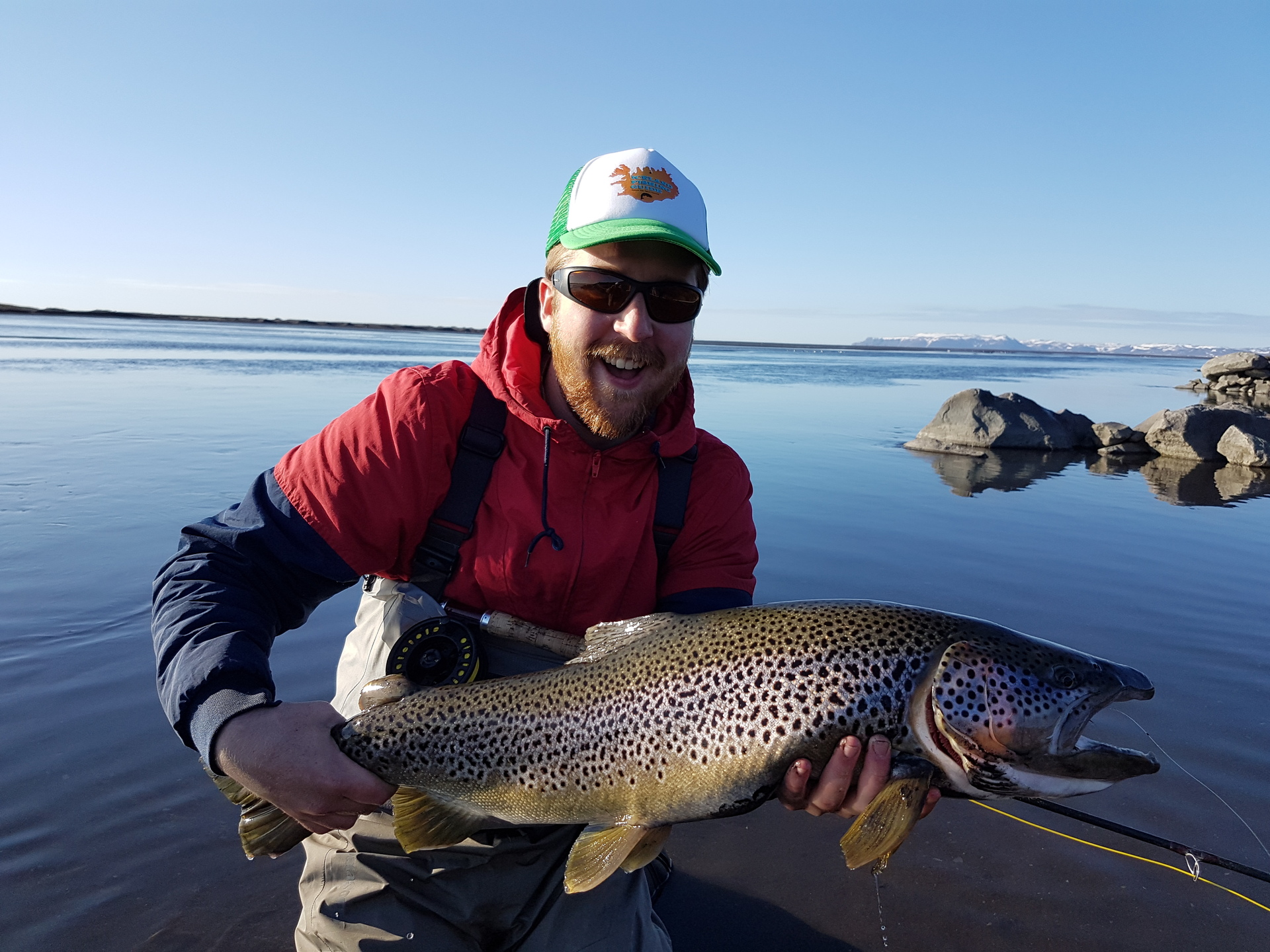
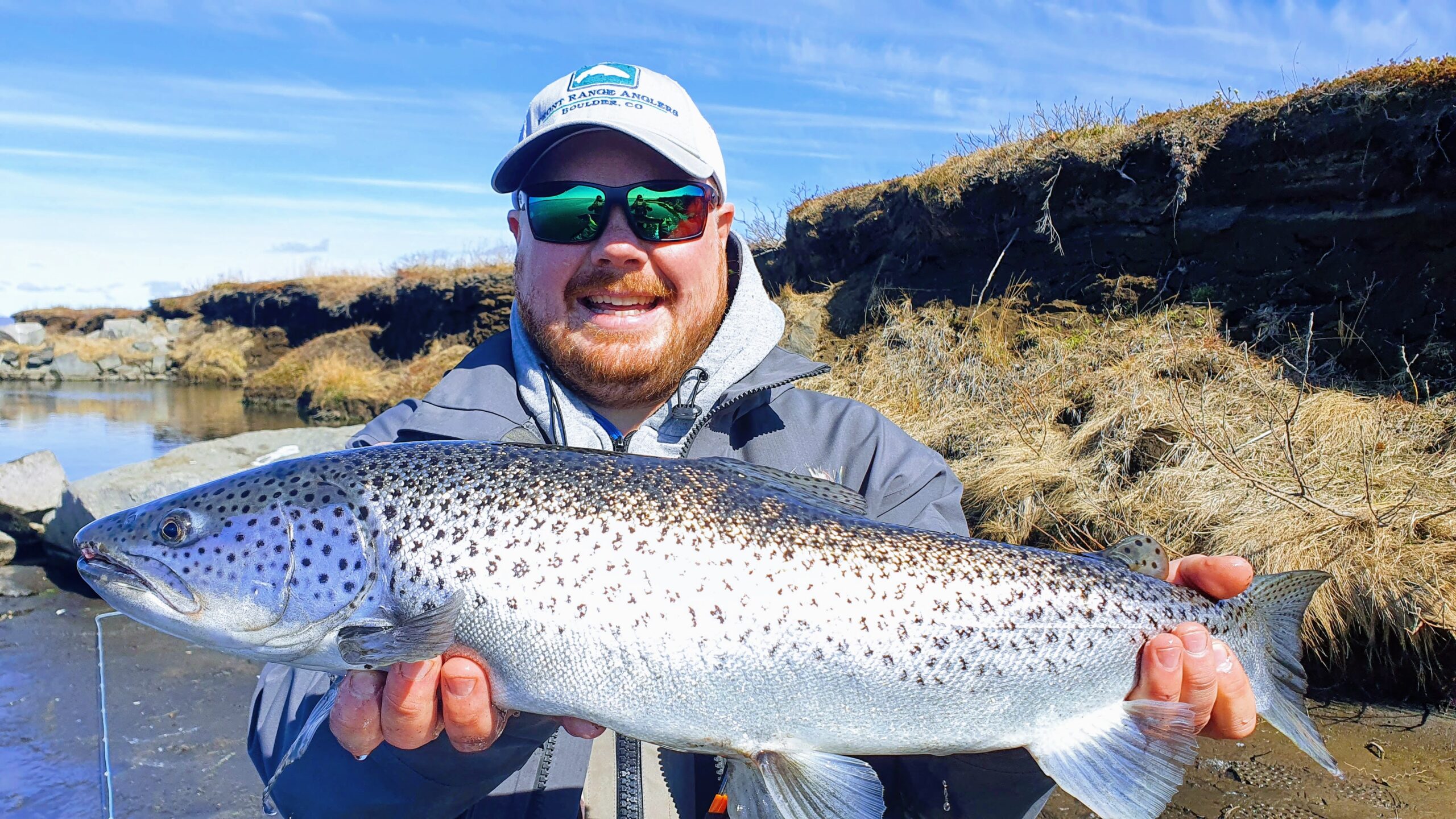
Fish up to 20 pounds have been landed here, and trout over 10 pounds are caught regularly. The average fish is around 4 pounds, already an impressive size for wild trout.
Large streamers are often the most productive flies here, although skating flies can sometimes trigger explosive takes under the right conditions.
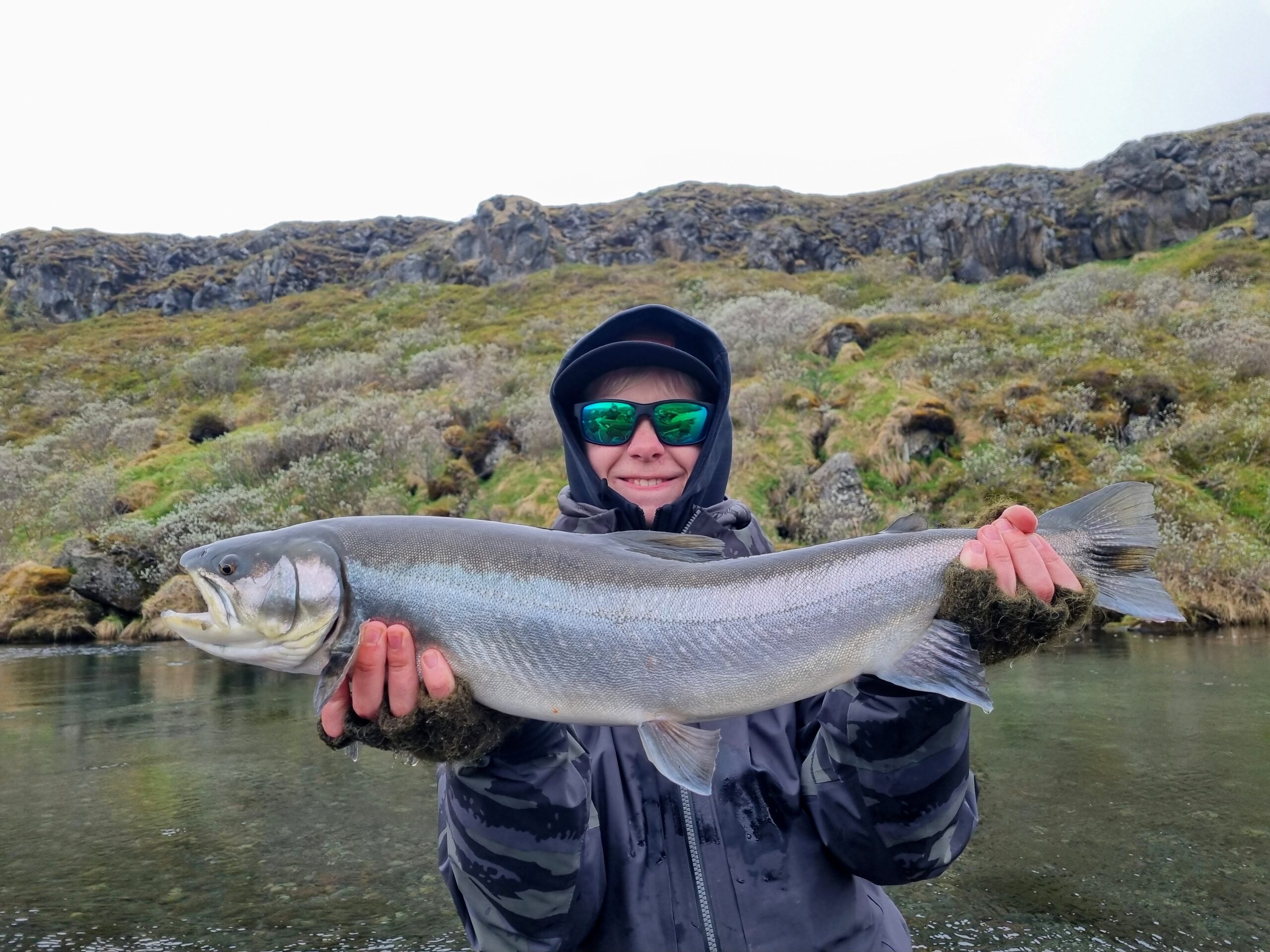
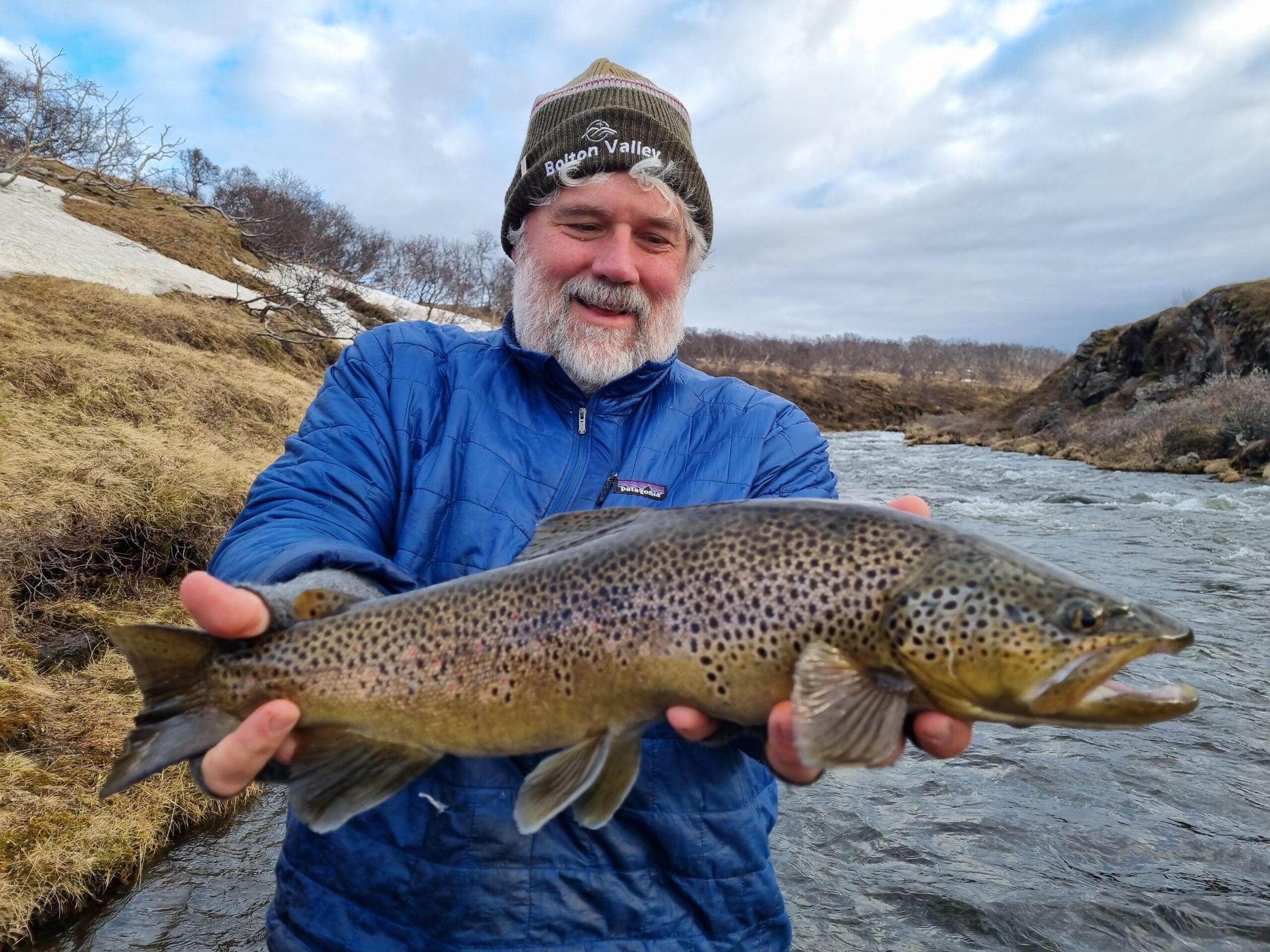
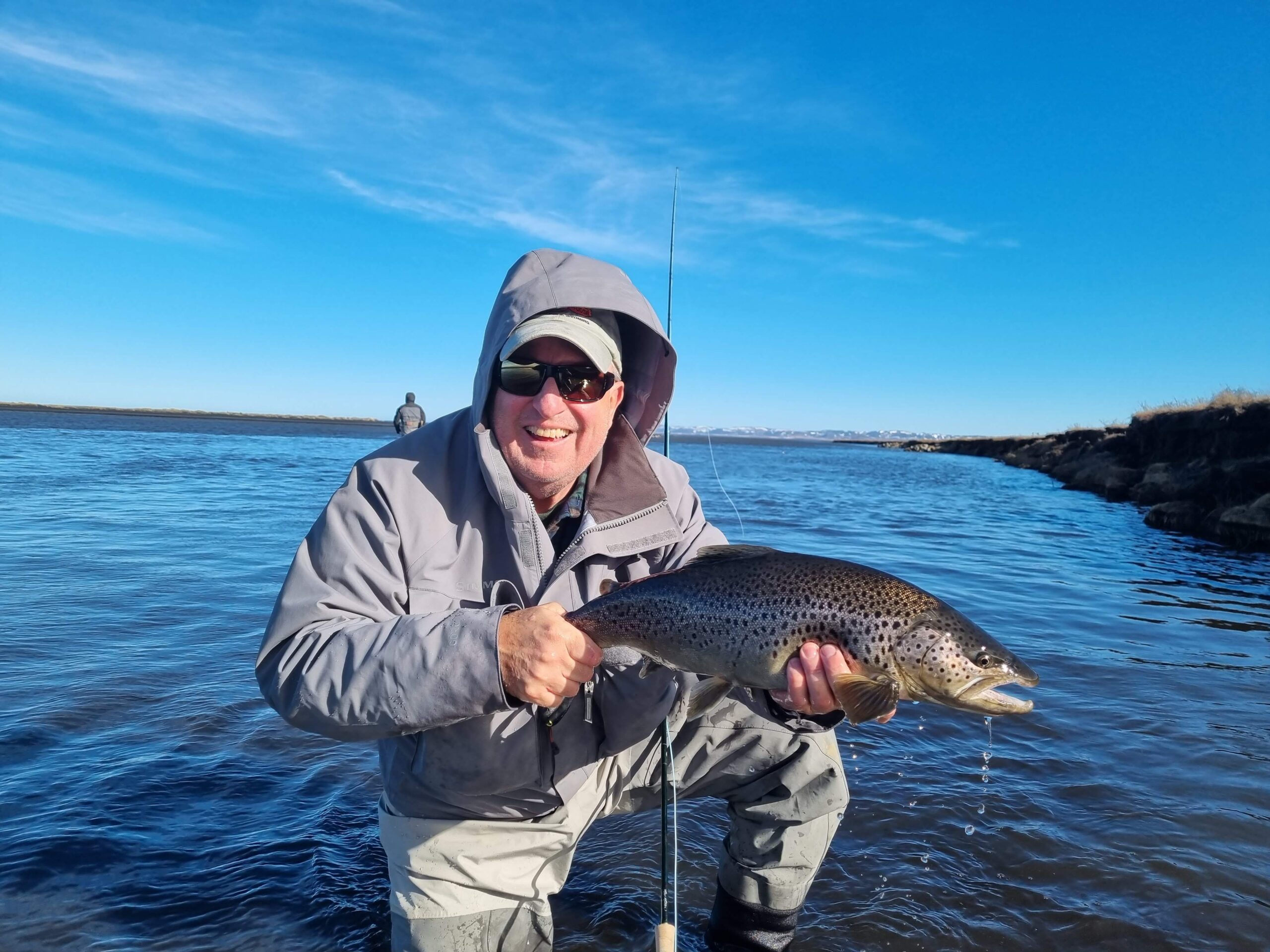
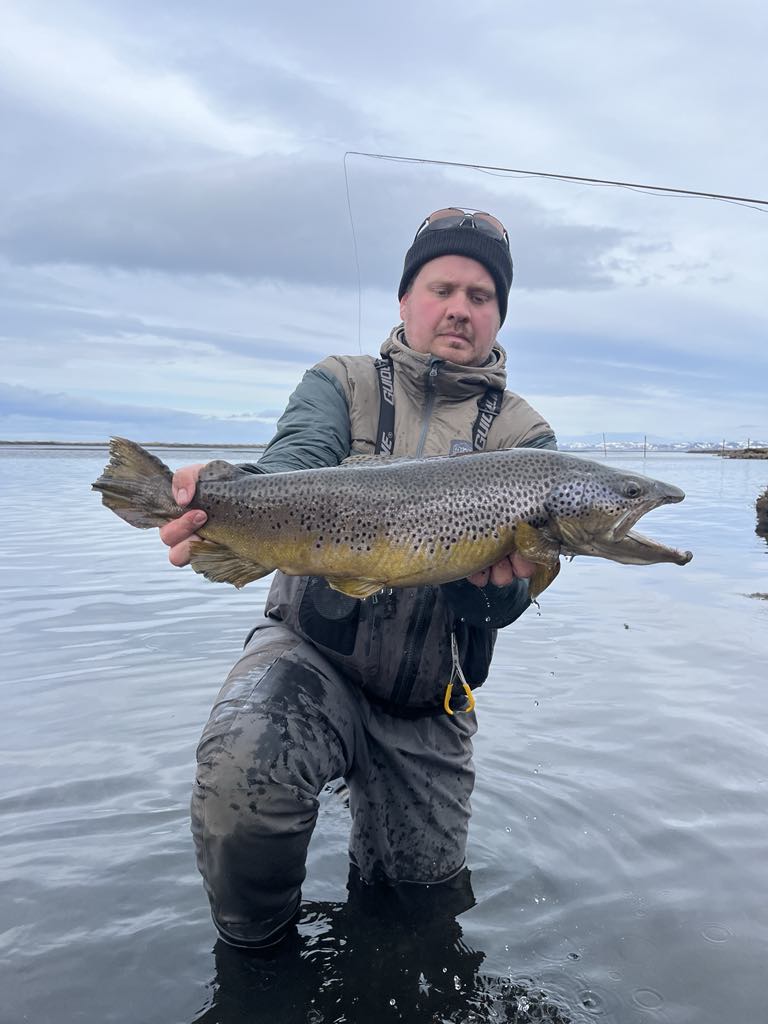
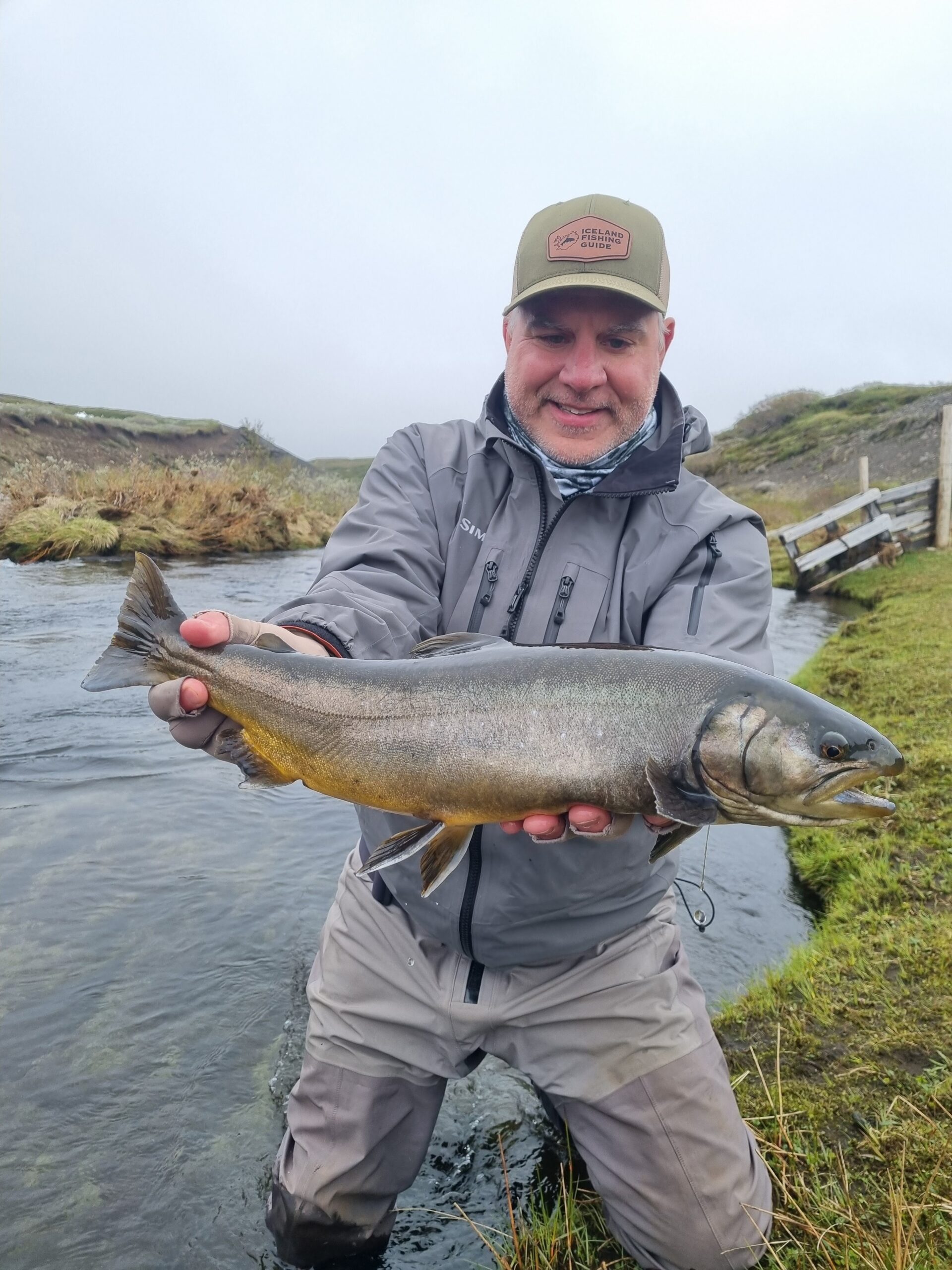
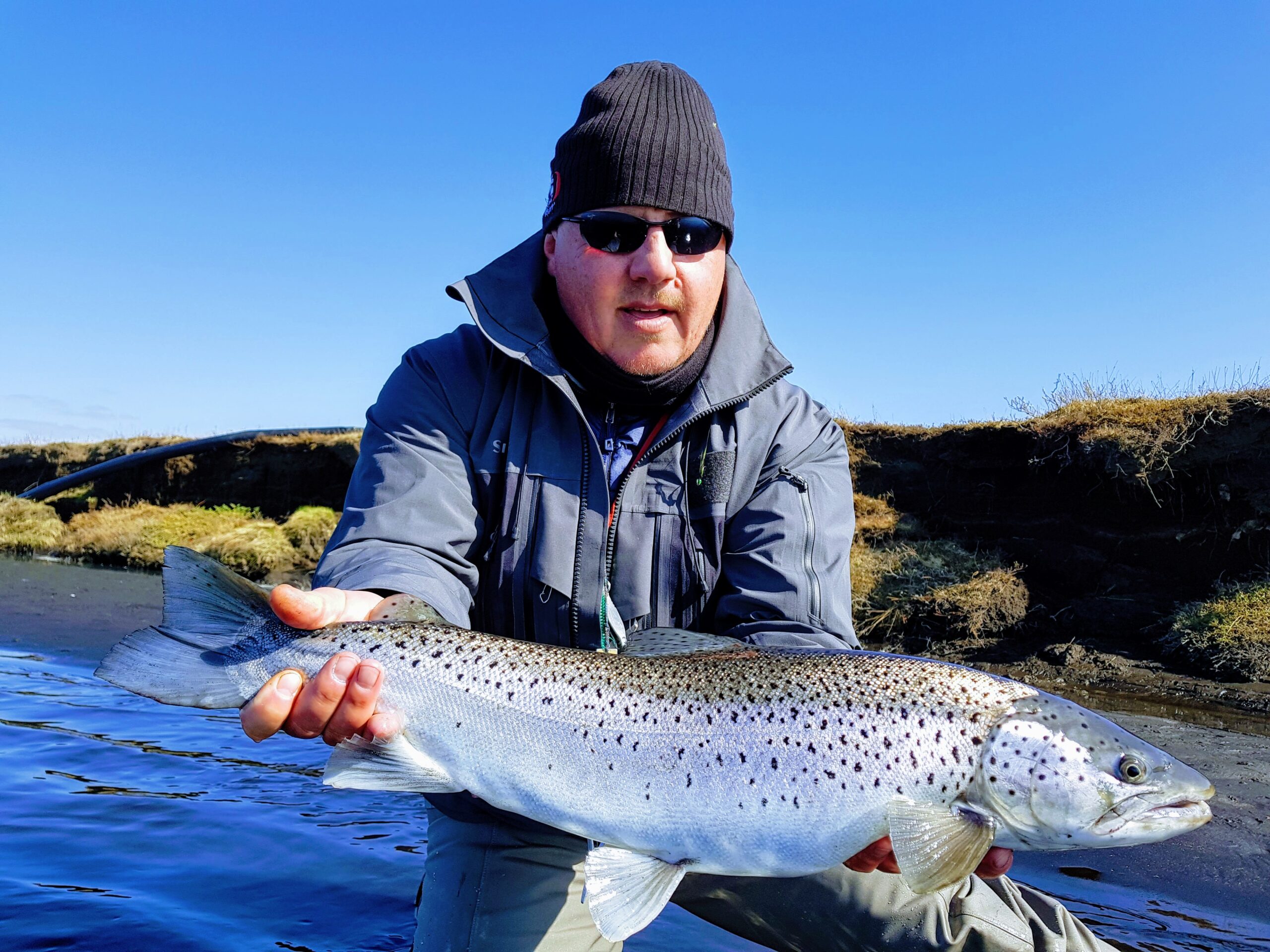
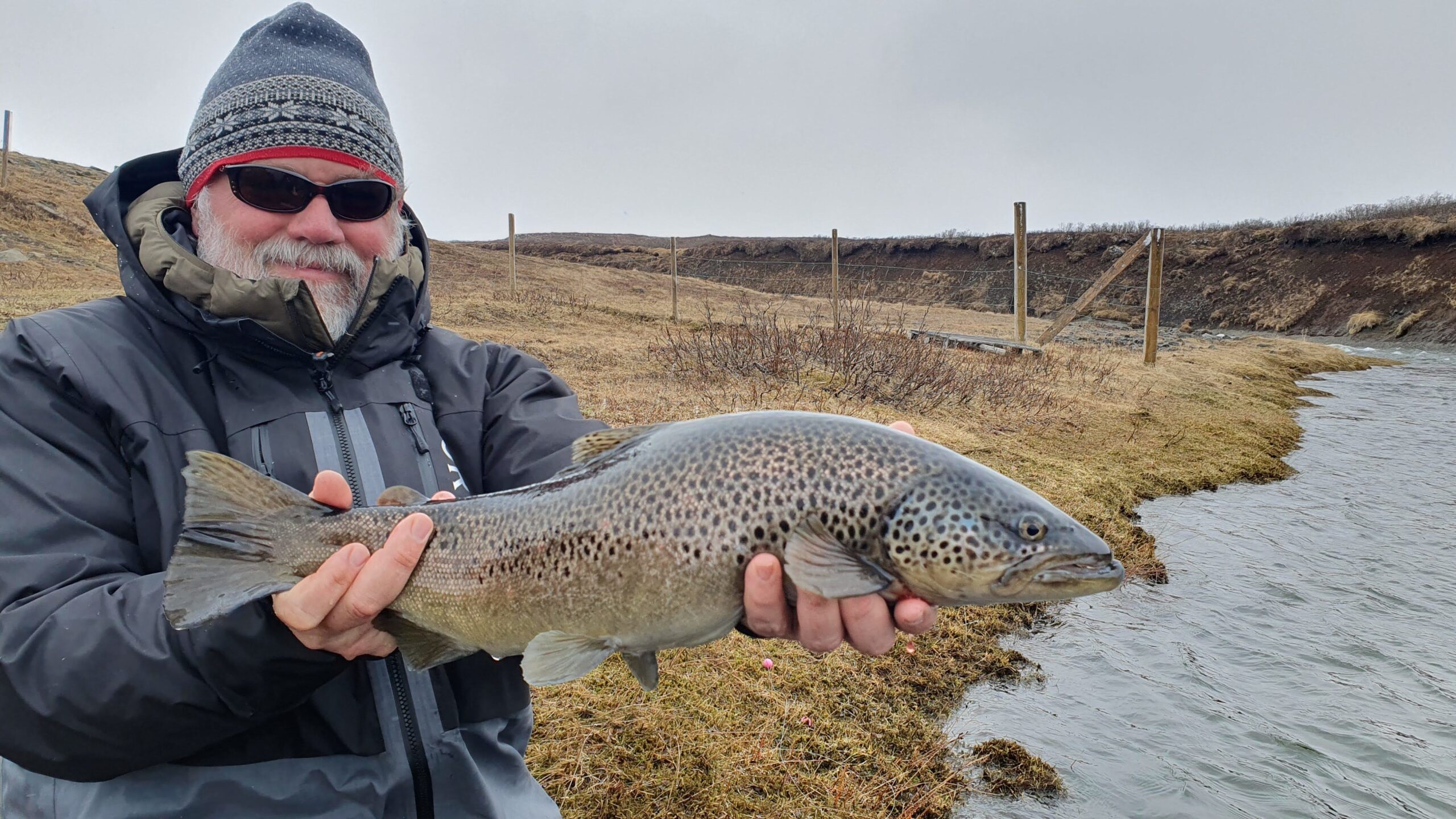
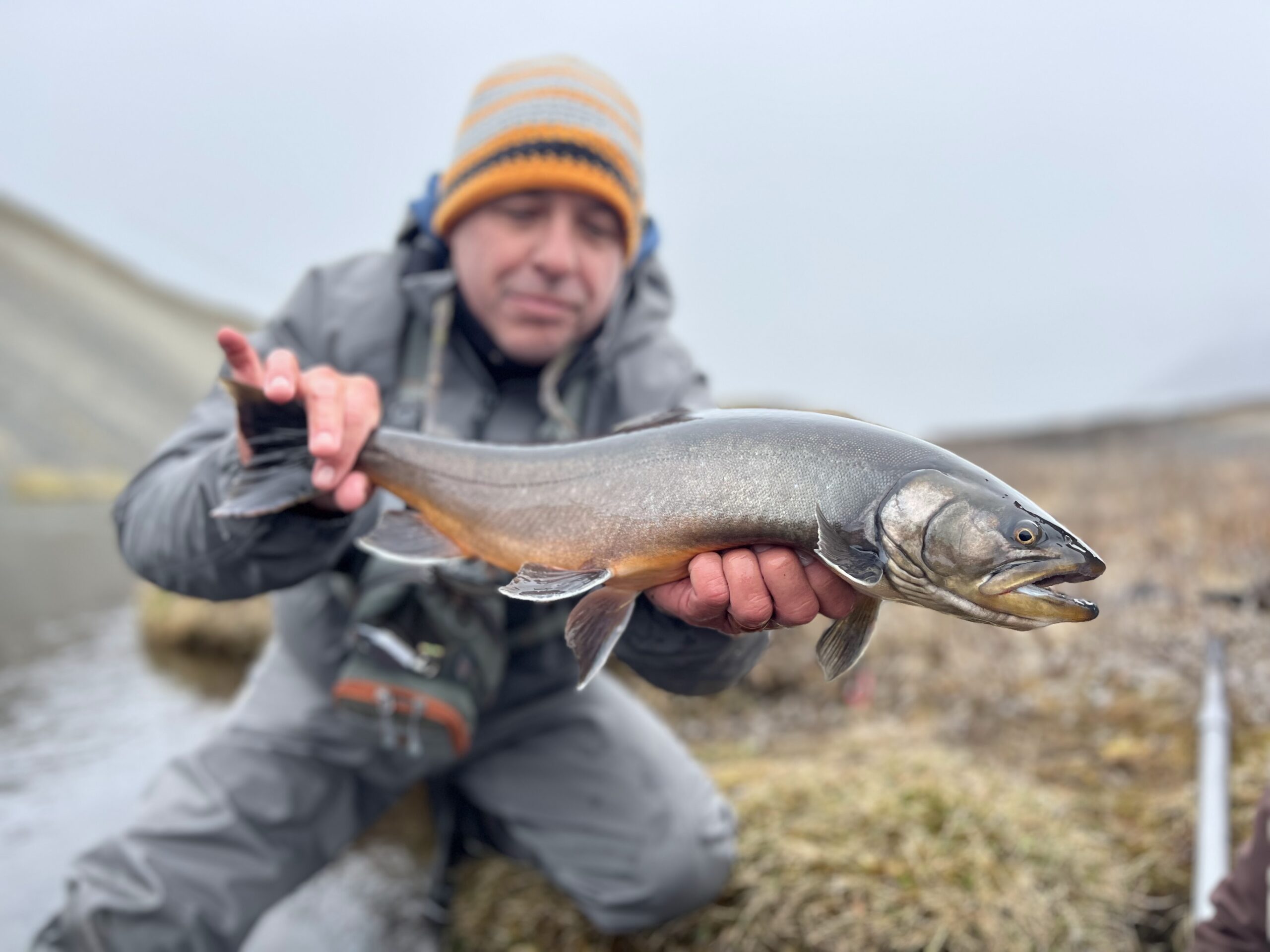
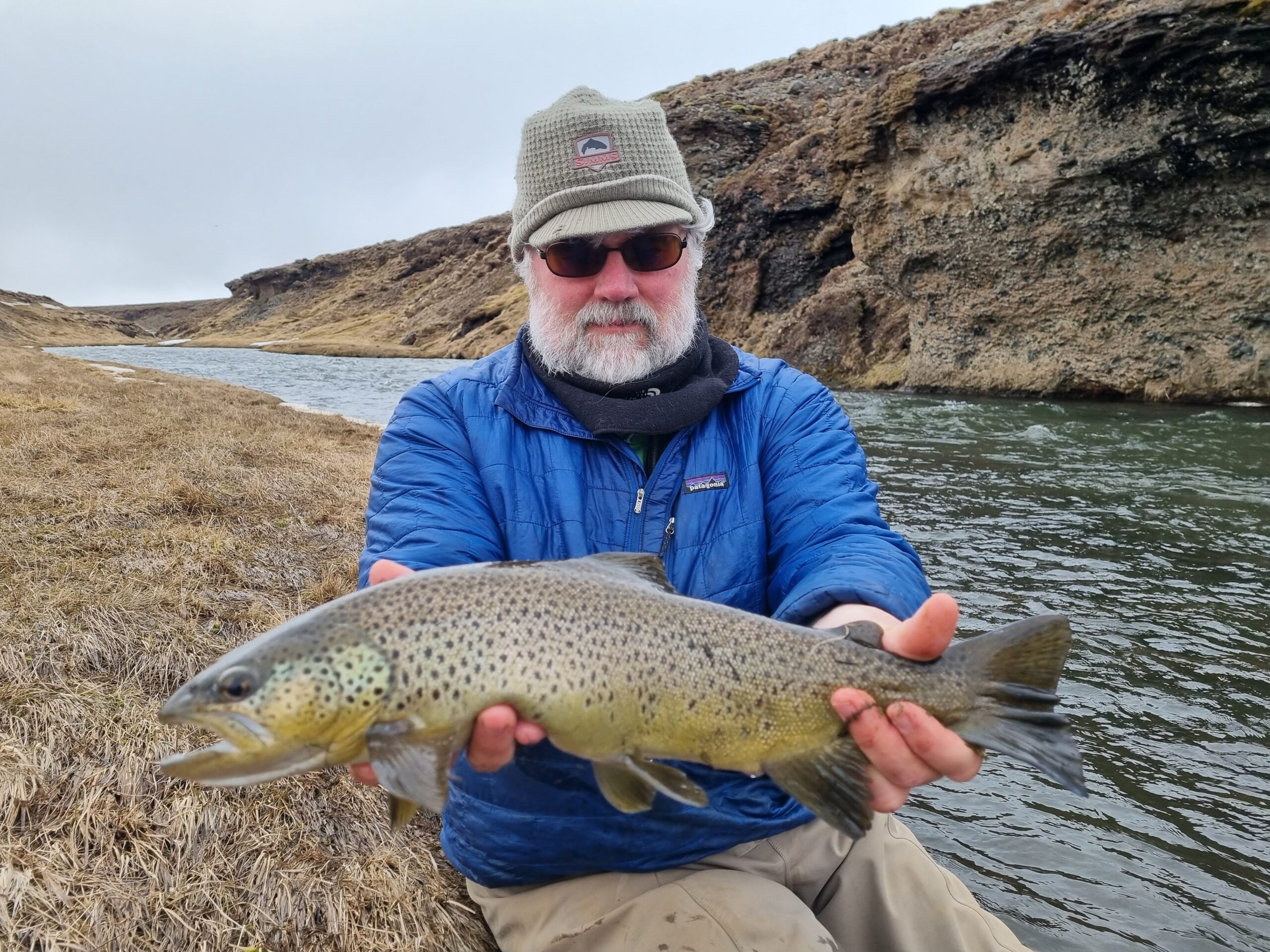
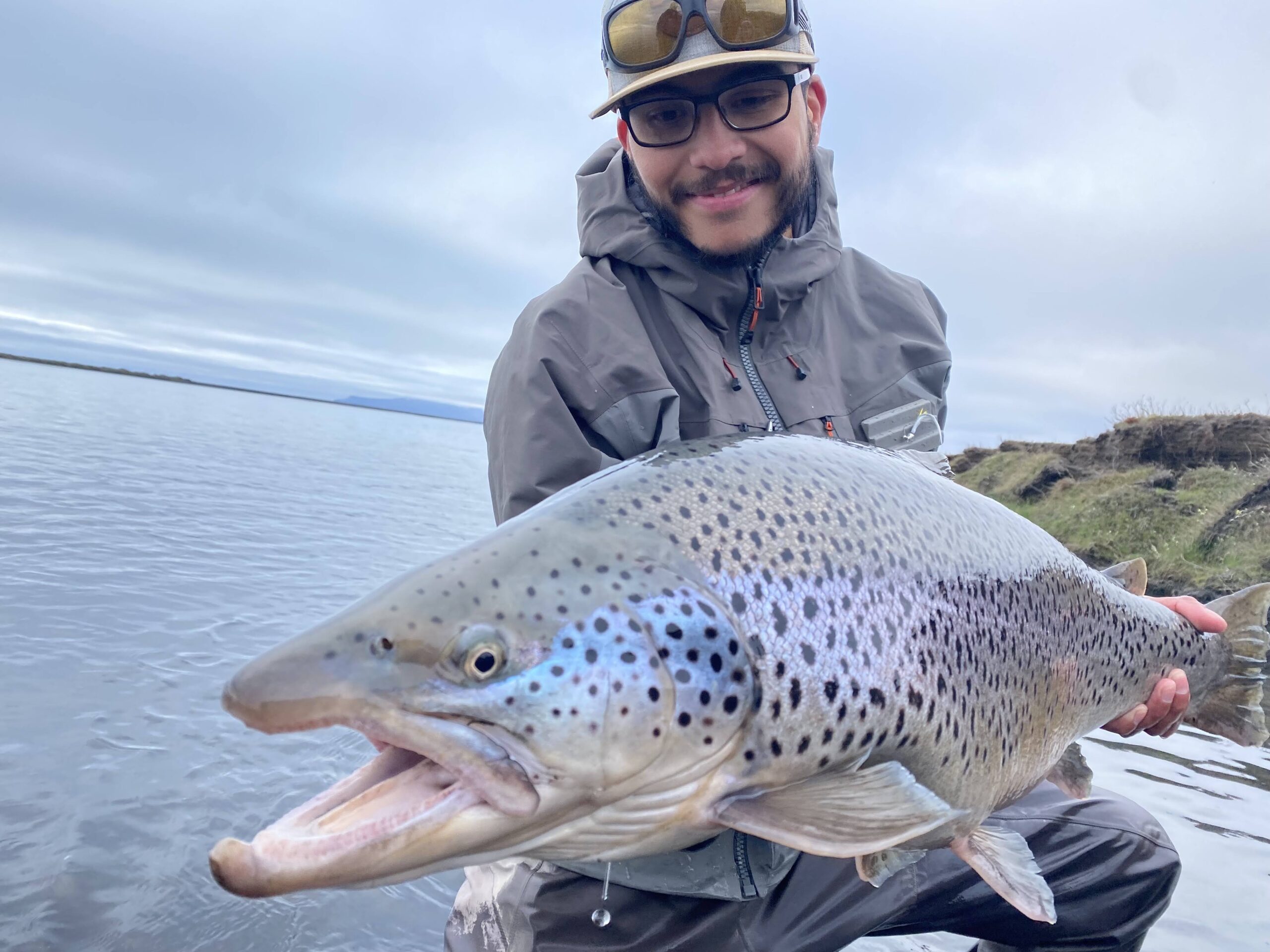
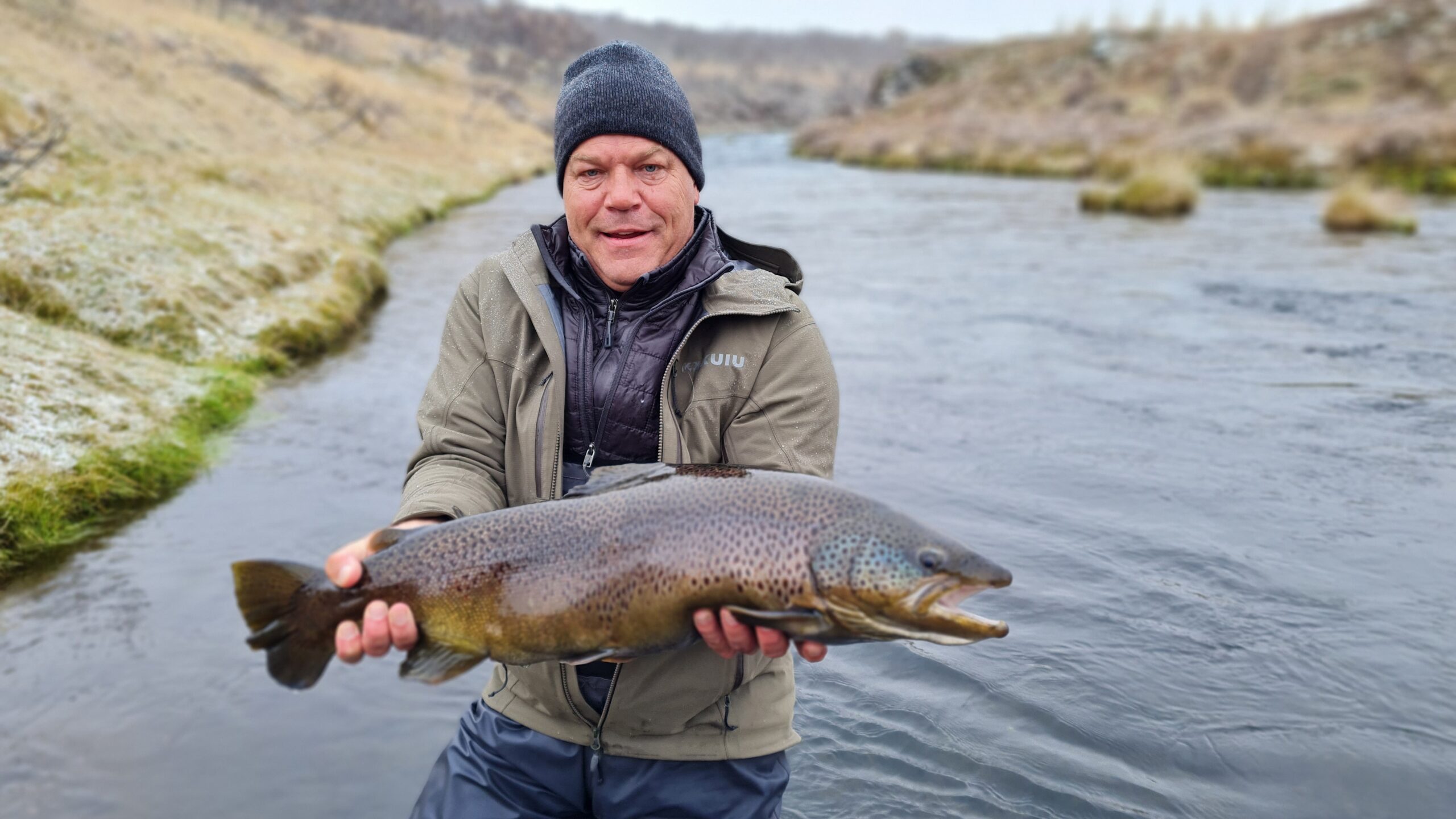
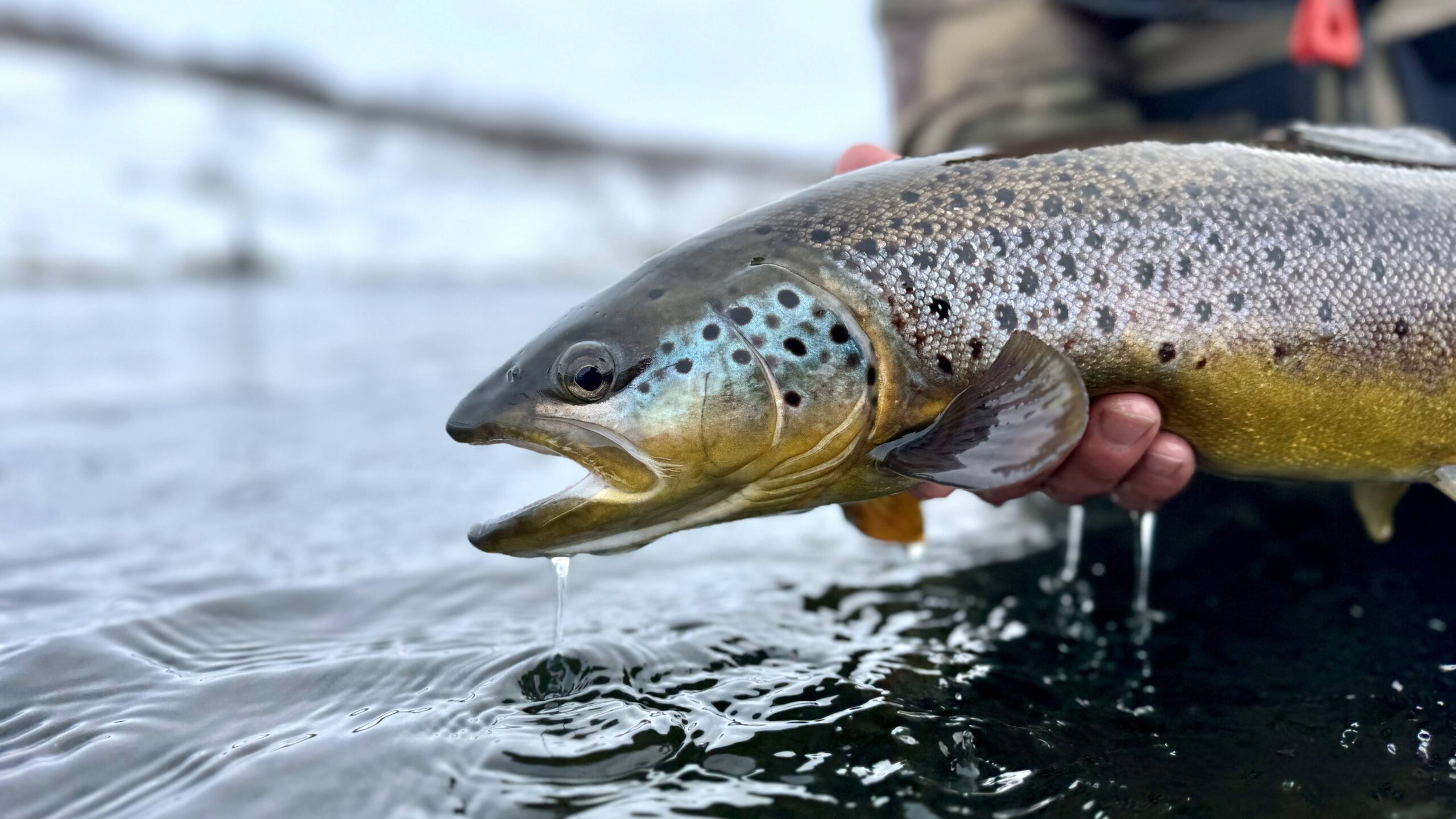
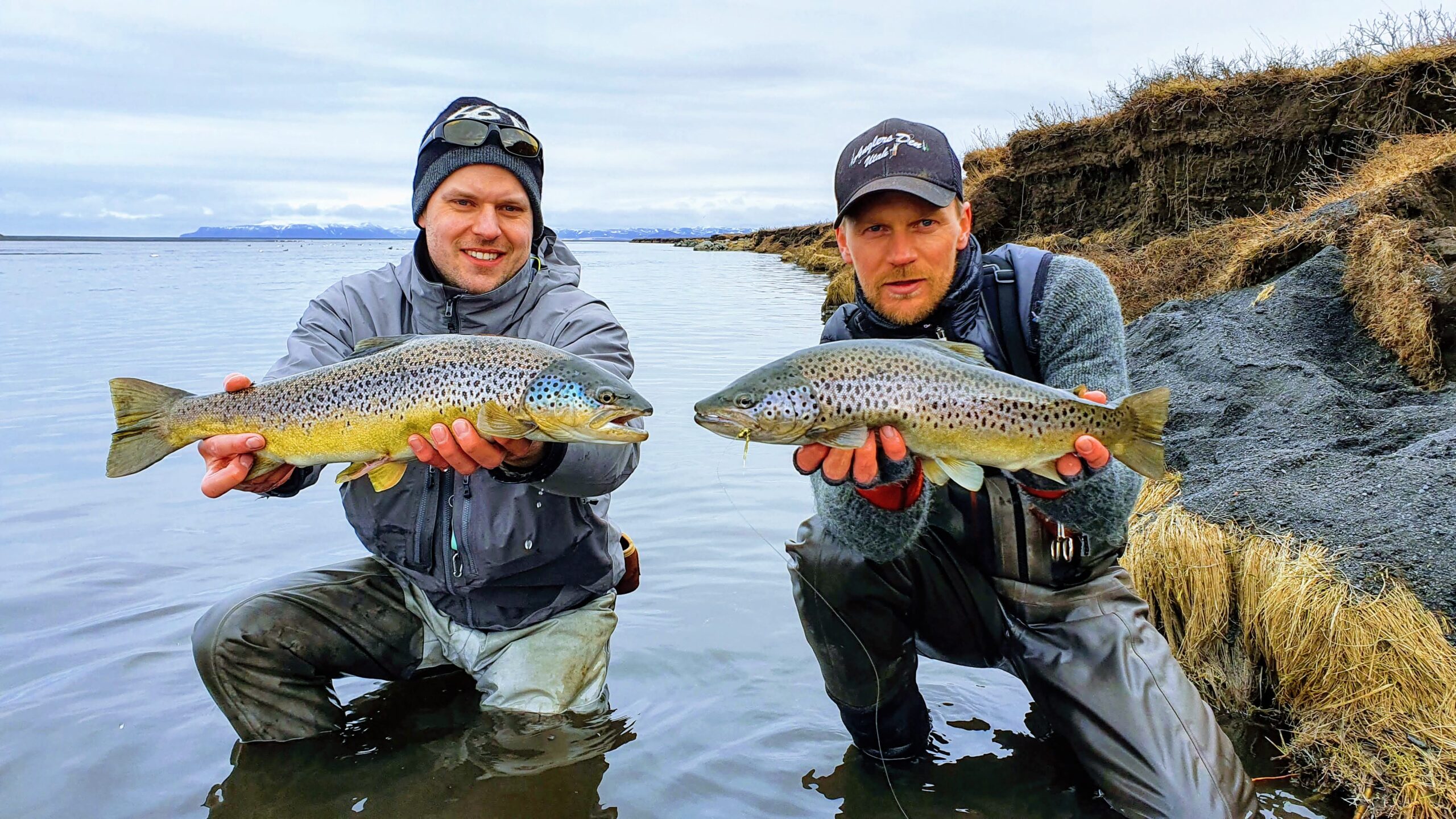
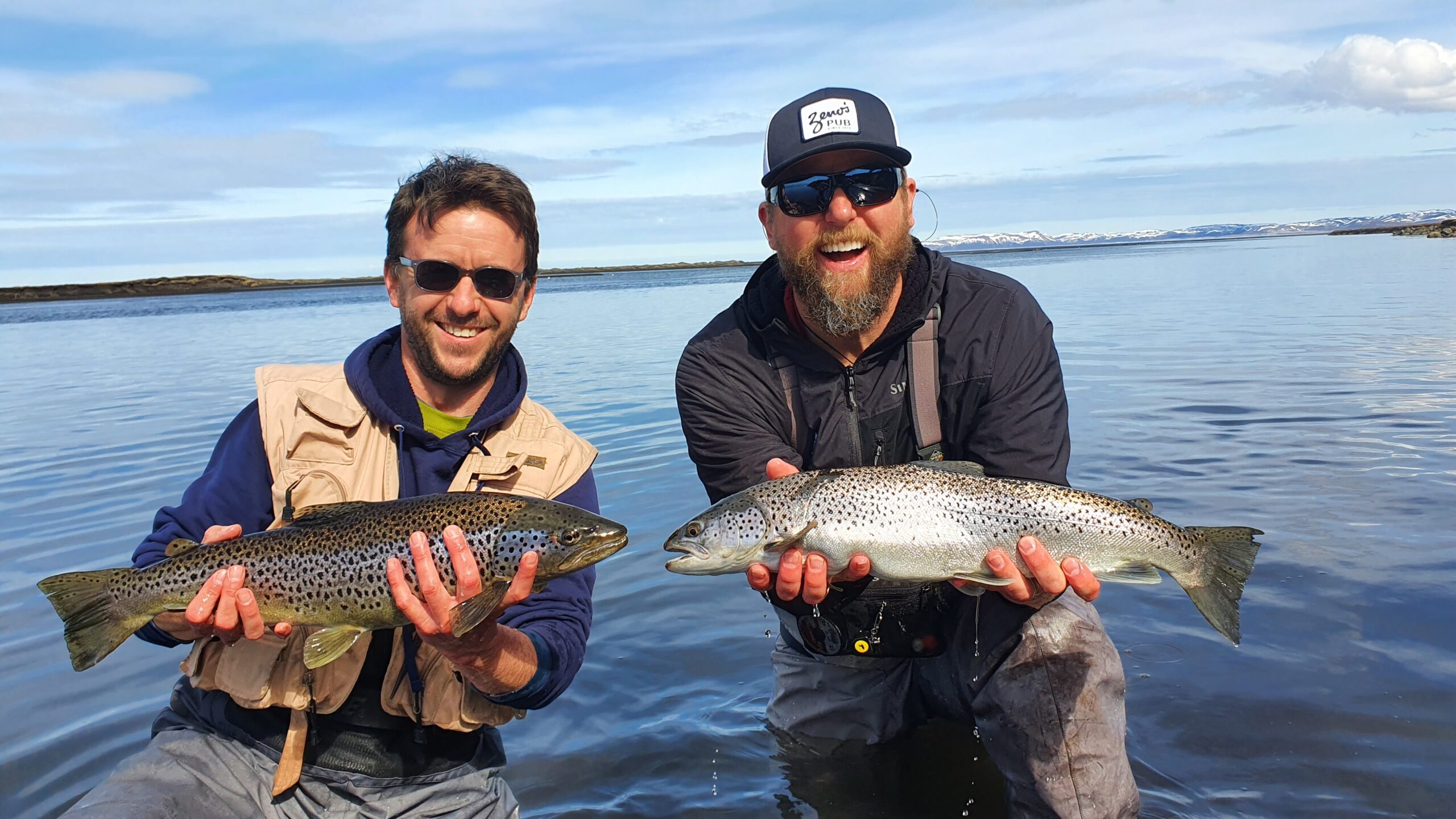
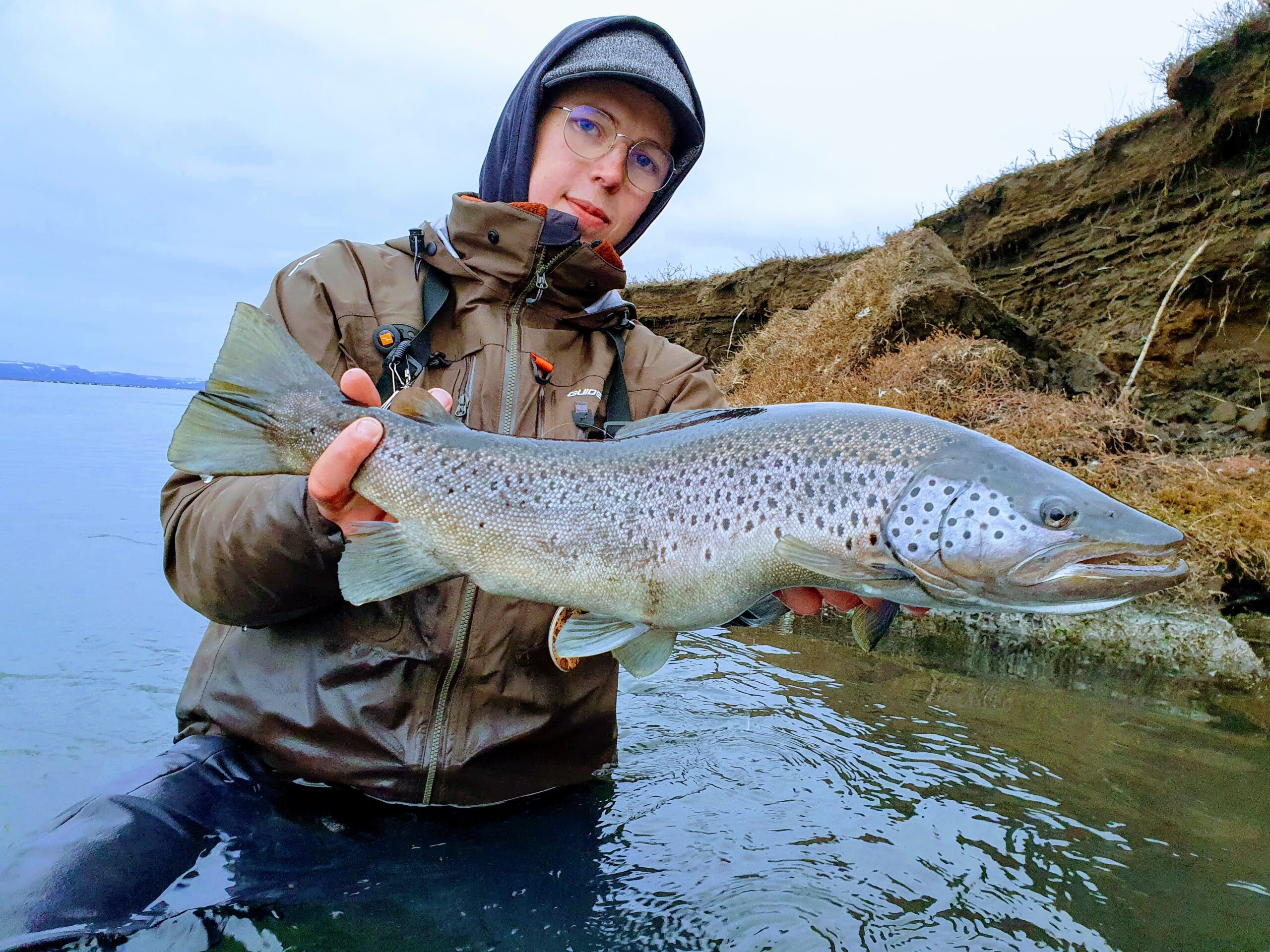
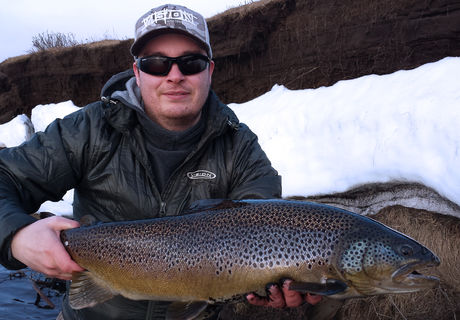
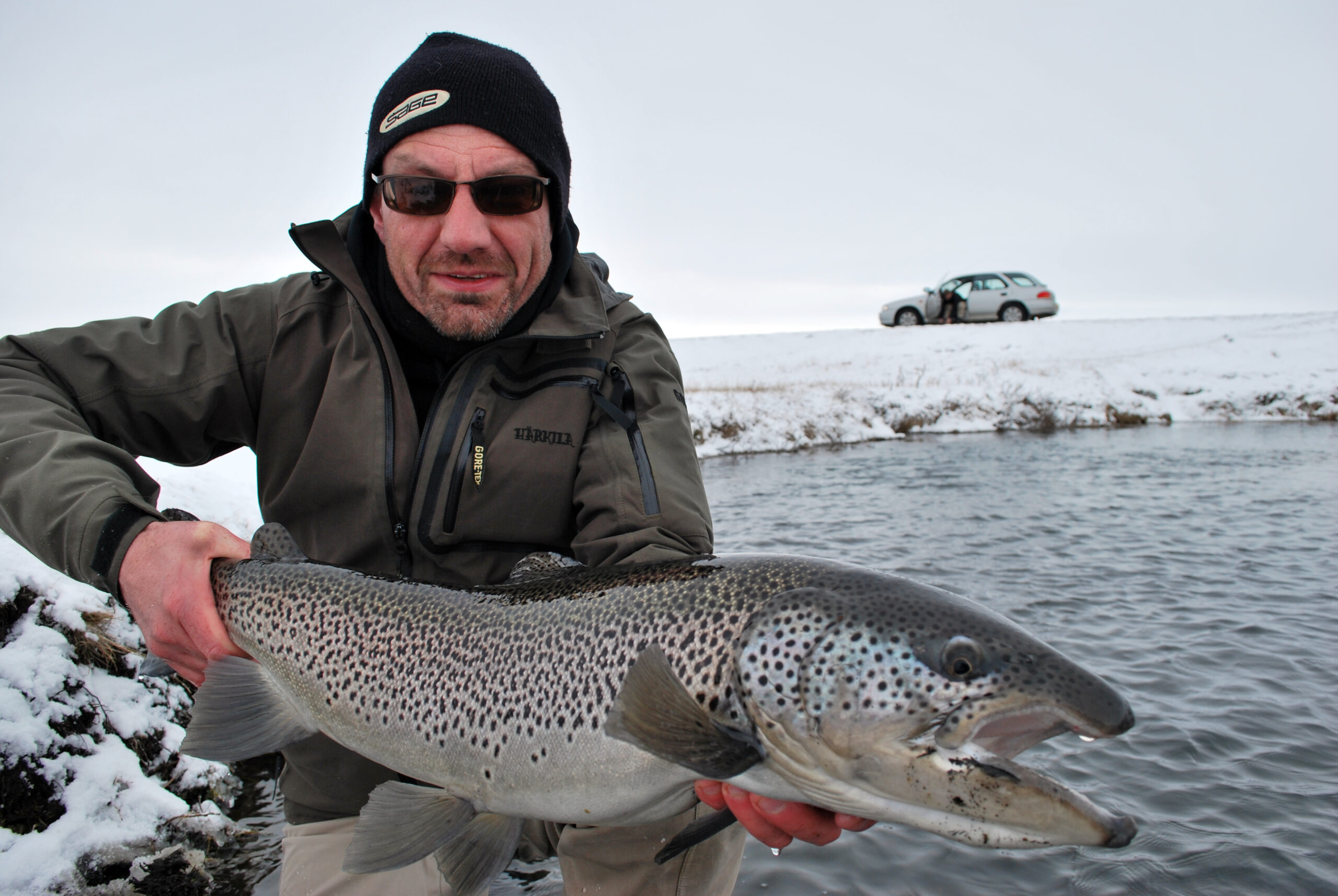
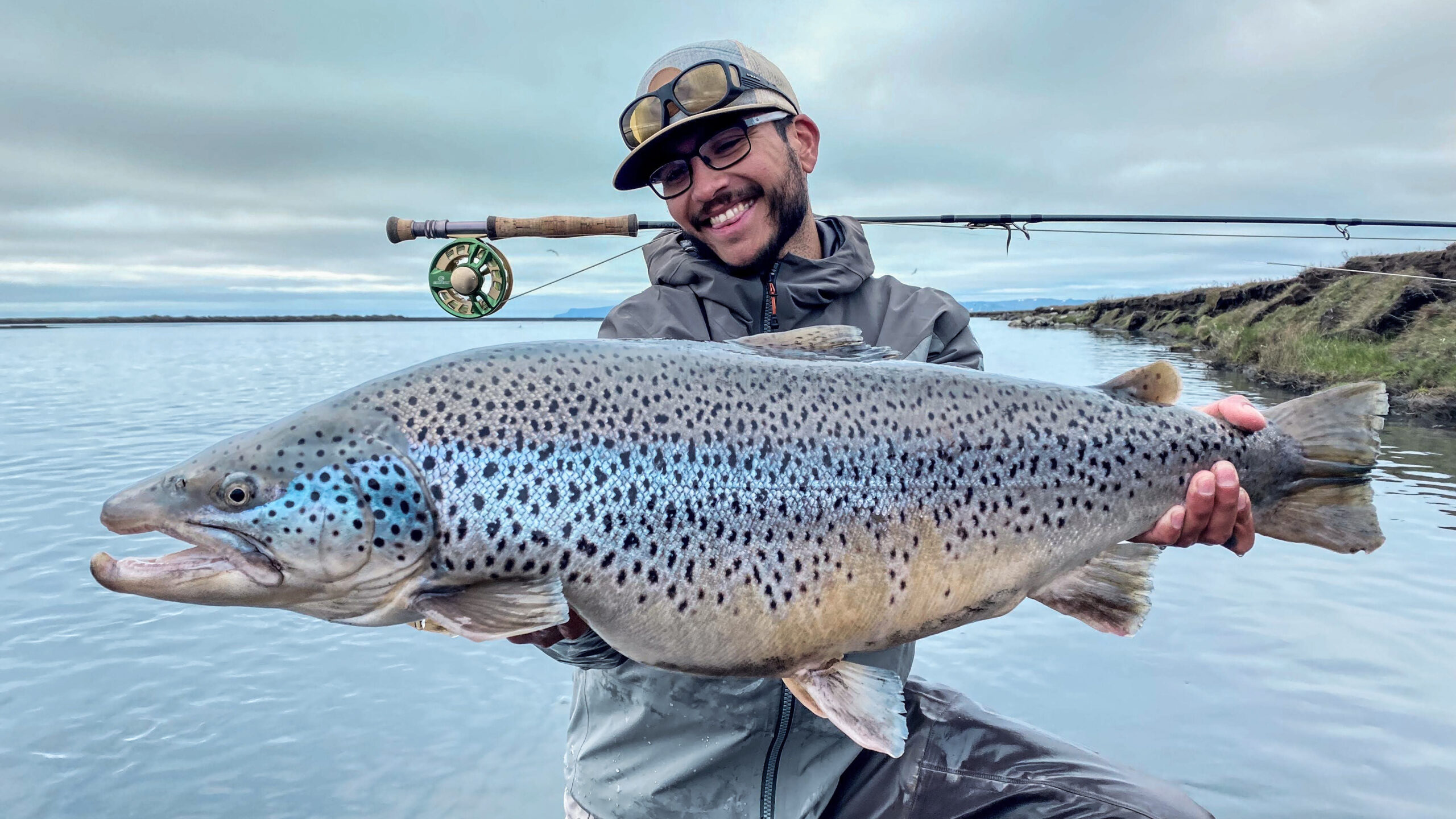
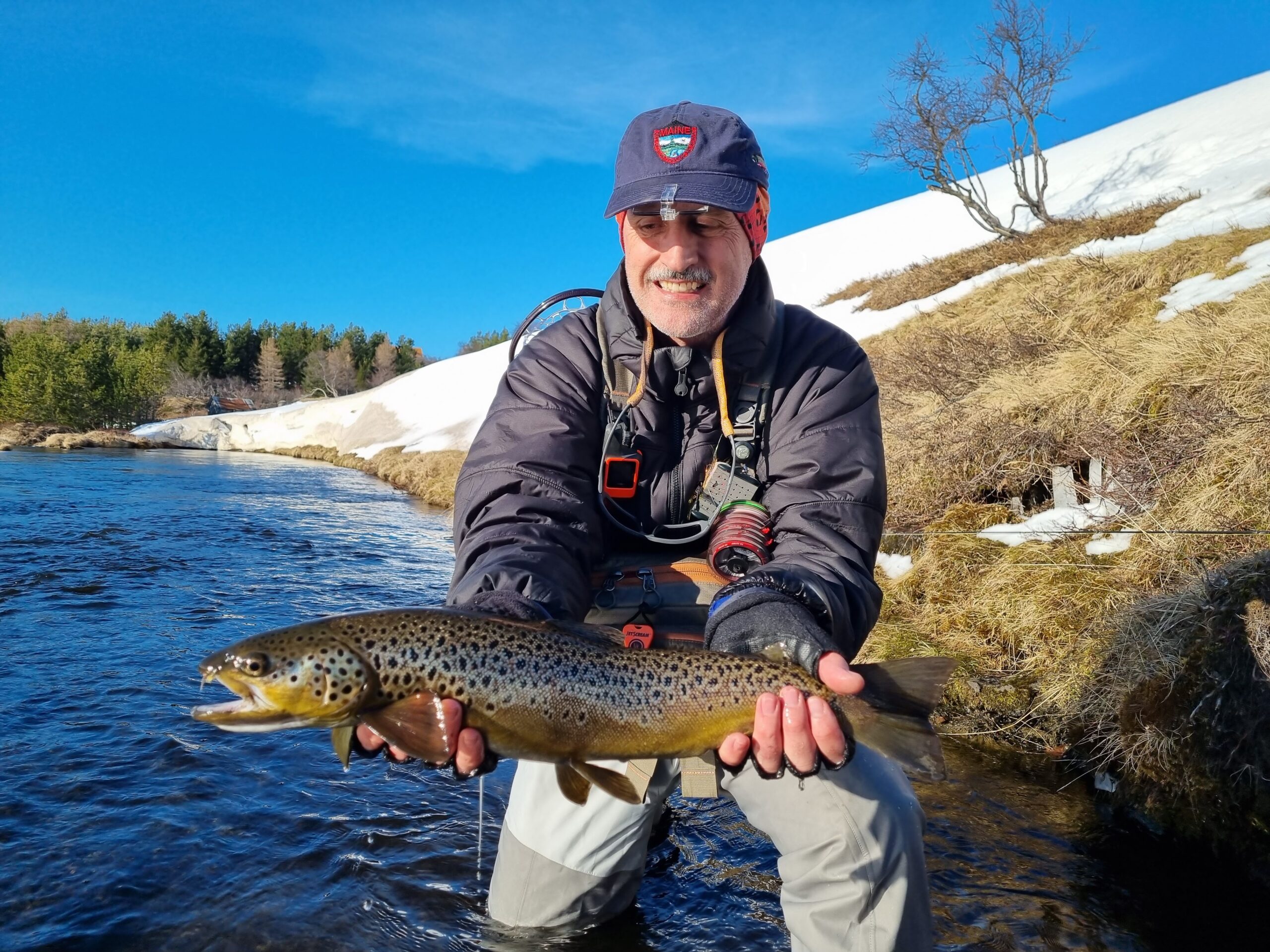
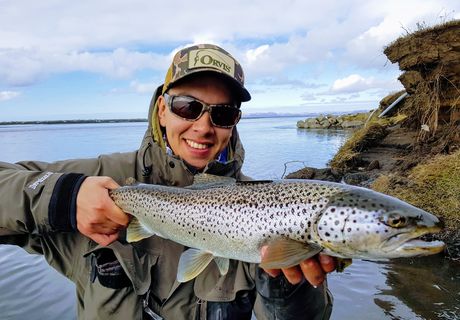
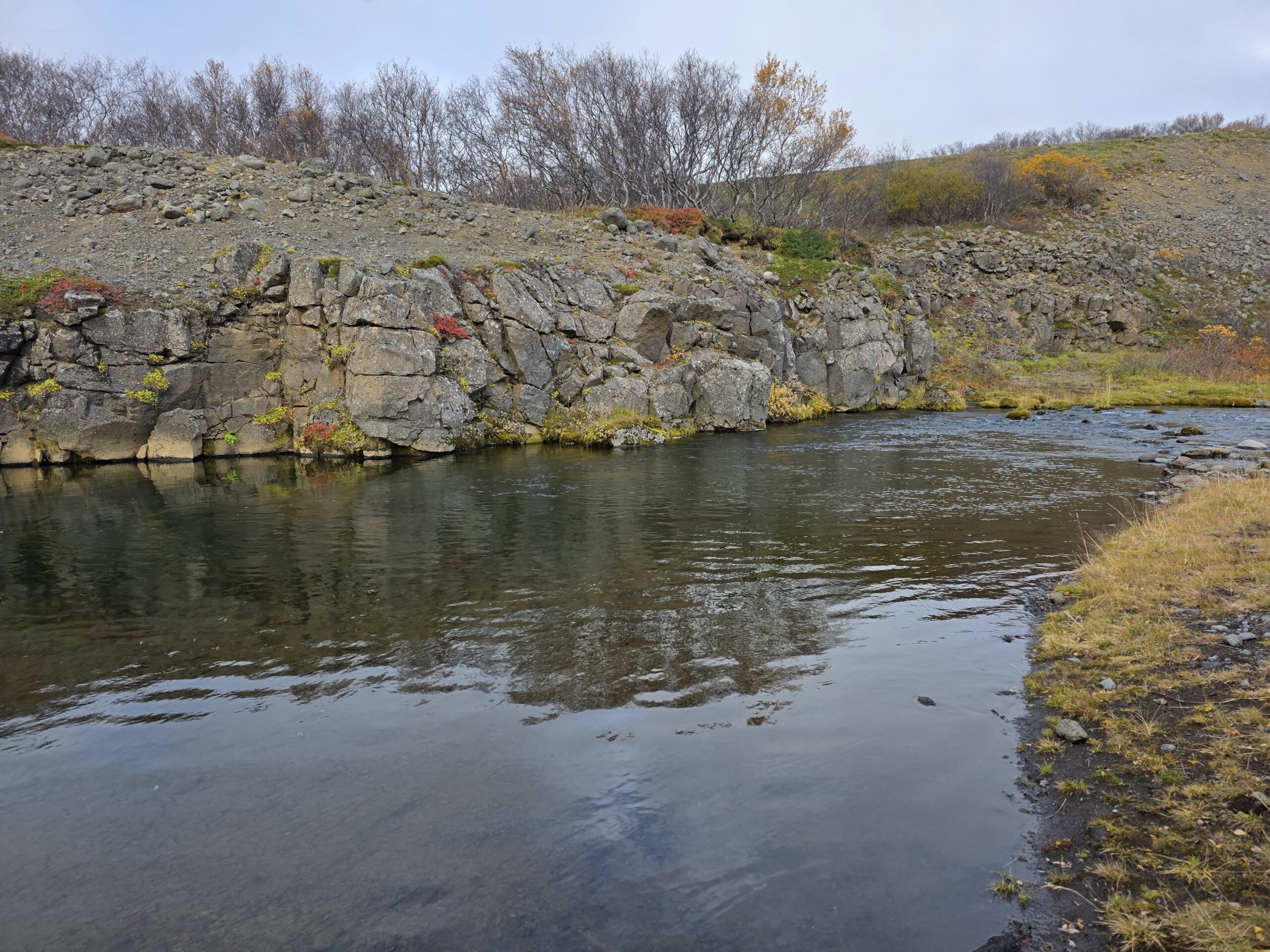
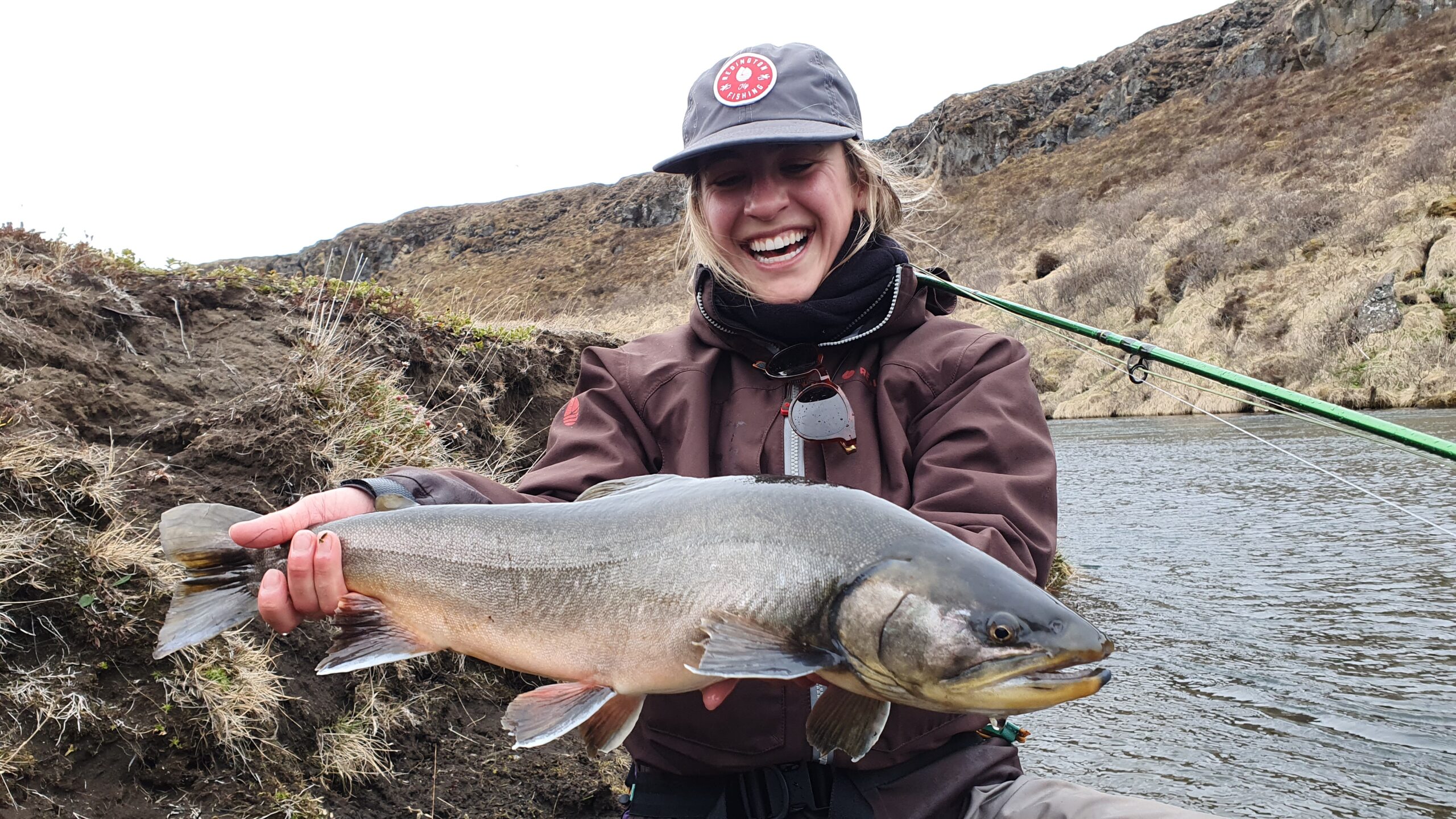
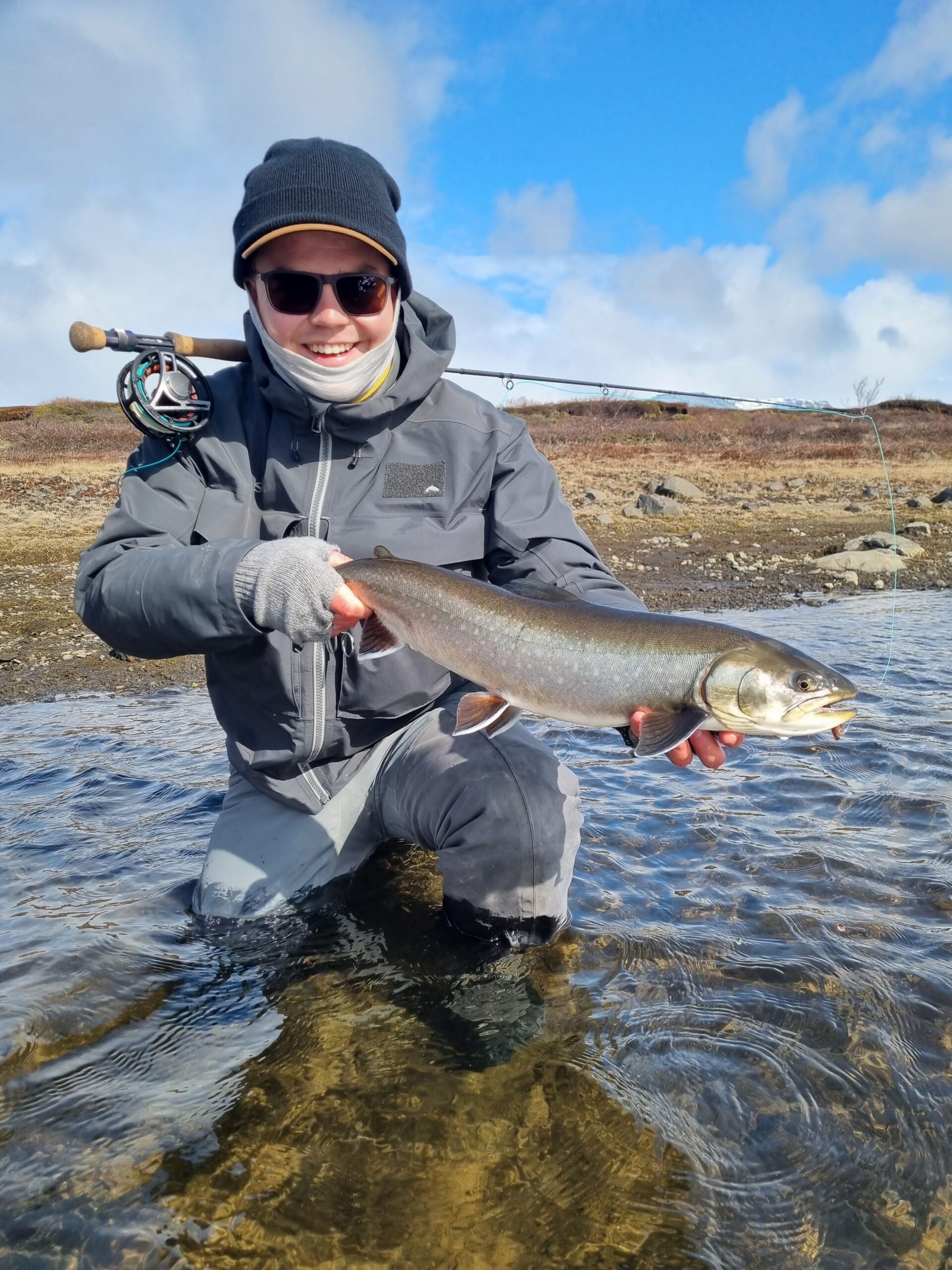
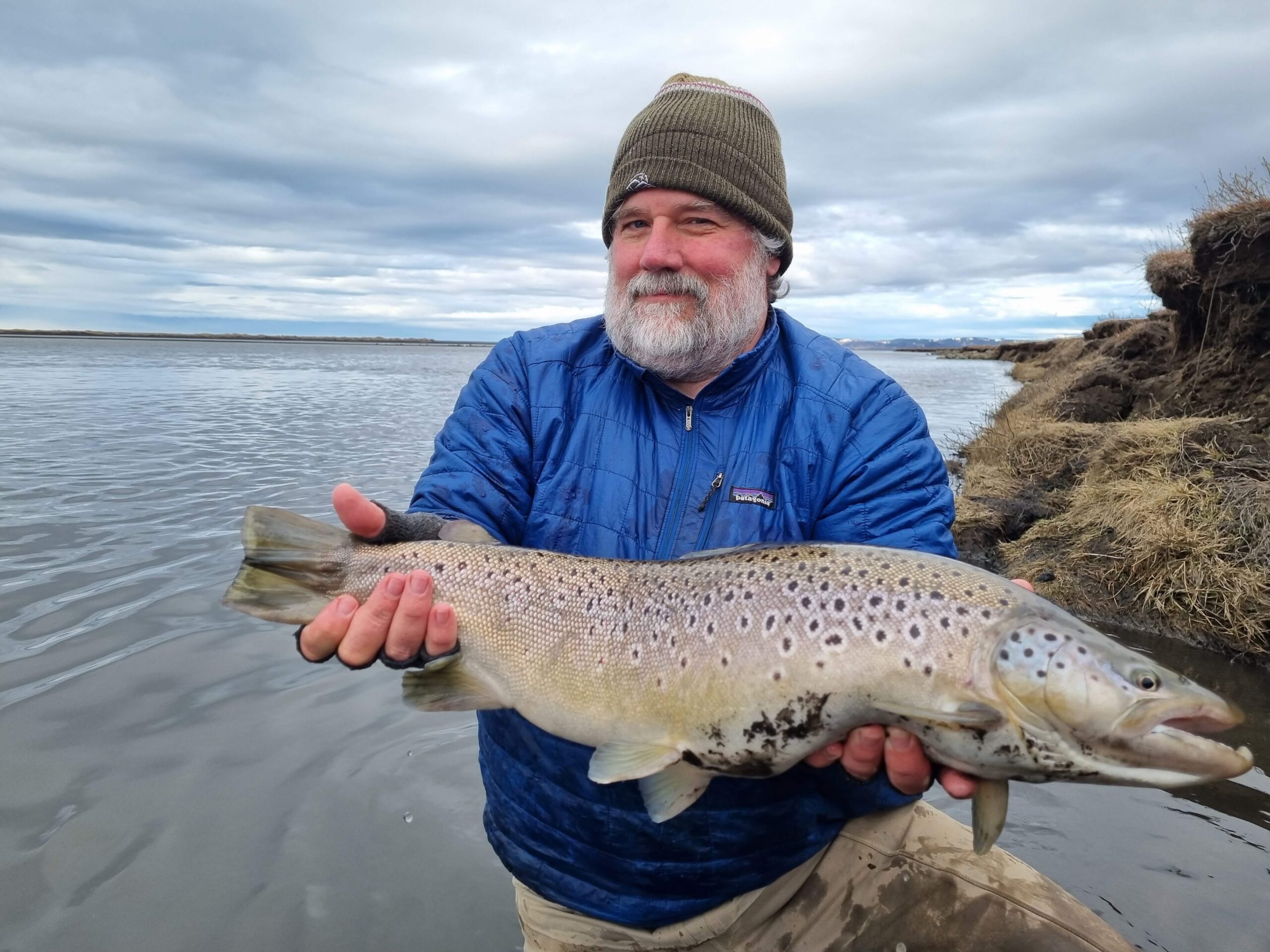
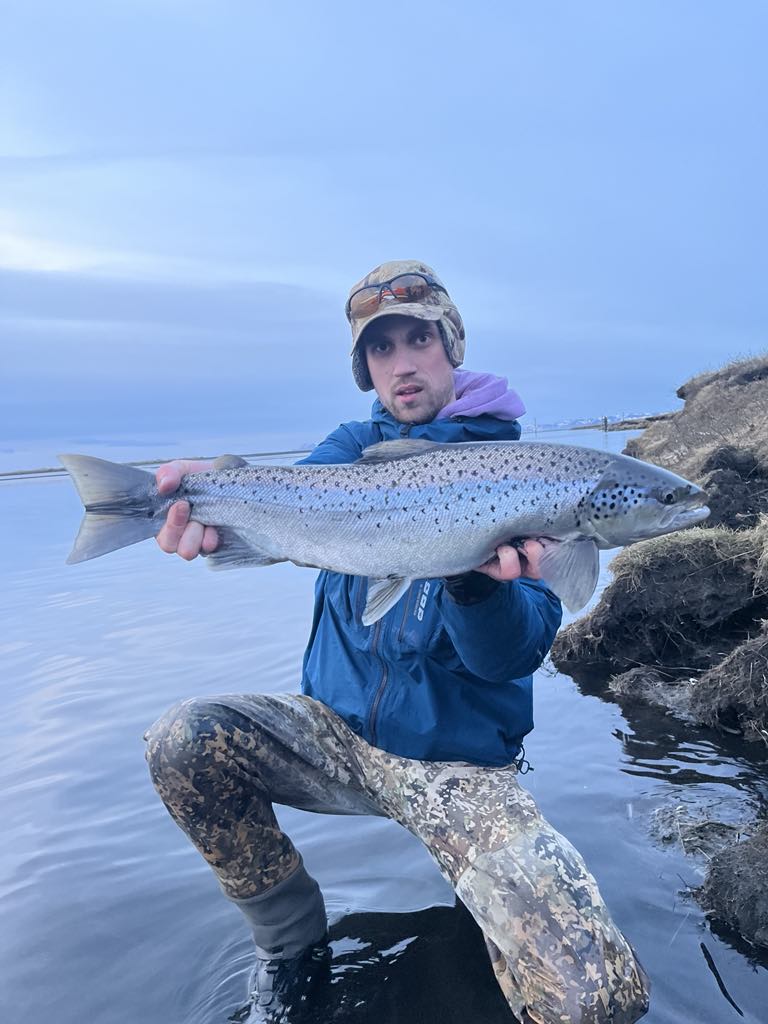
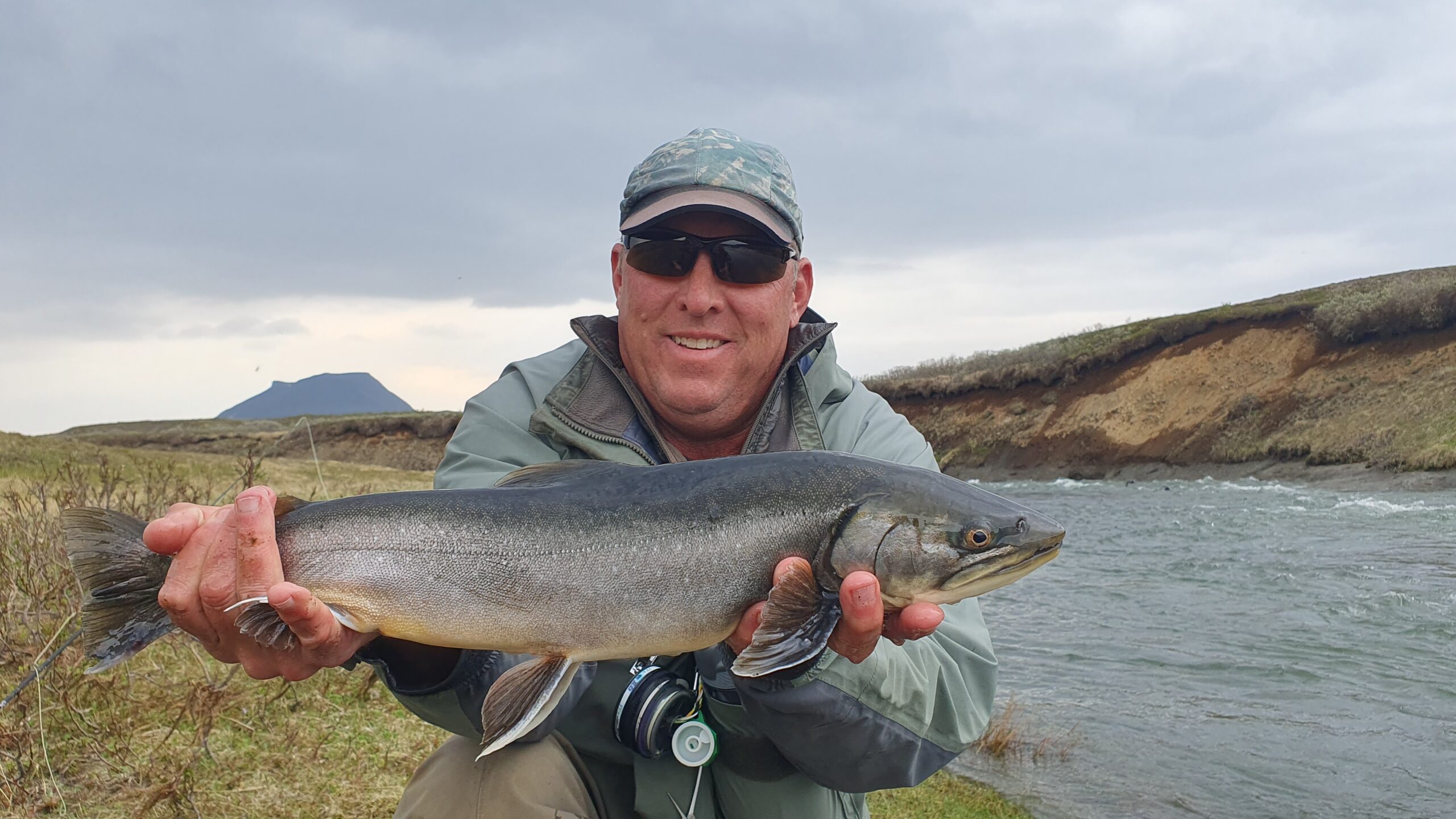
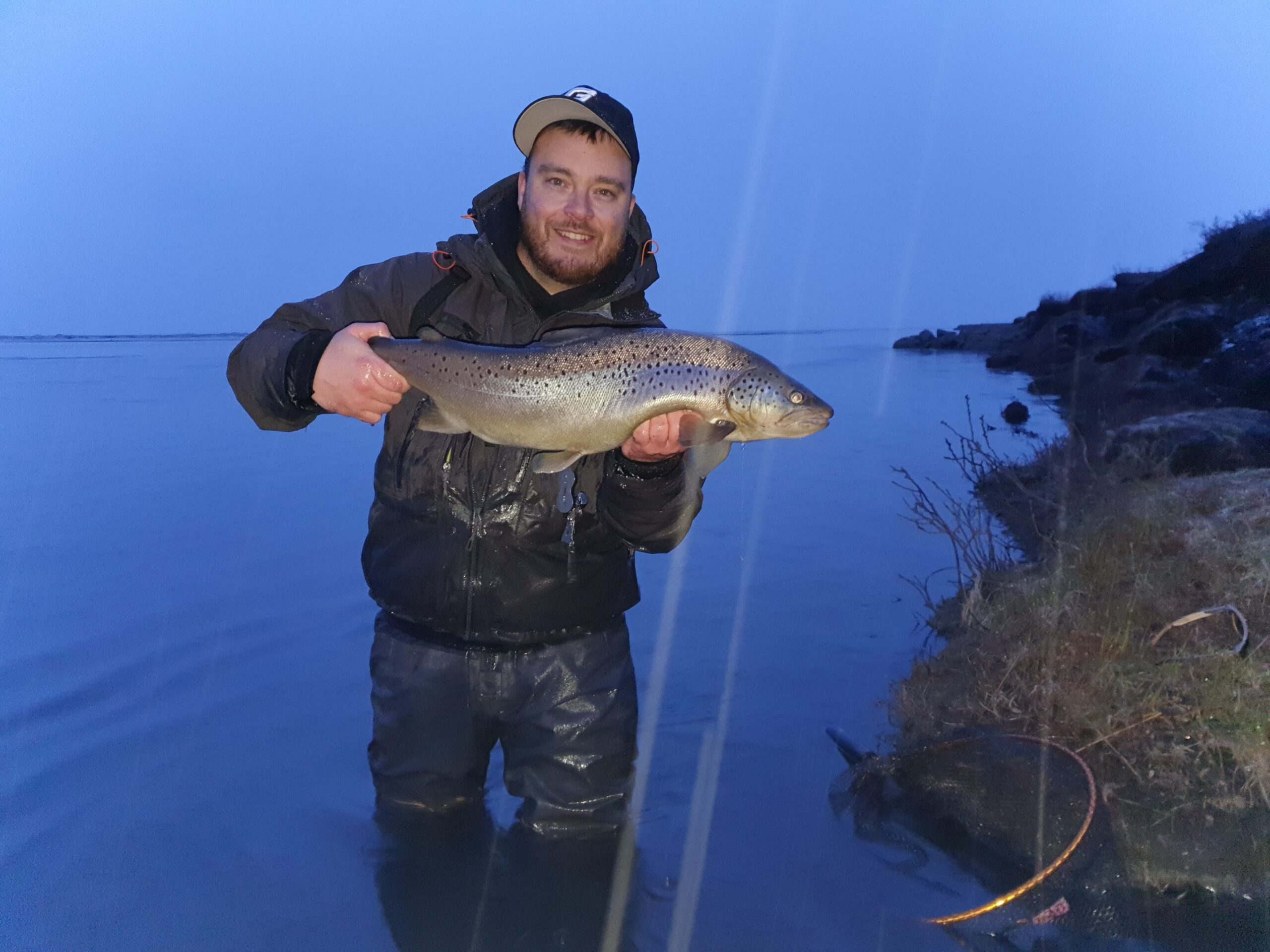
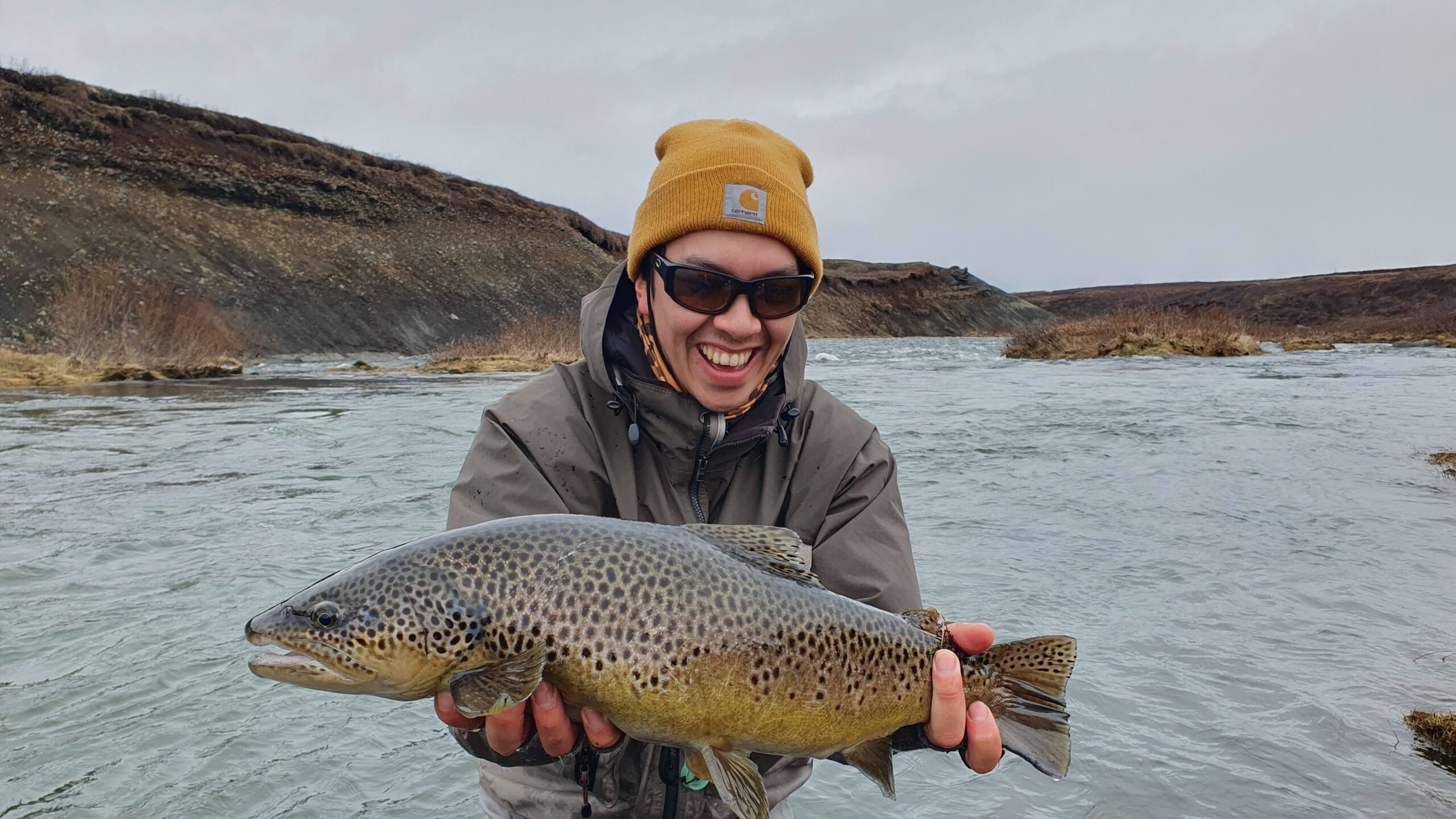
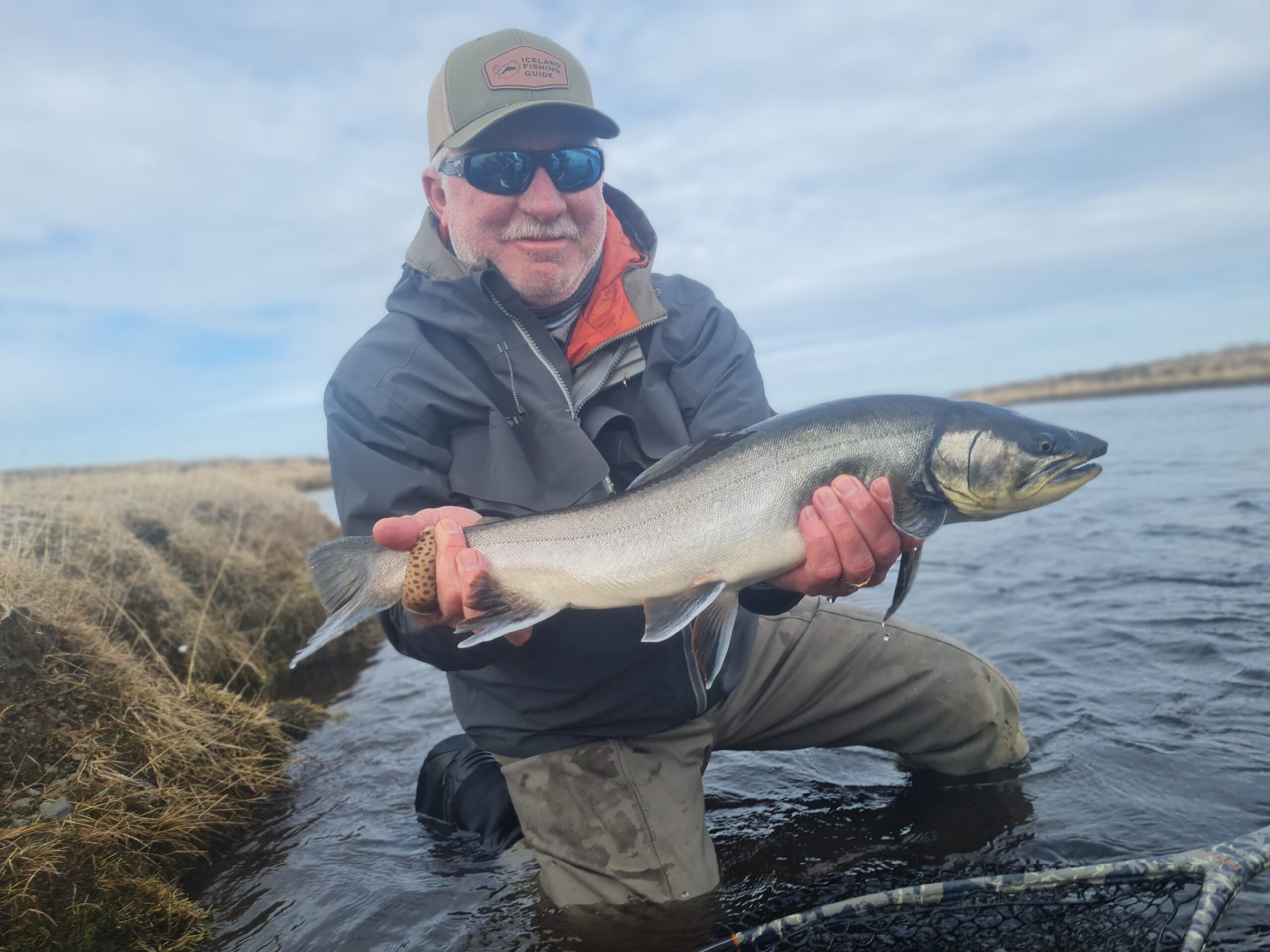
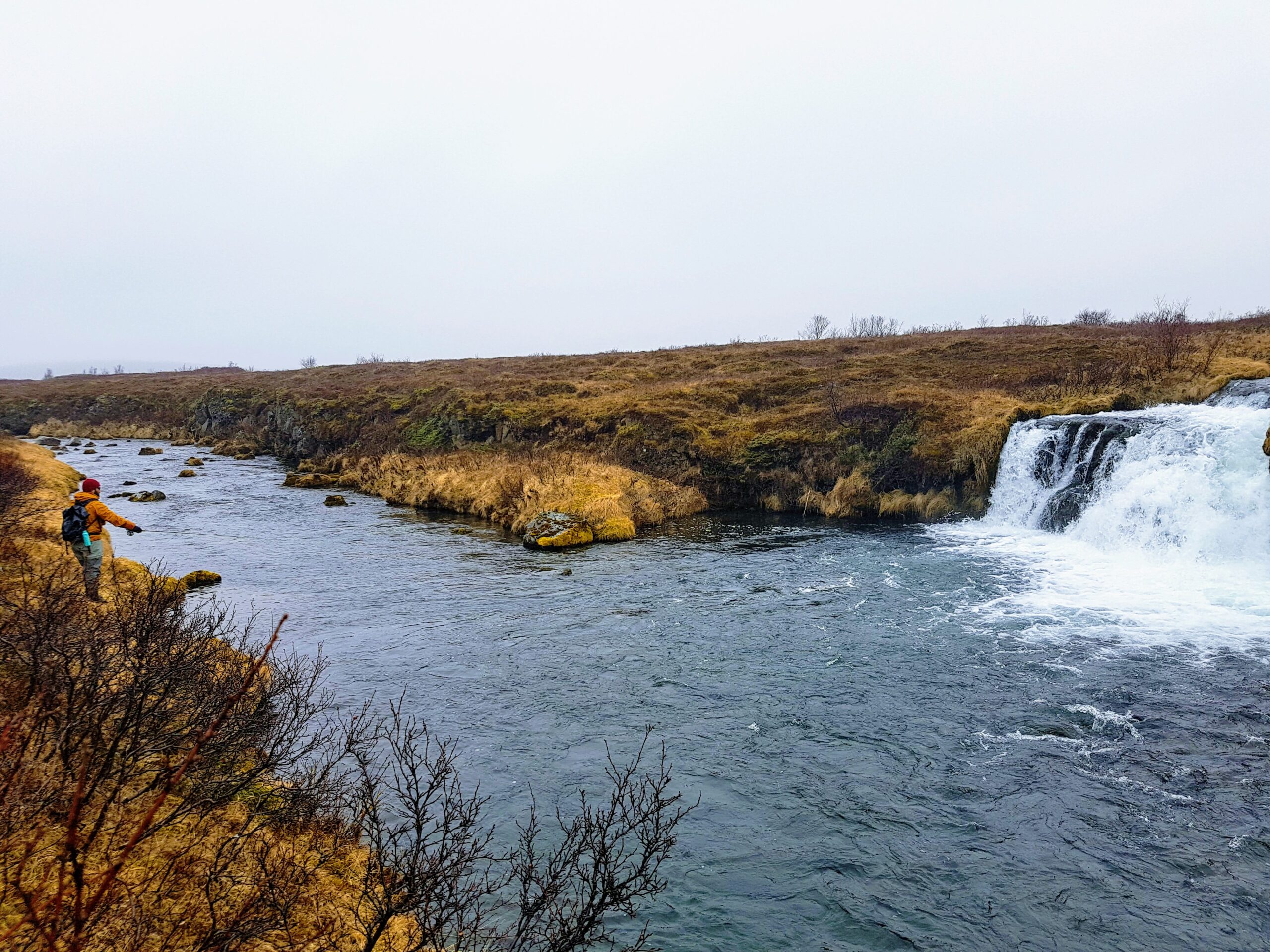
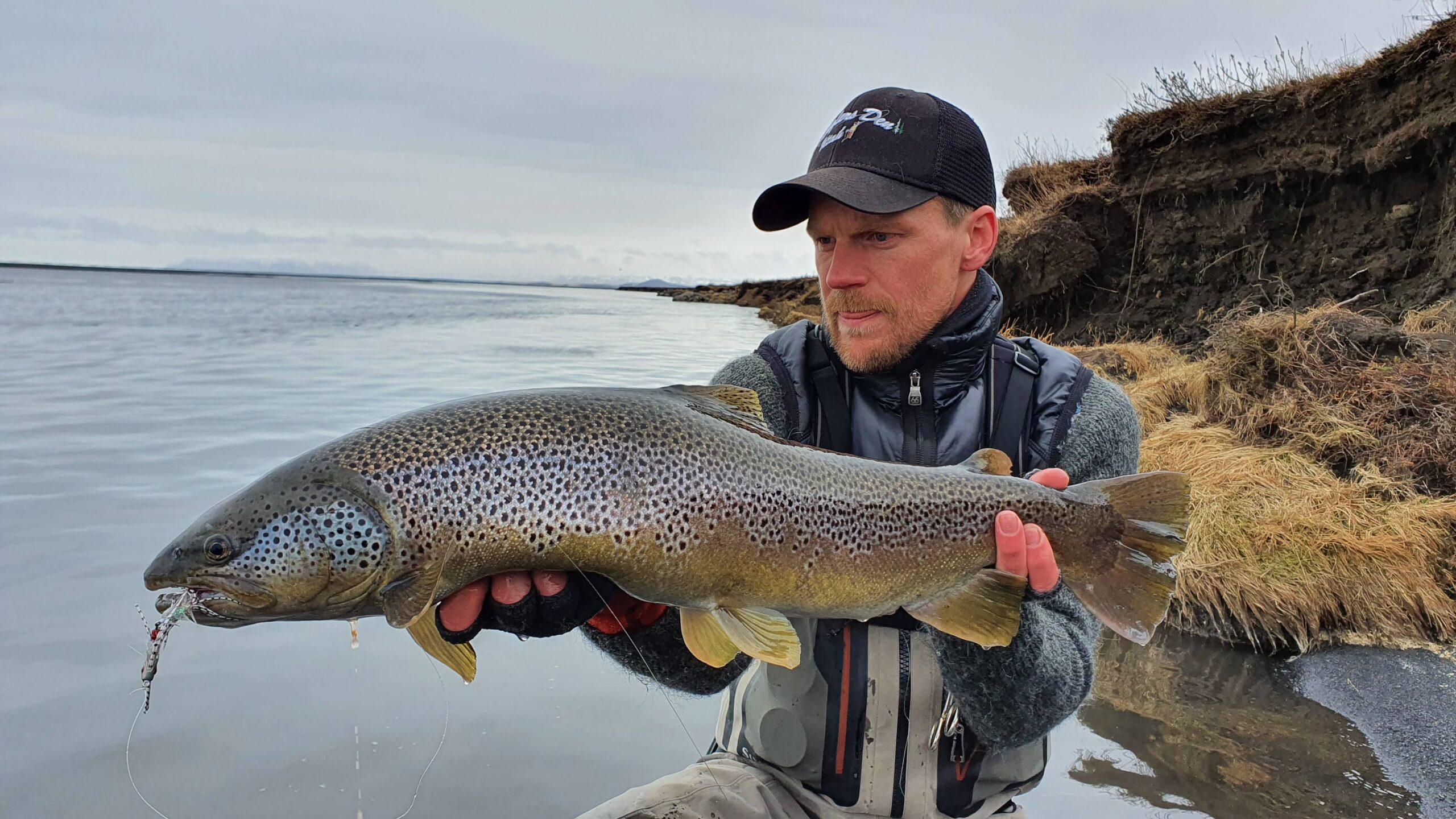
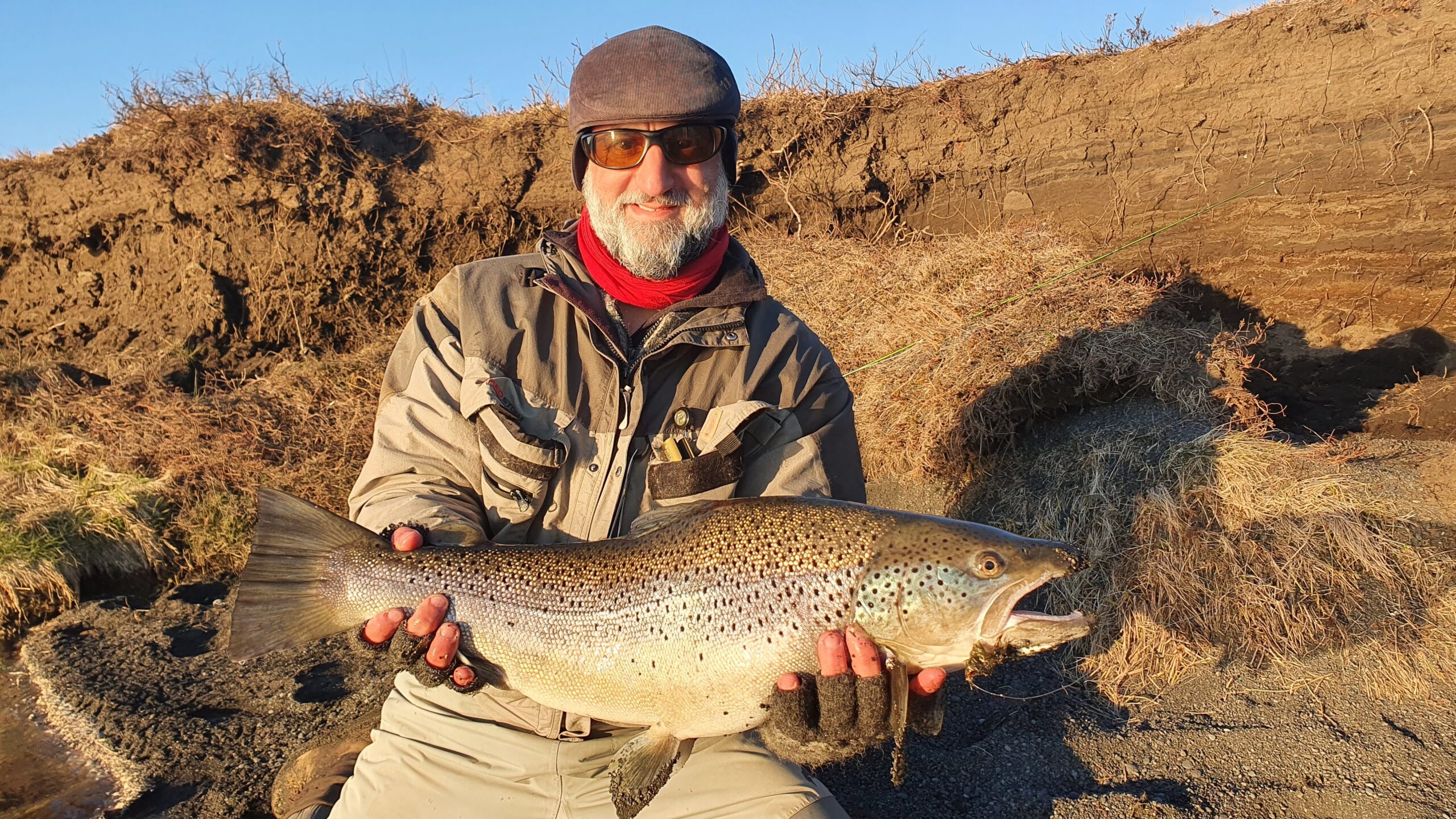
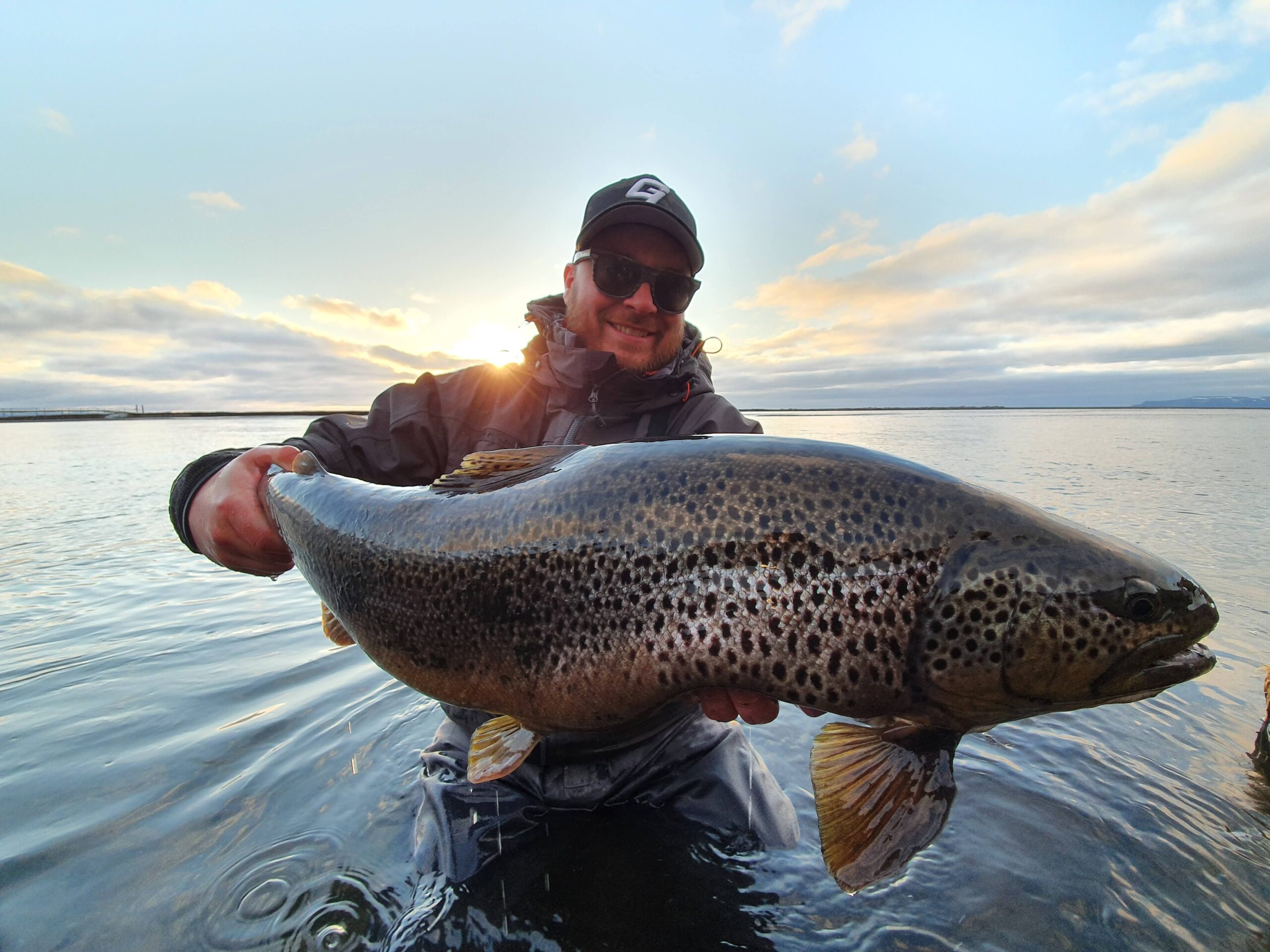
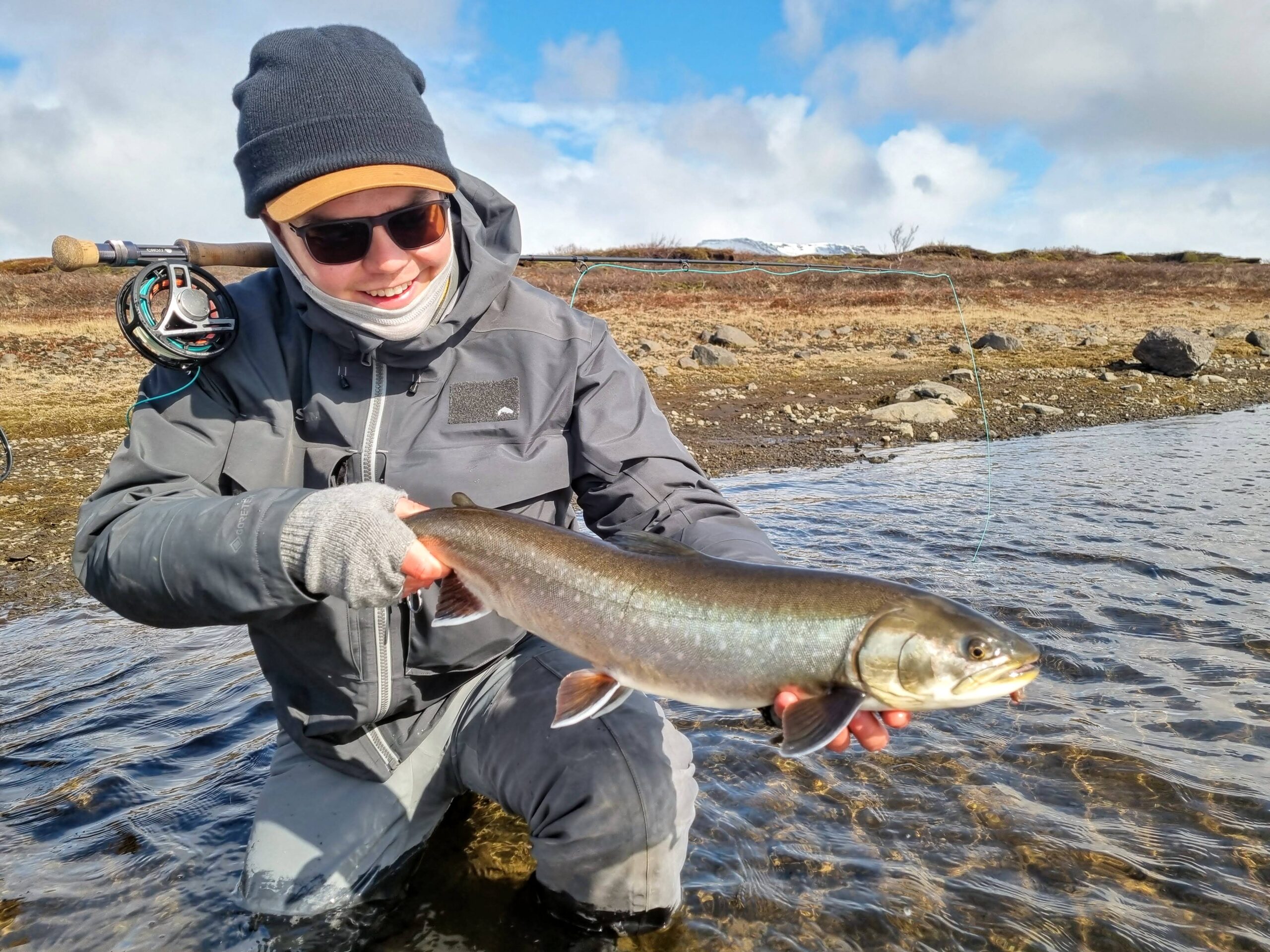
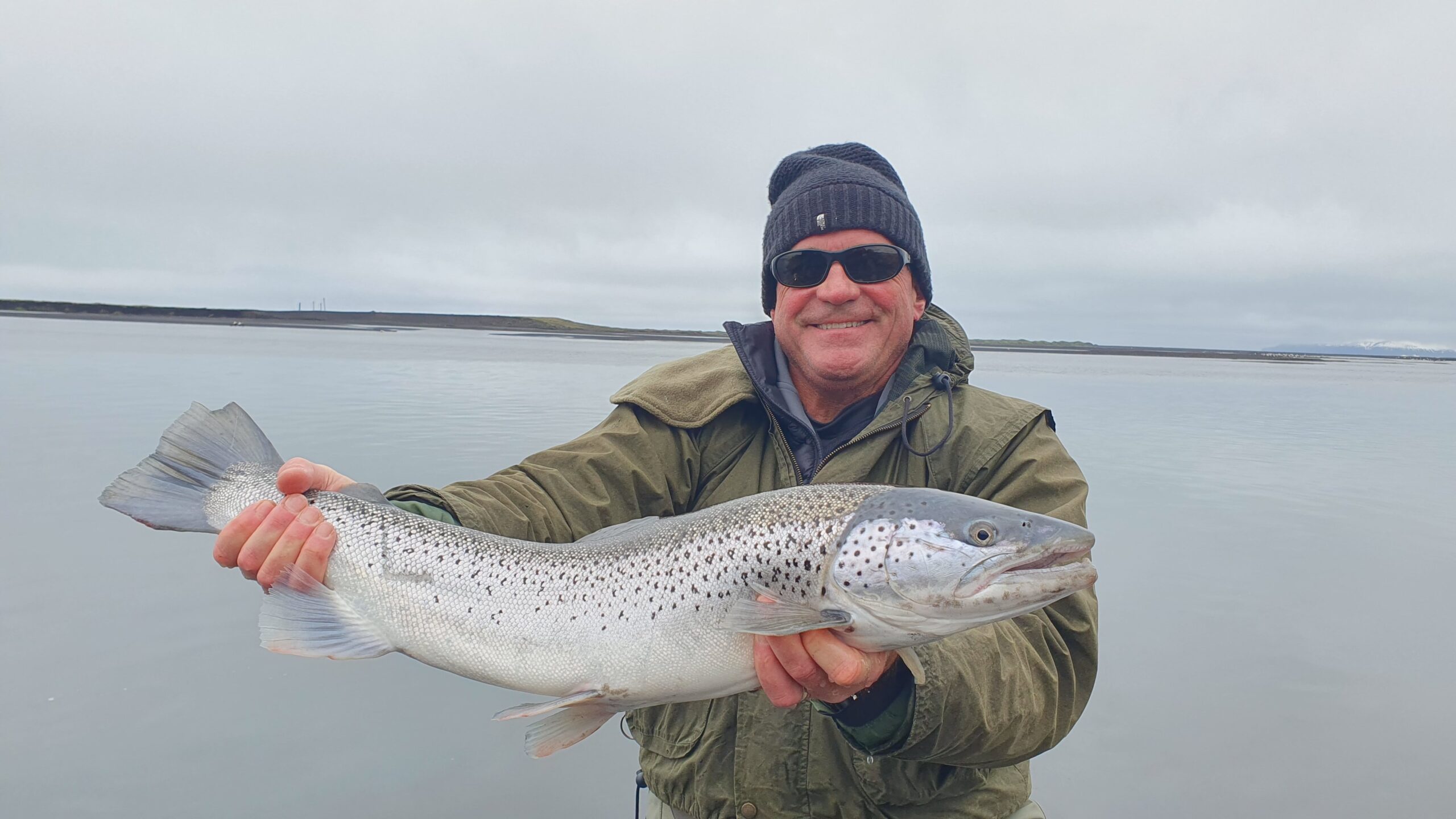

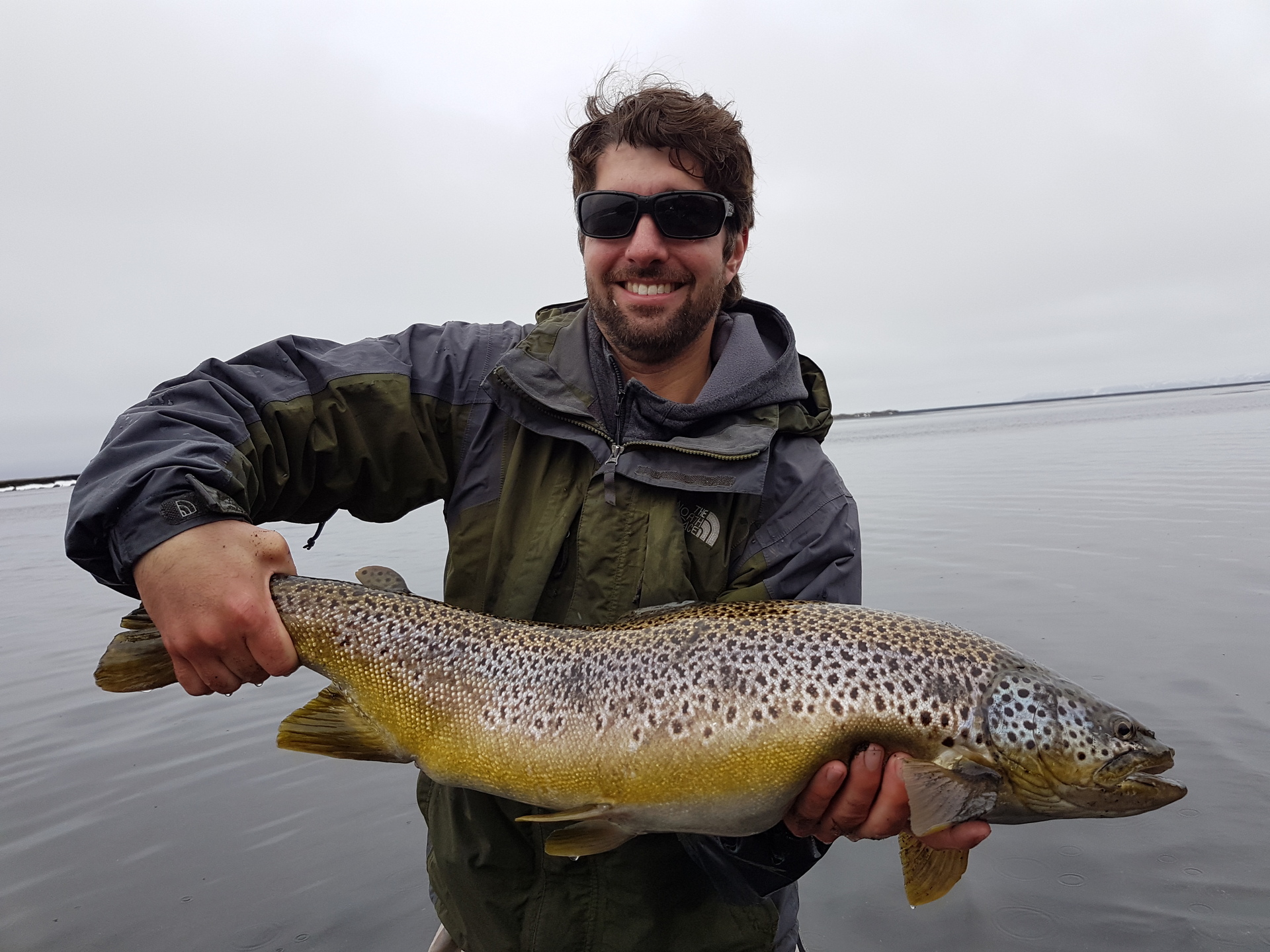
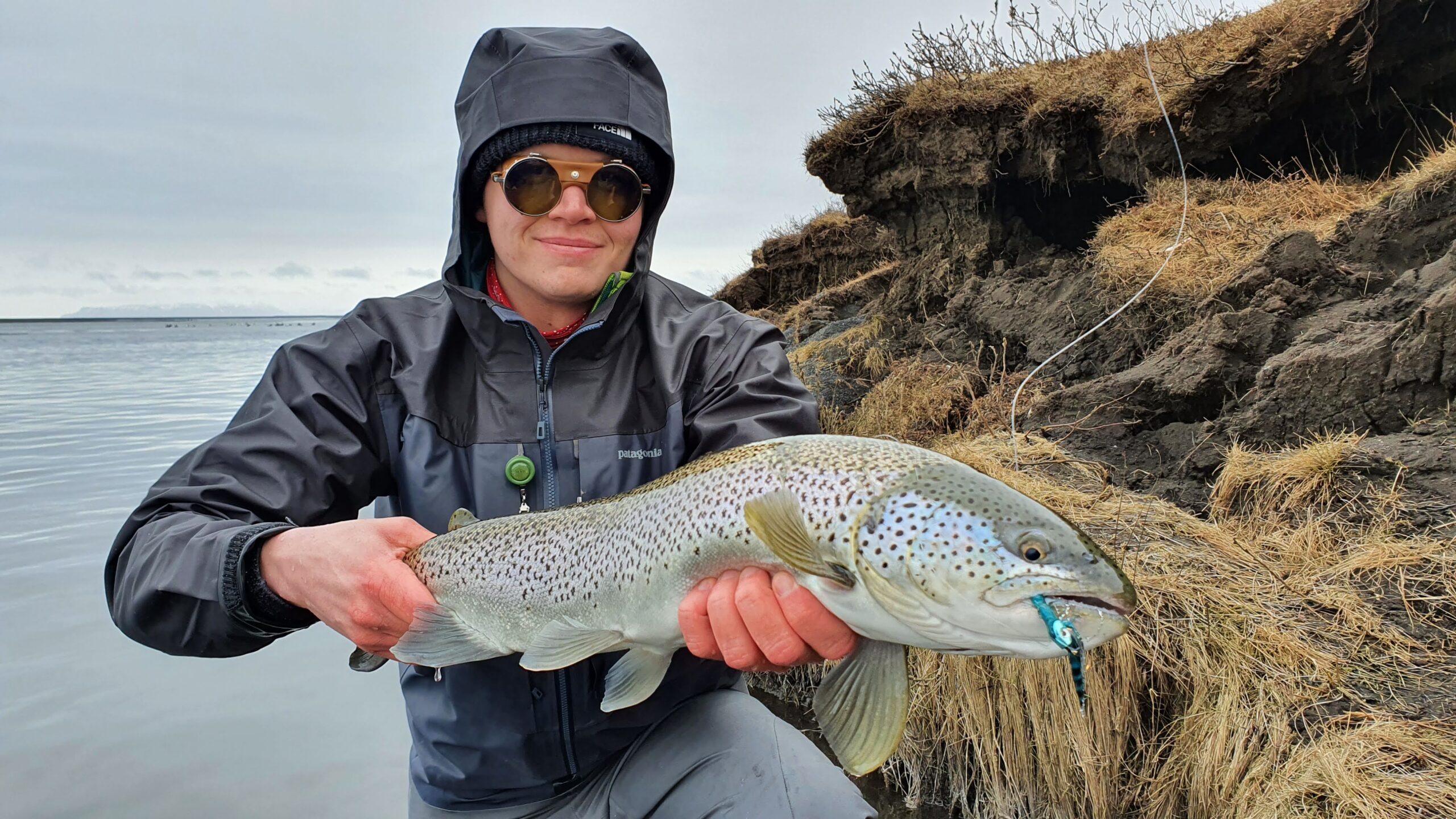
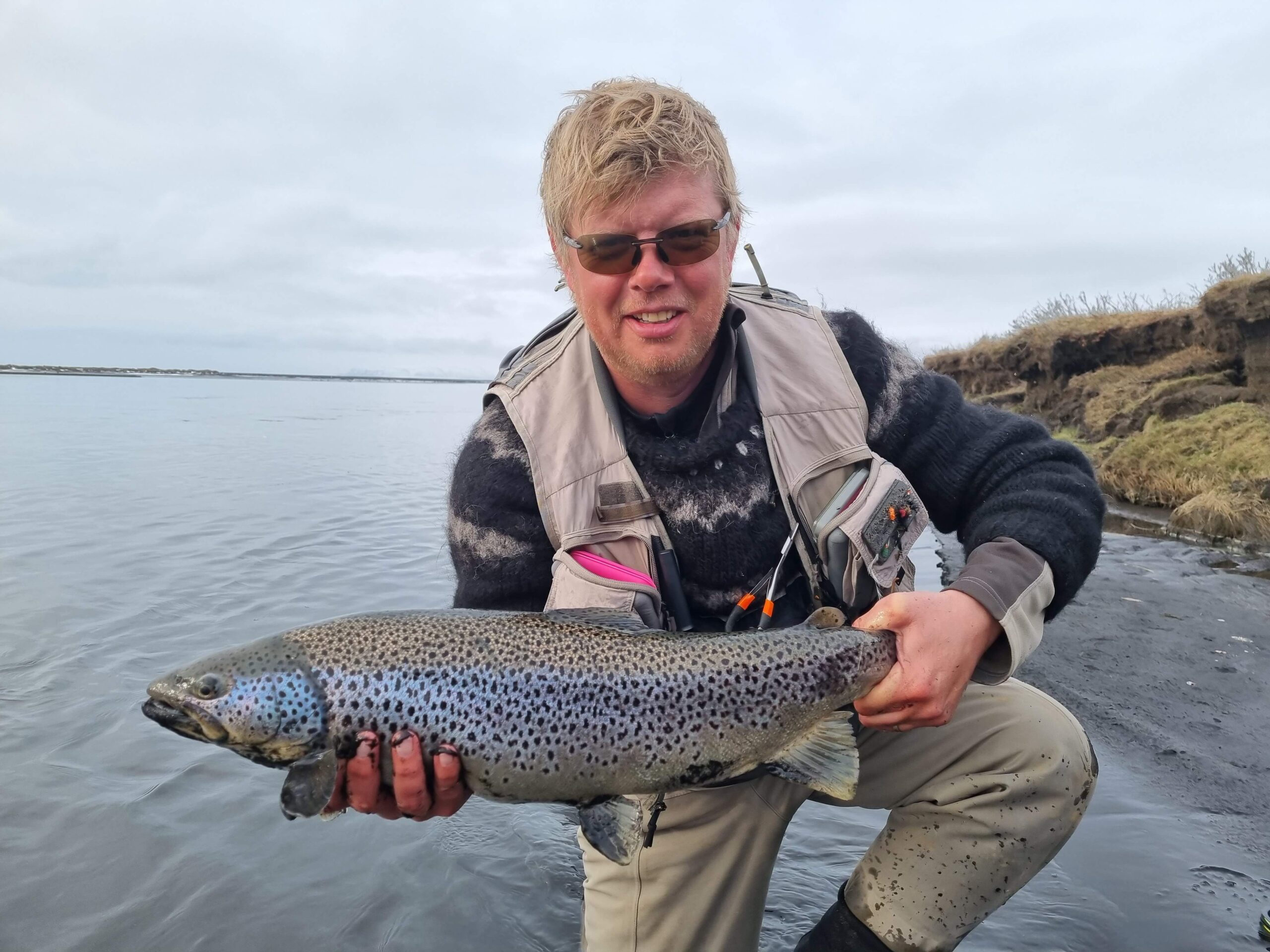
Photos from the spring fishing on river Brunná
Laxá in Aðaldalur – Trout Beats
While Laxá in Aðaldalur is famous worldwide as one of Iceland’s great salmon rivers, it is also widely considered one of the best brown trout rivers on the planet.
The river is incredibly fertile thanks to its connection to Lake Mývatn, a shallow lake that produces enormous amounts of aquatic insects. The river itself flows over black lava sand and remains relatively shallow and wide, creating ideal conditions for insect production.
As a result, trout in Laxá grow strong and powerful, accustomed to living in steady currents and feeding heavily.
Average trout size ranges from 2–3 pounds, but fish up to 8 pounds are caught every season.
During spring sessions we typically aim to catch 6–20 trout per outing, most commonly in the 18–25 inch range. Interestingly, many of the largest trout of the year are caught during the spring months.
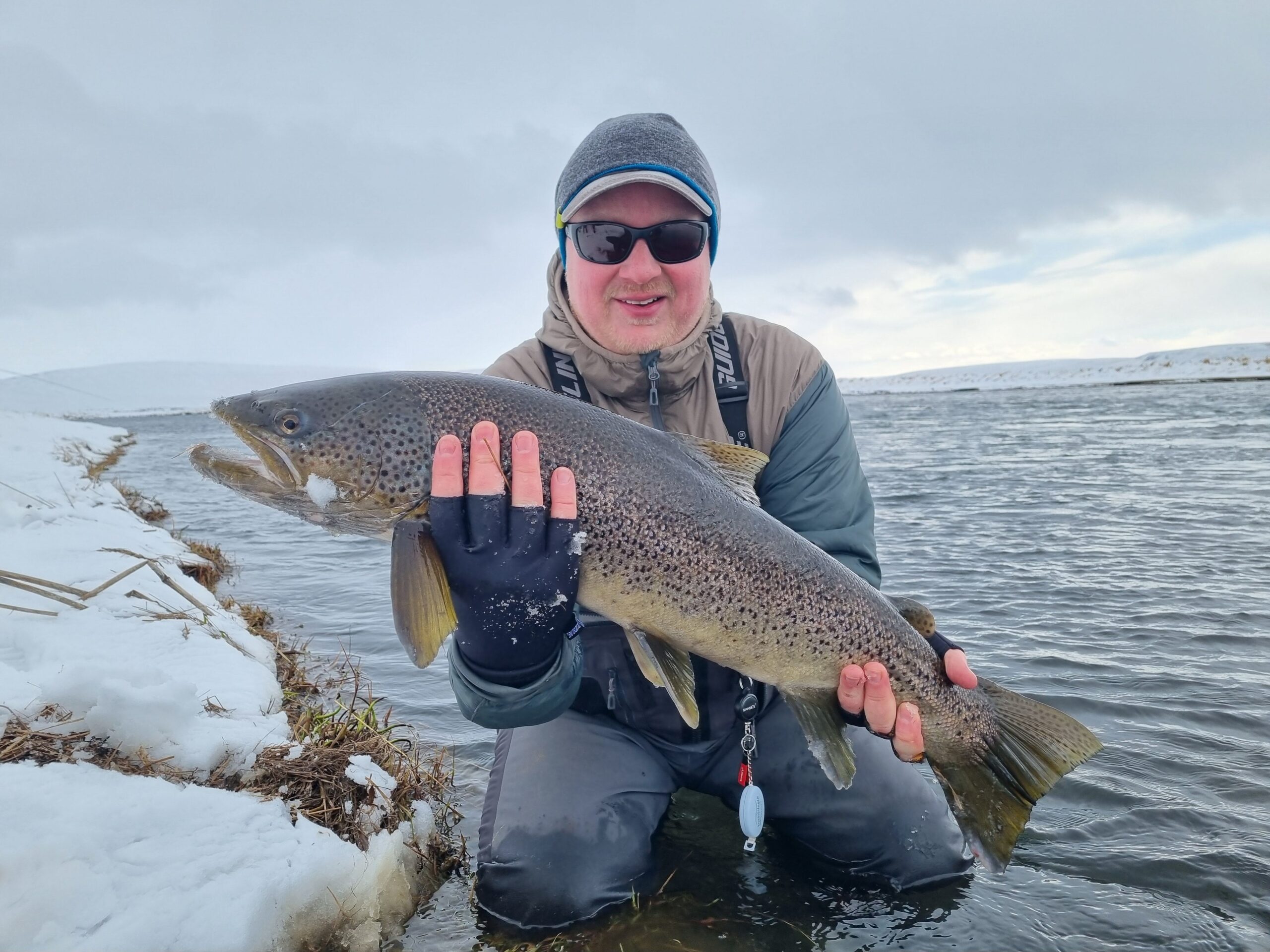
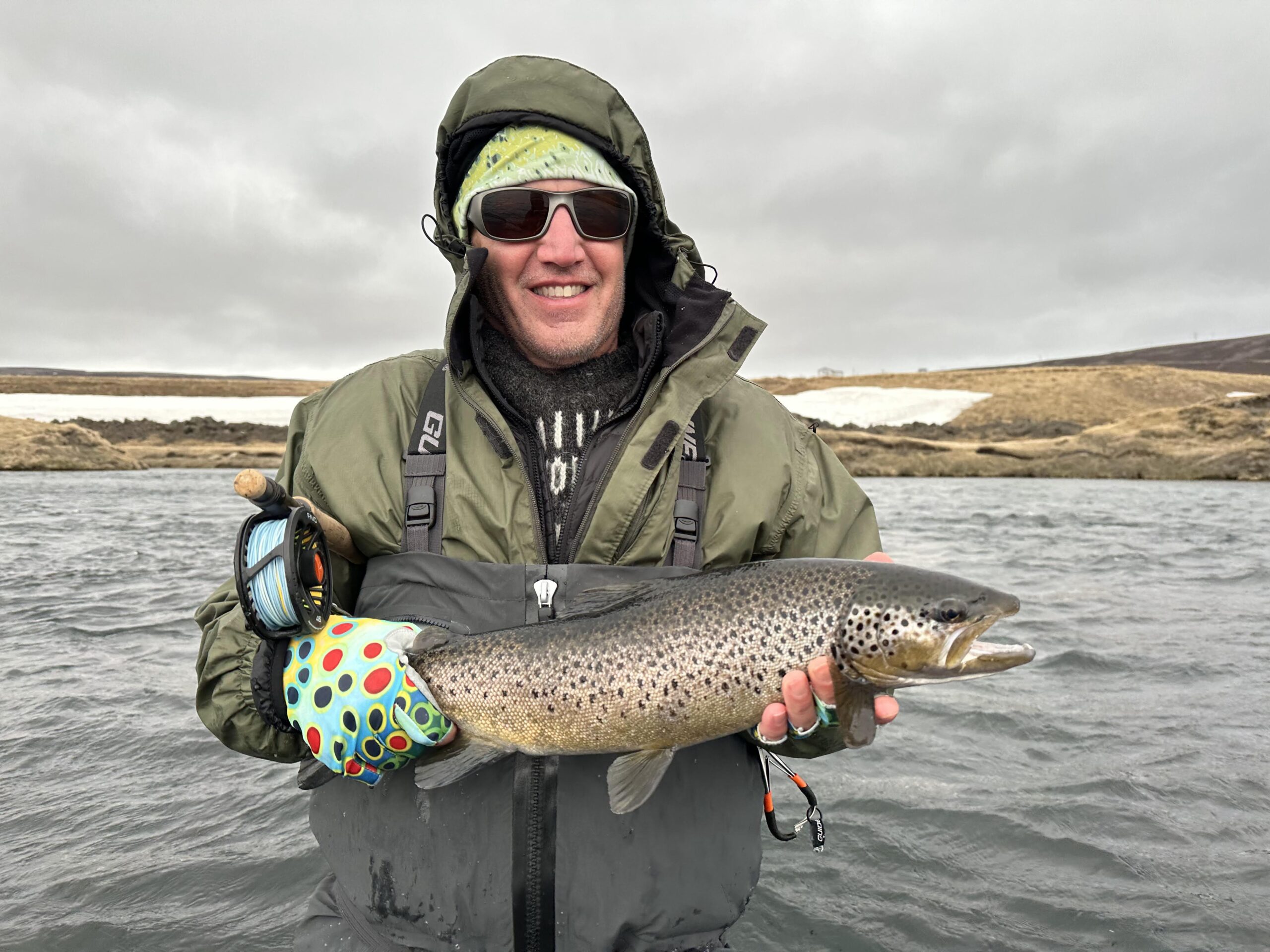
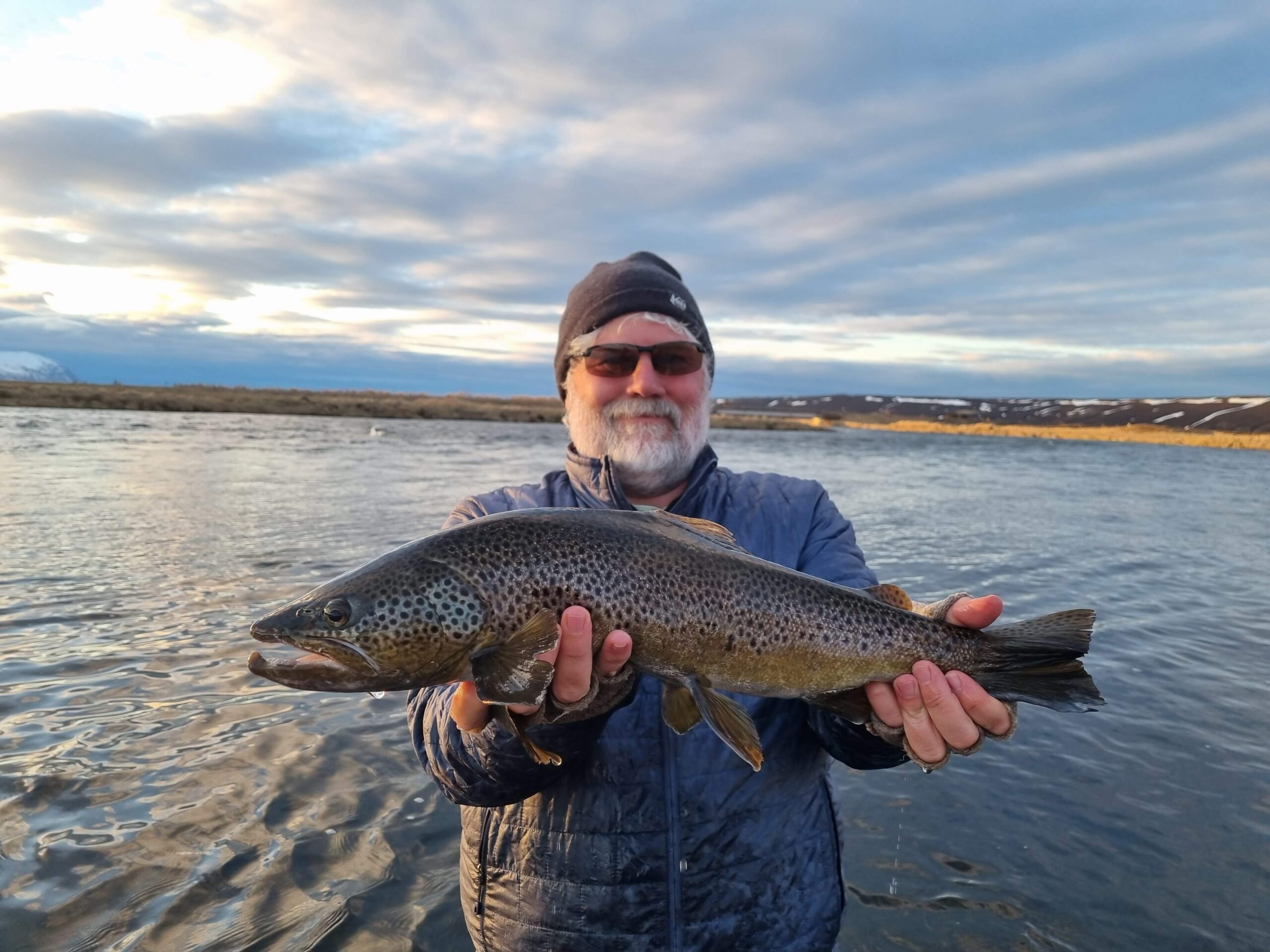
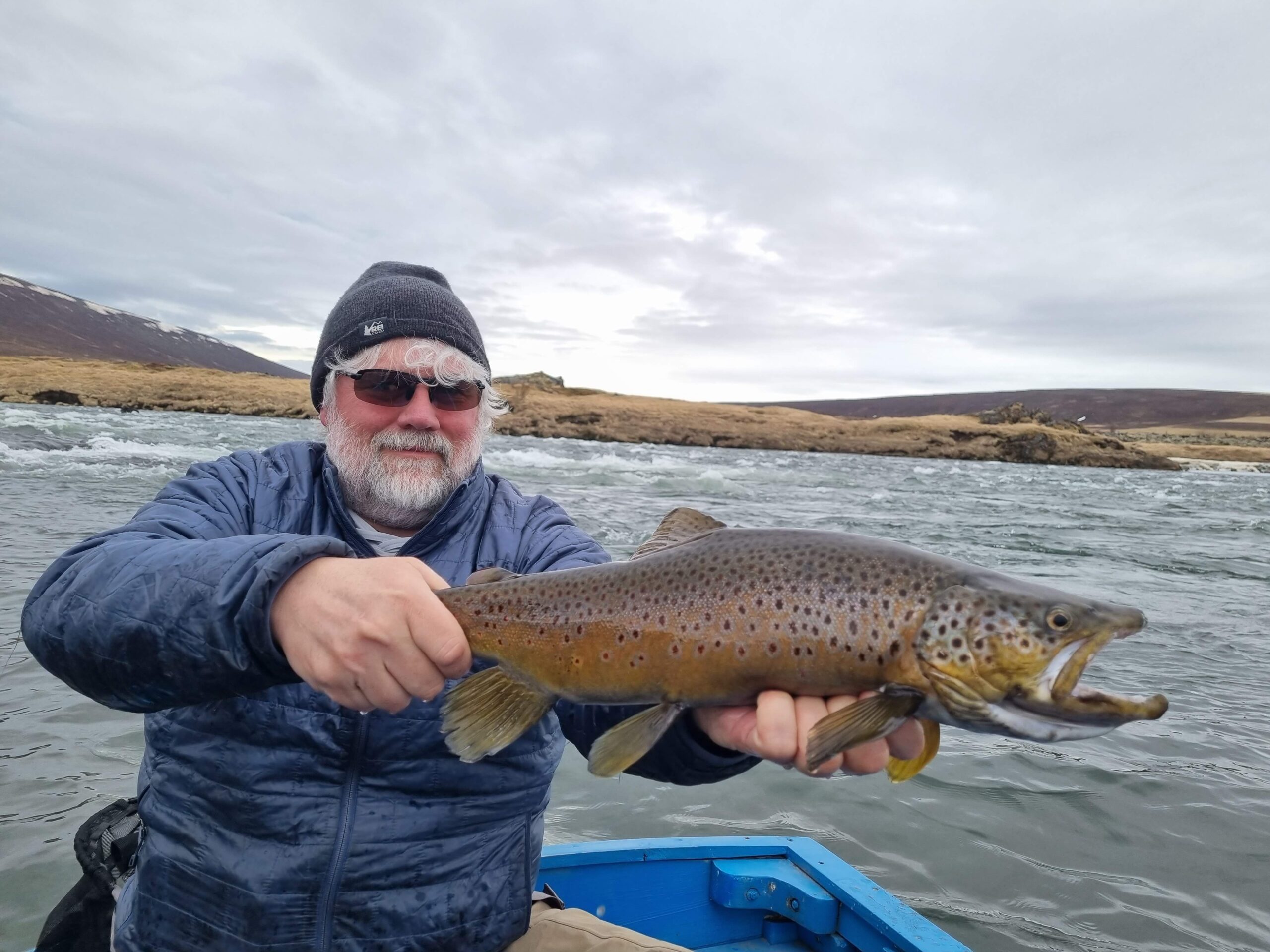
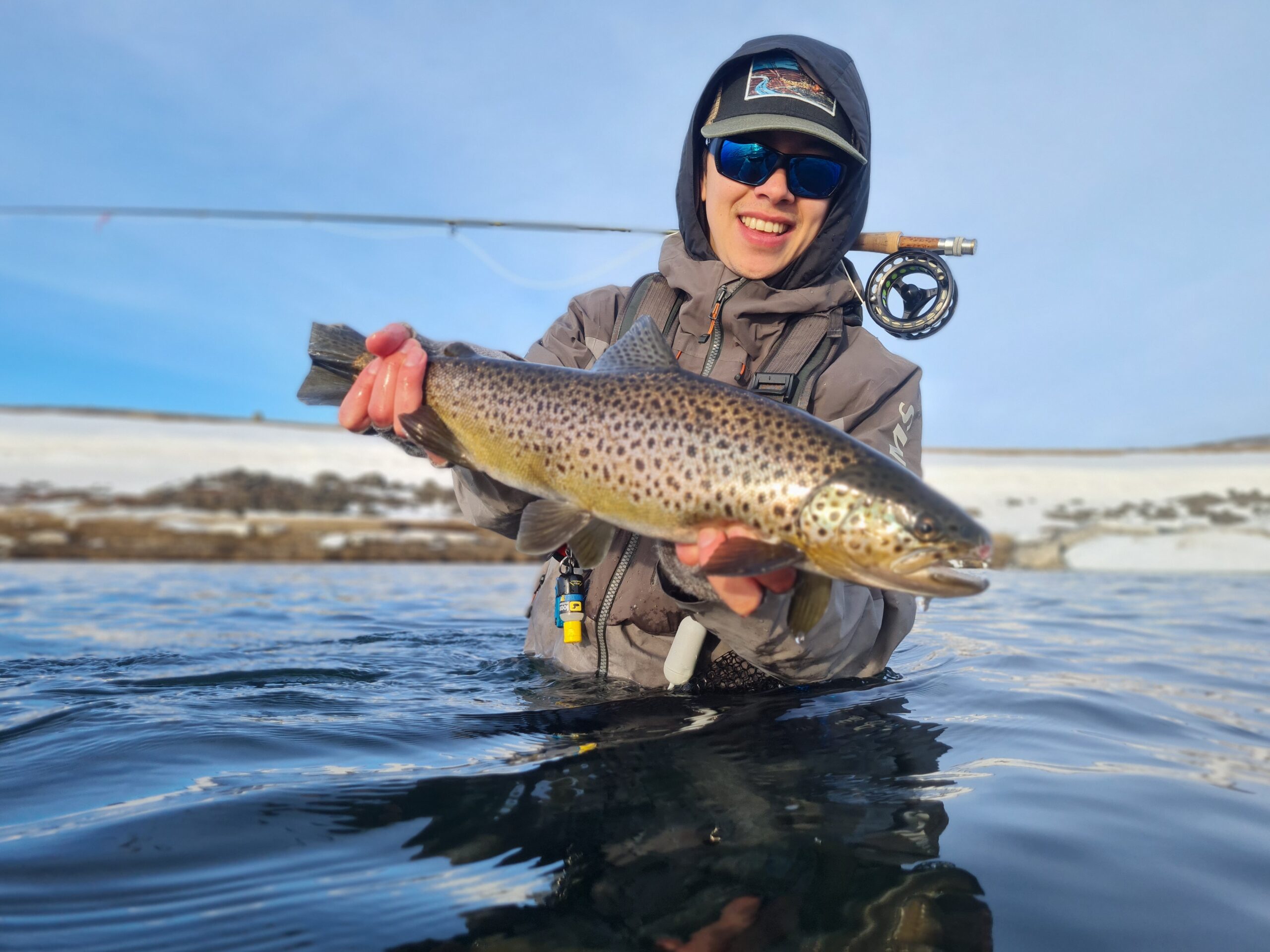
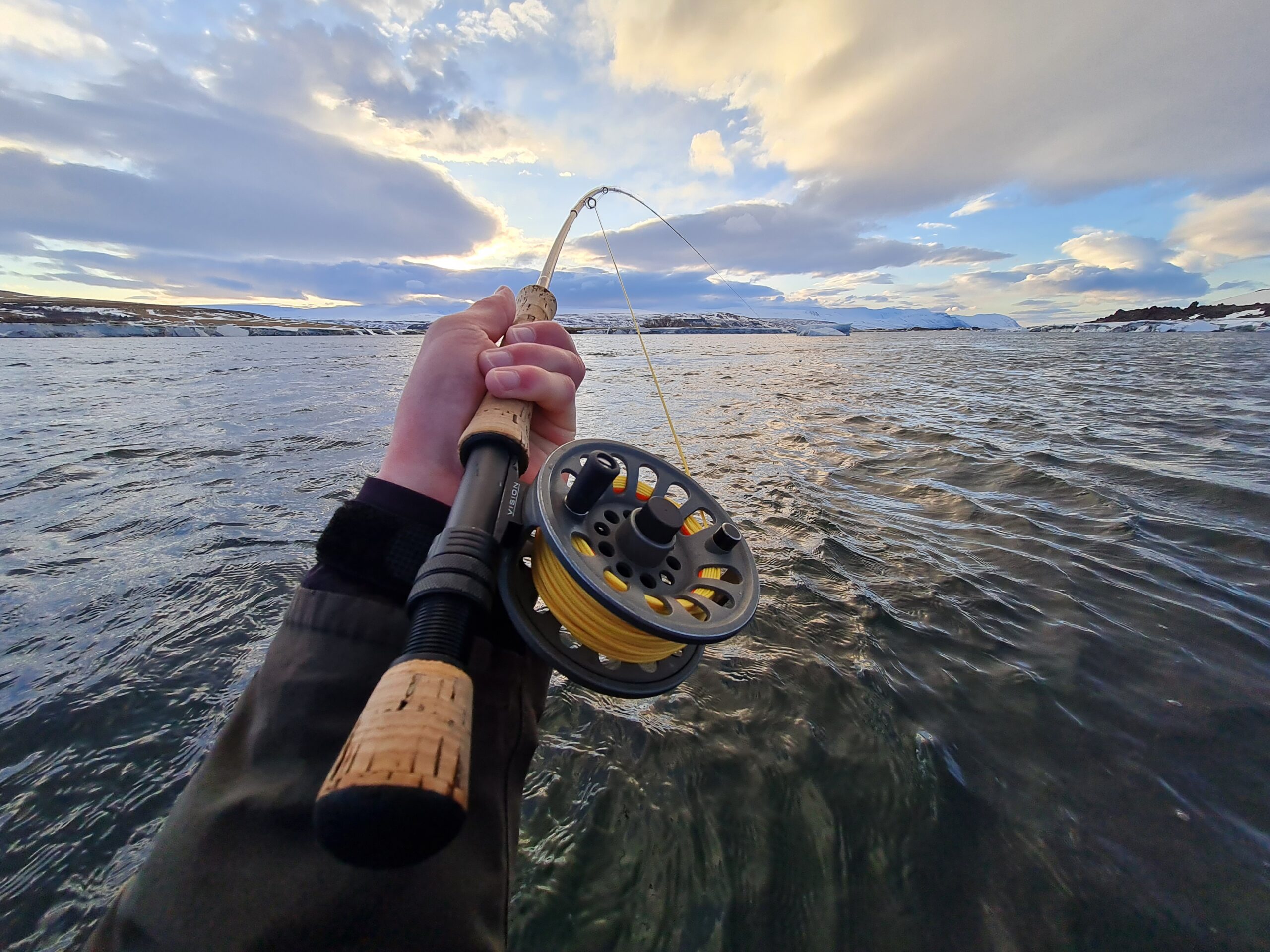
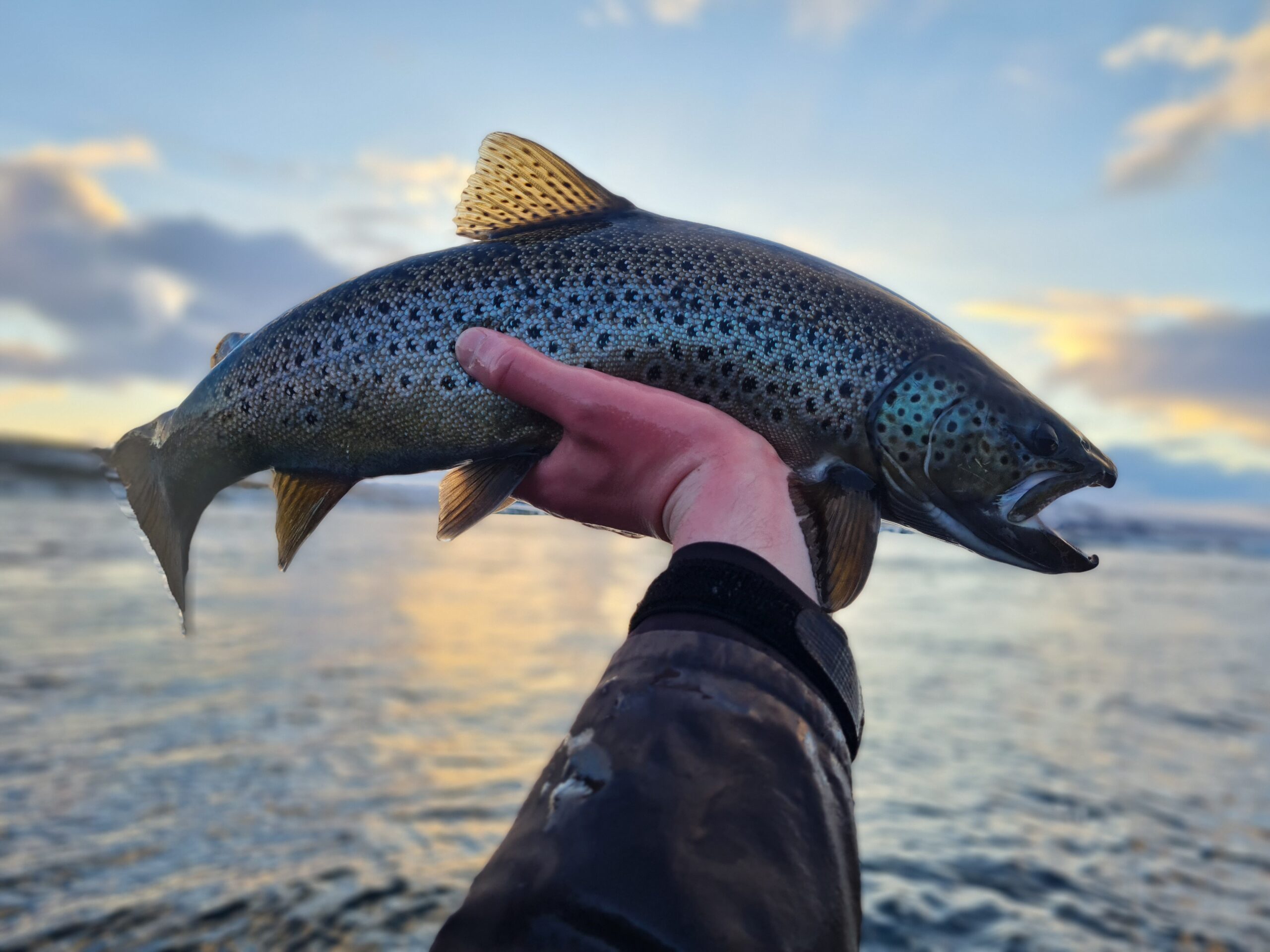
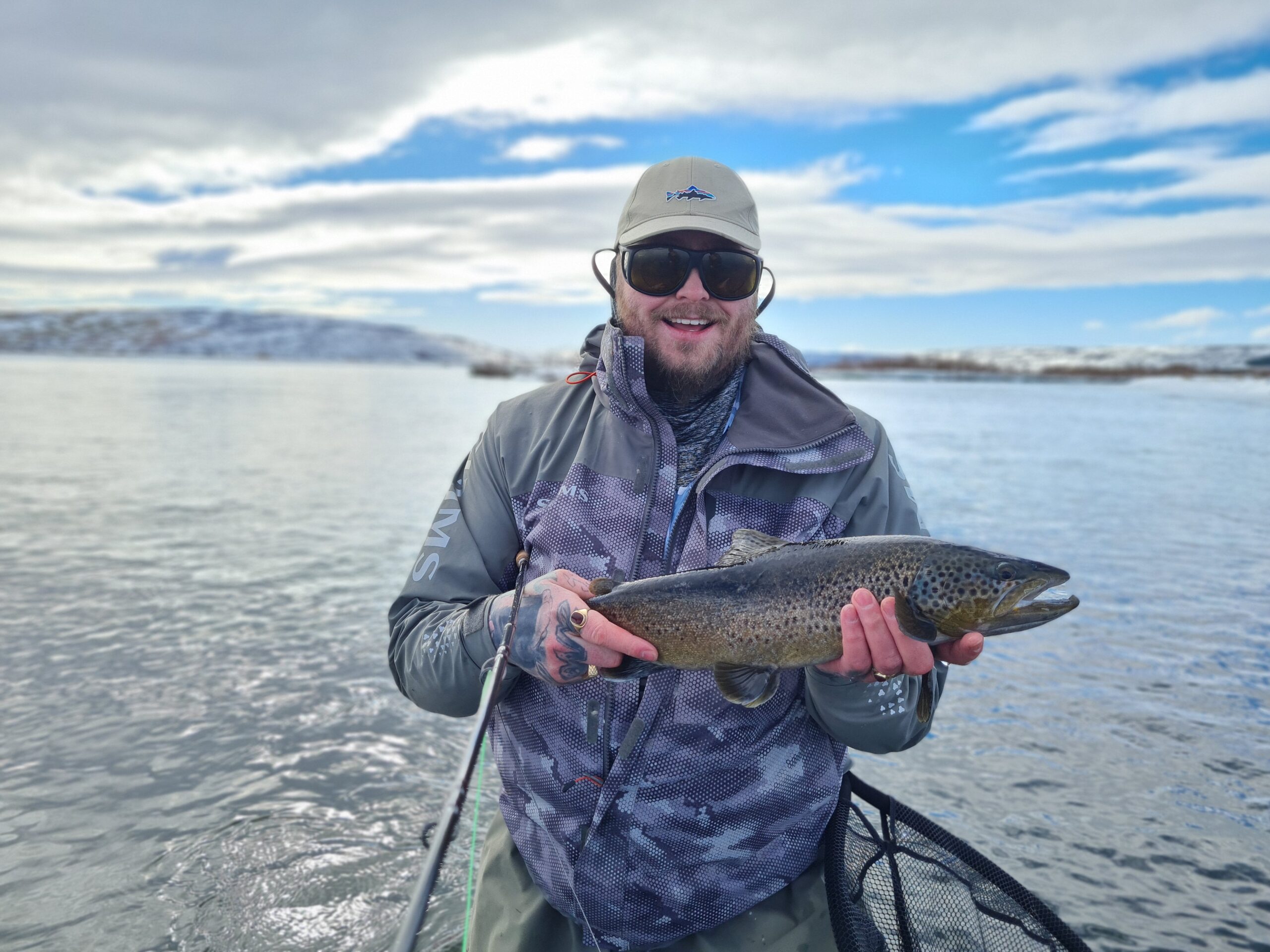
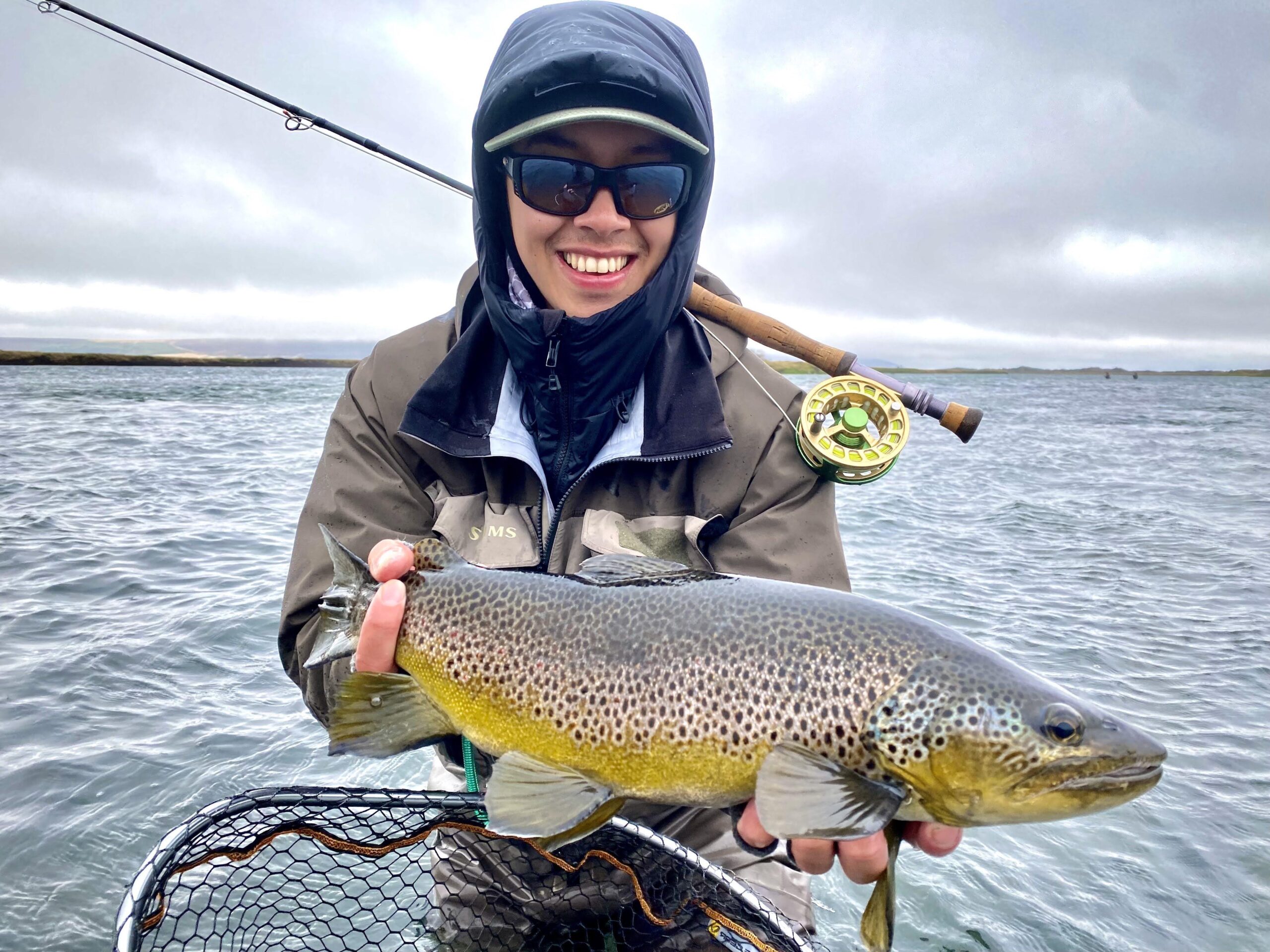
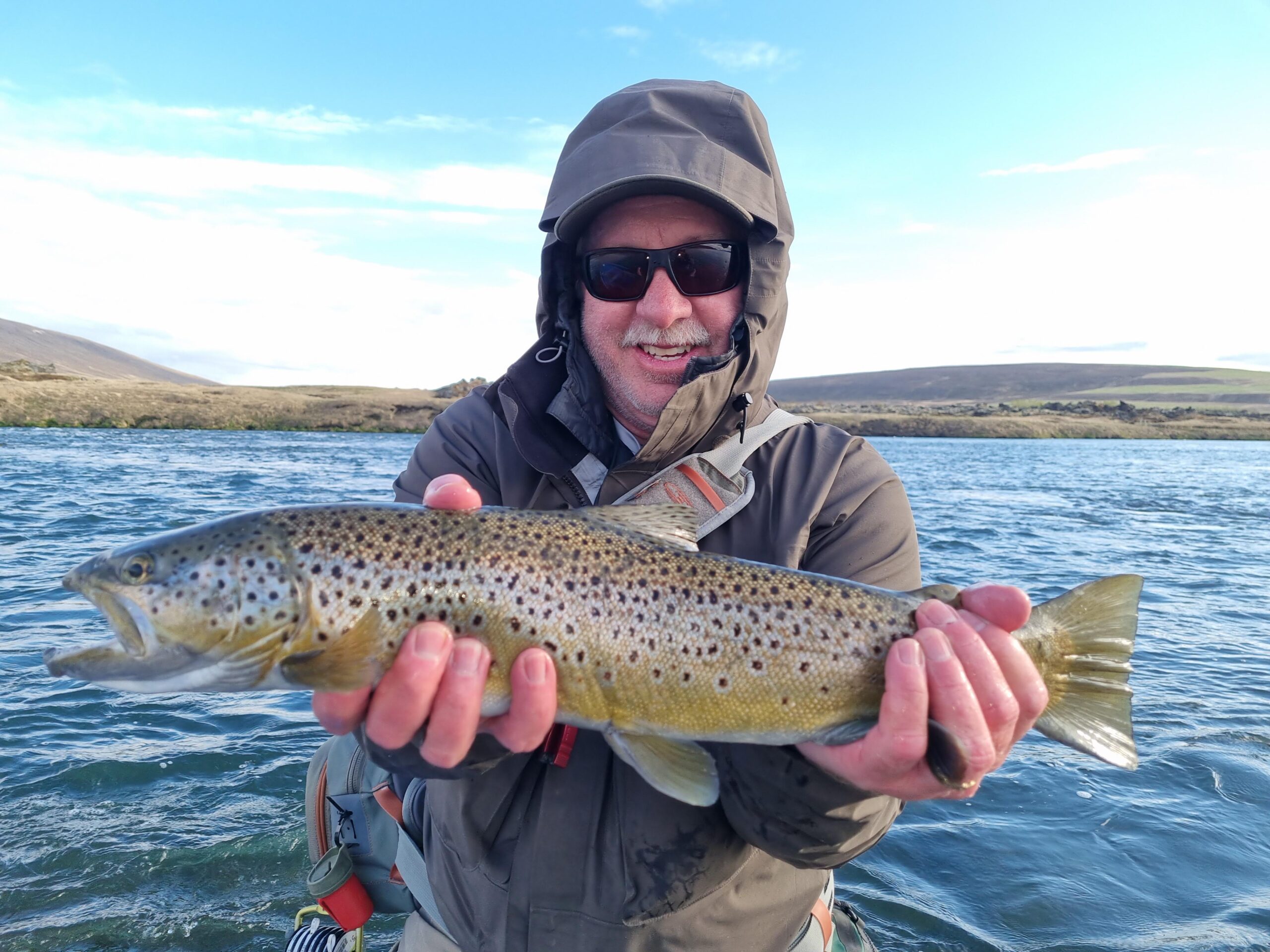
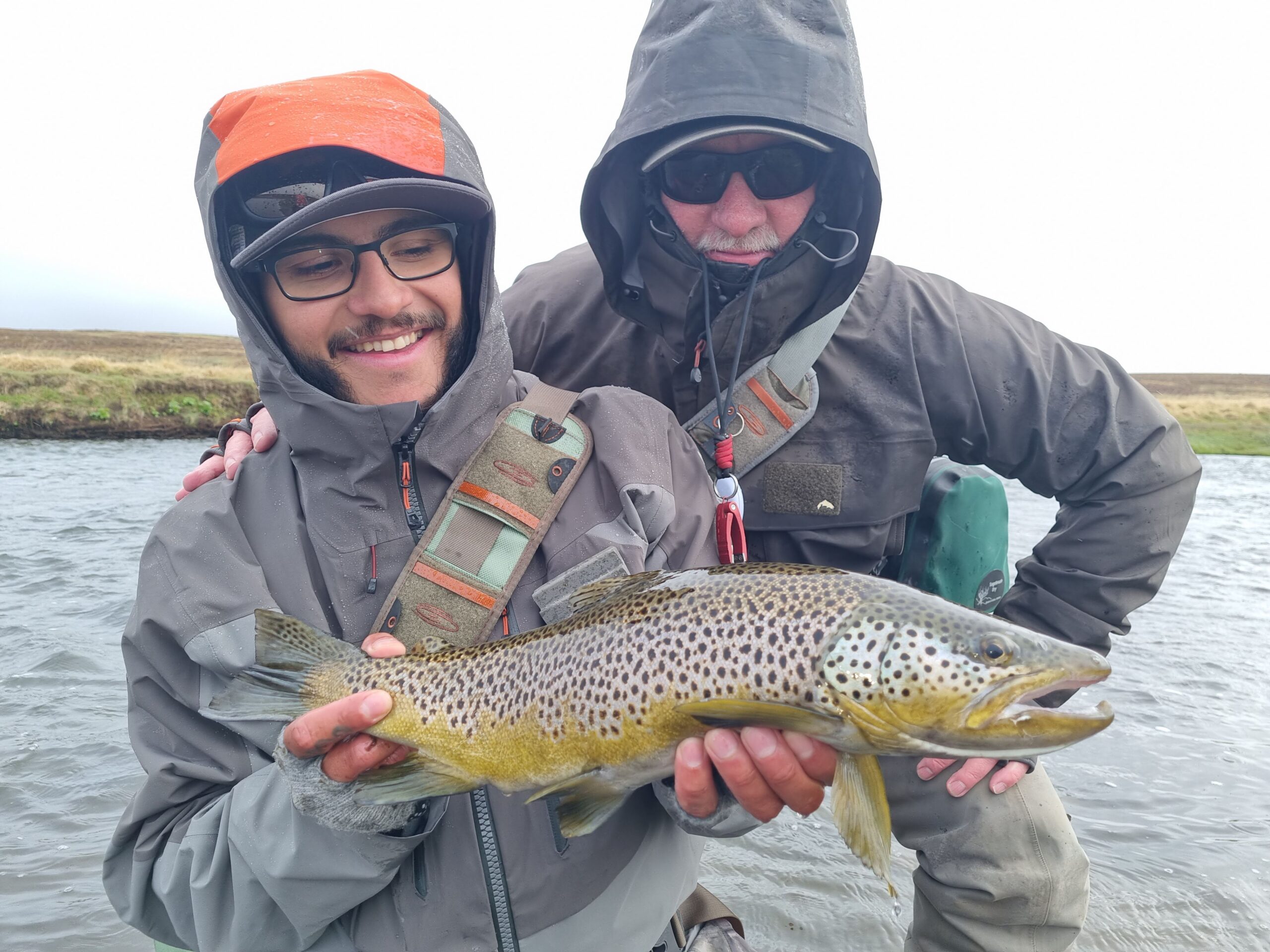
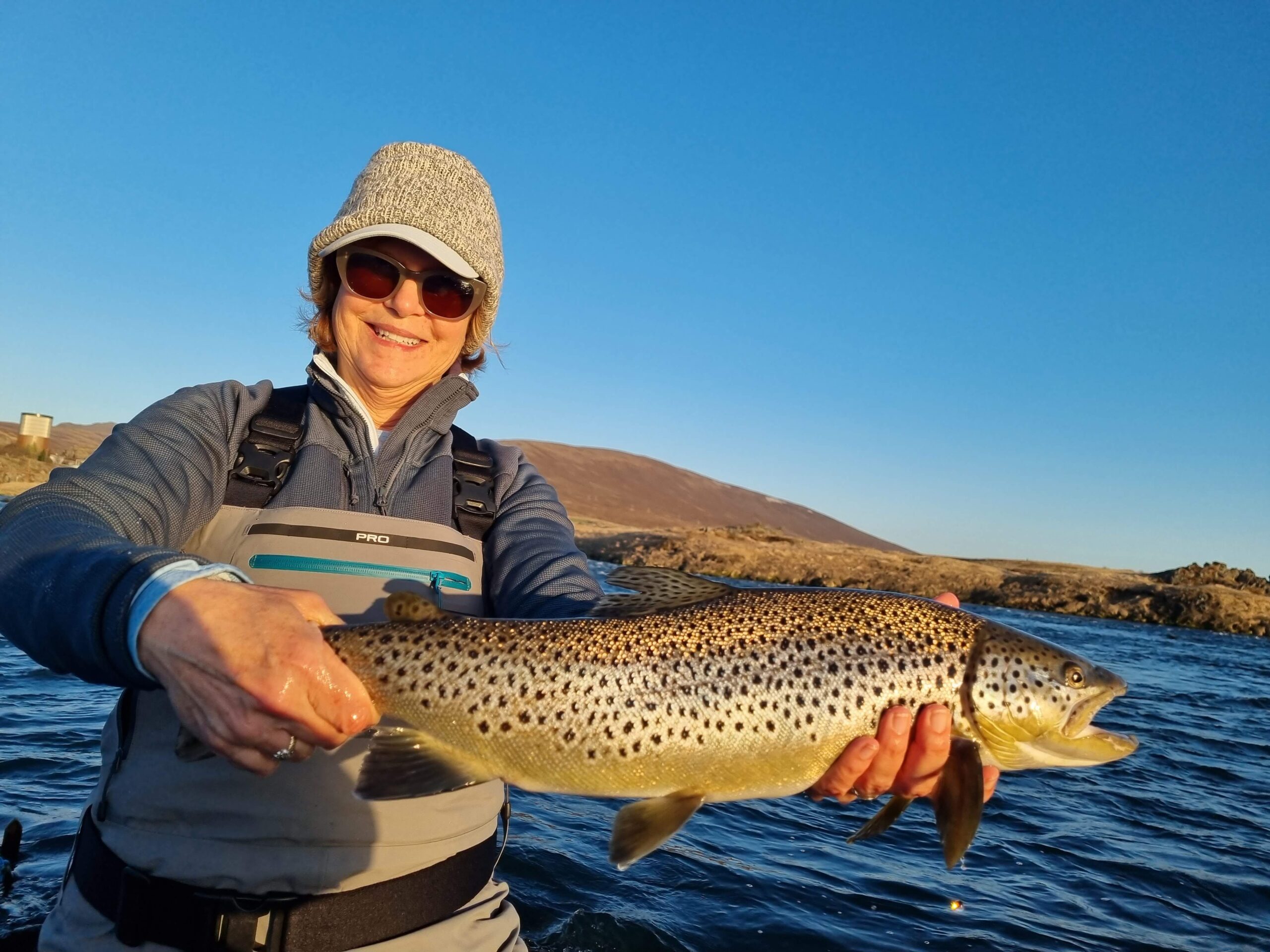
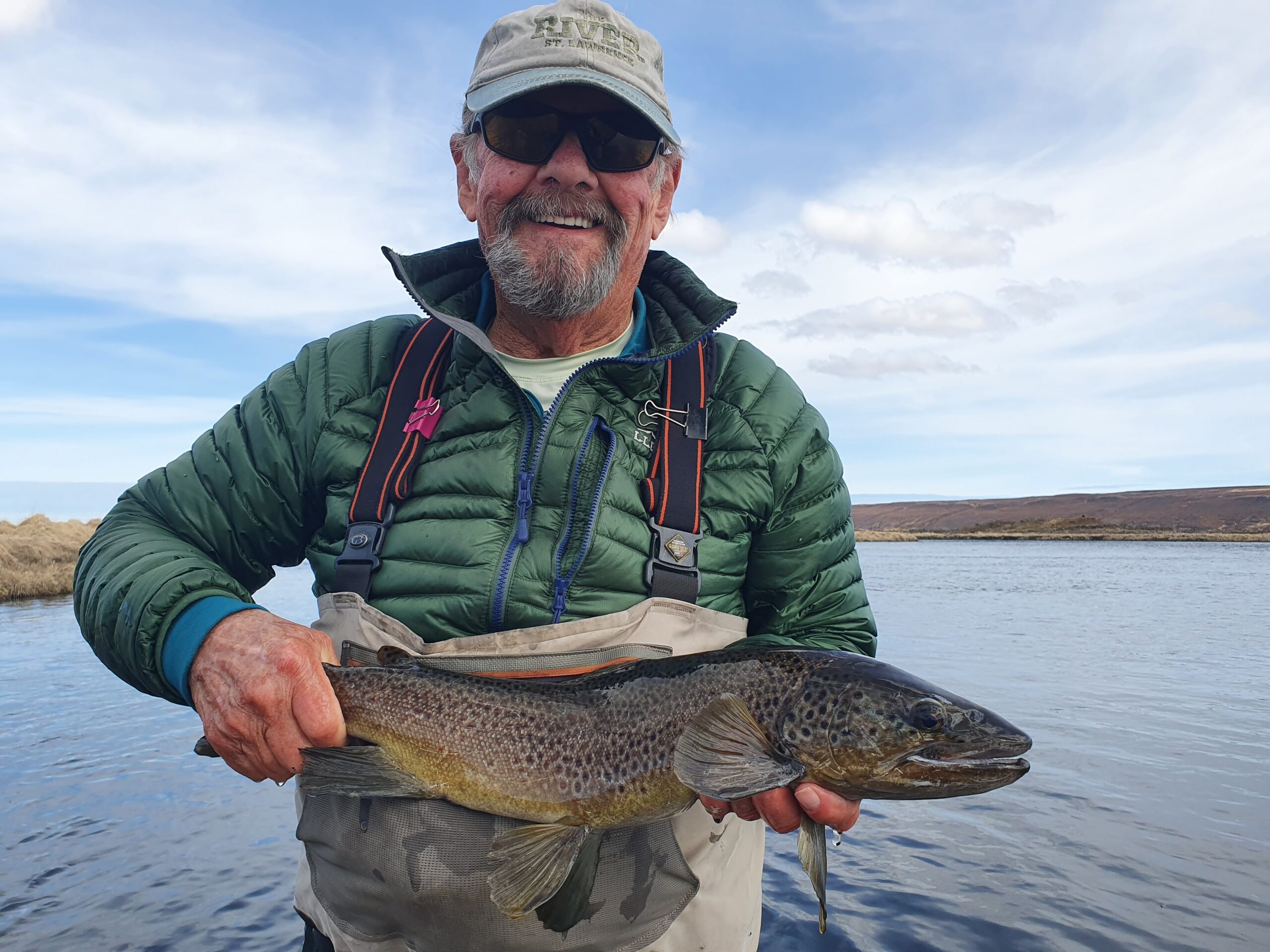
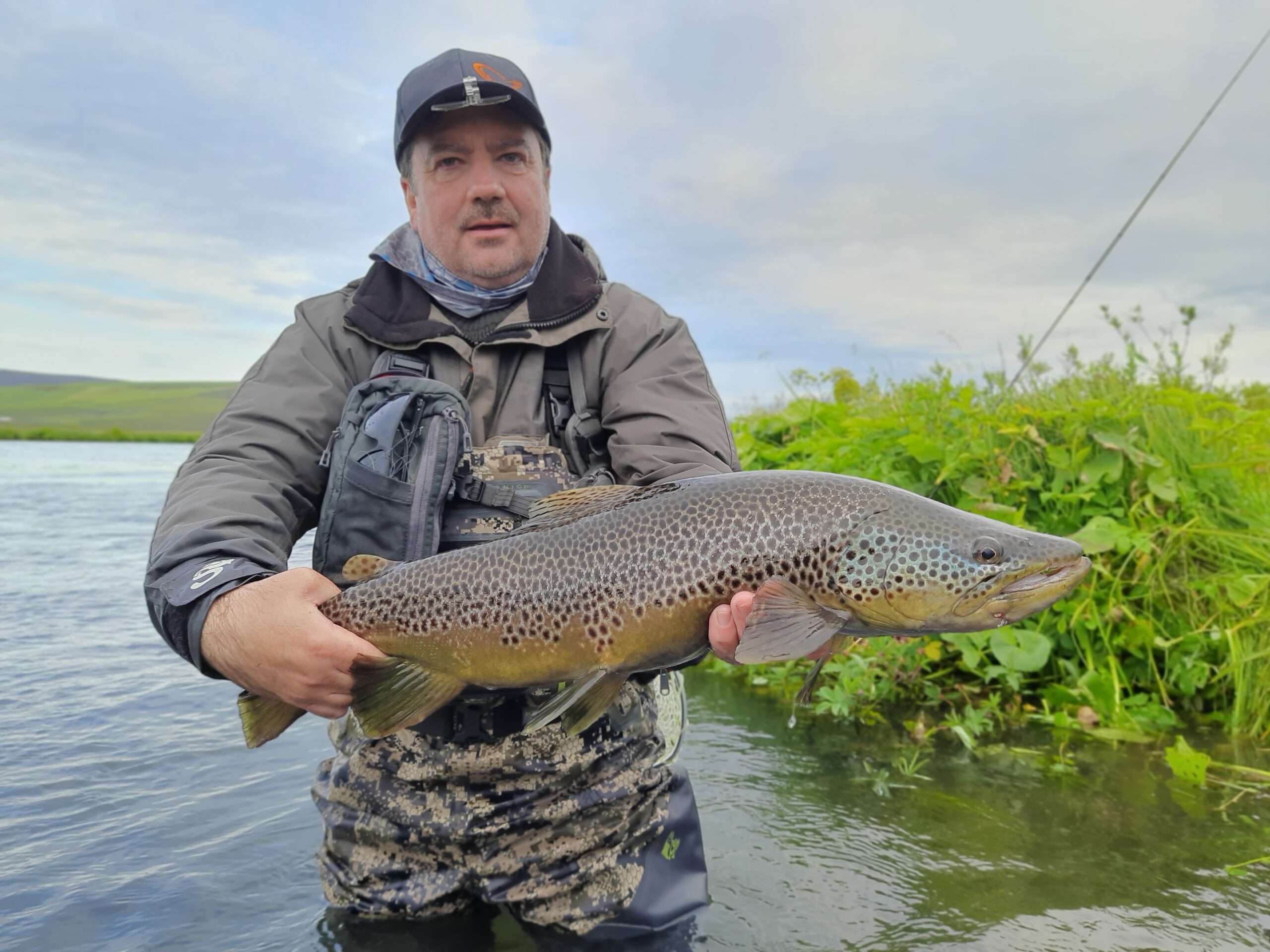
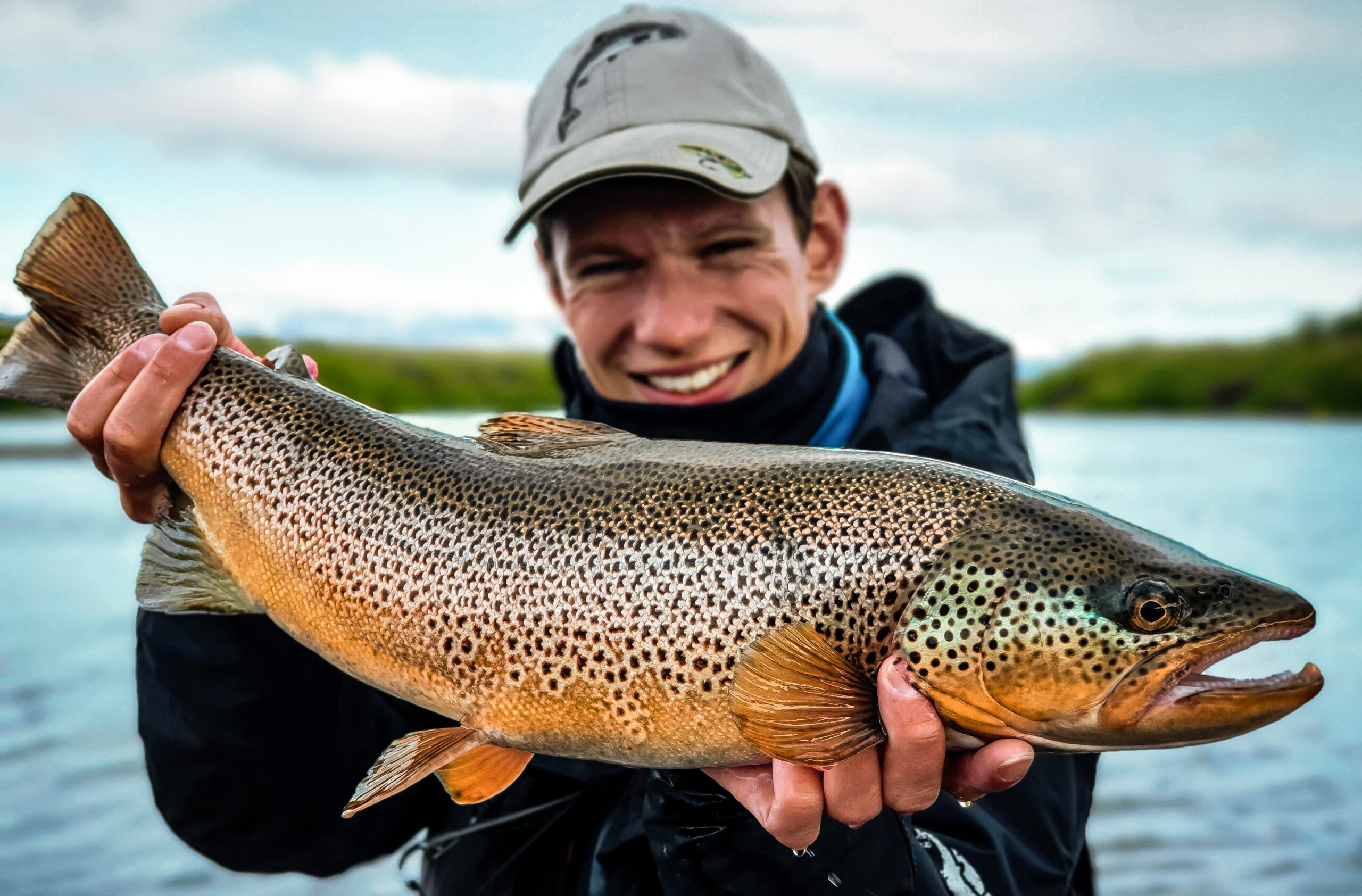
Photos from spring fishing on Laxá trout beats
Flexible Spring Fishing
In addition to these main rivers, we also have access to several smaller tributaries, lakes, and streams that we occasionally fish when conditions are right.
Because spring is much quieter than the peak summer and autumn seasons, we often organize trips slightly differently.
Instead of moving between multiple lodges, we usually create a spring combo package where anglers stay in one comfortable lodge while we fish different rivers each day depending on water levels, weather, and conditions.
This flexibility allows us to choose the best fishing available each day, ensuring guests get the most out of their time on the water.